At the edge of Congo Basin, the ‘lungs of Africa’ absorb a gigantic portion of the world’s greenhouse gases. The road to commodifying this natural process will be a focal point at COP26.
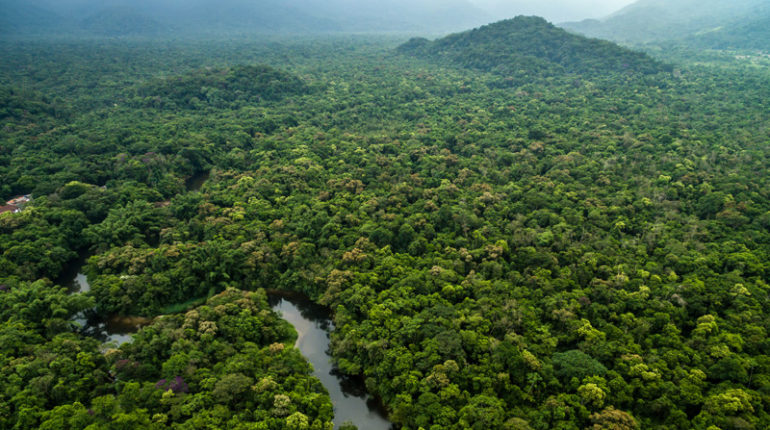
On the West coast of Africa lies the second most forested country on Earth and one of the few places left that absorbs more carbon than it emits.
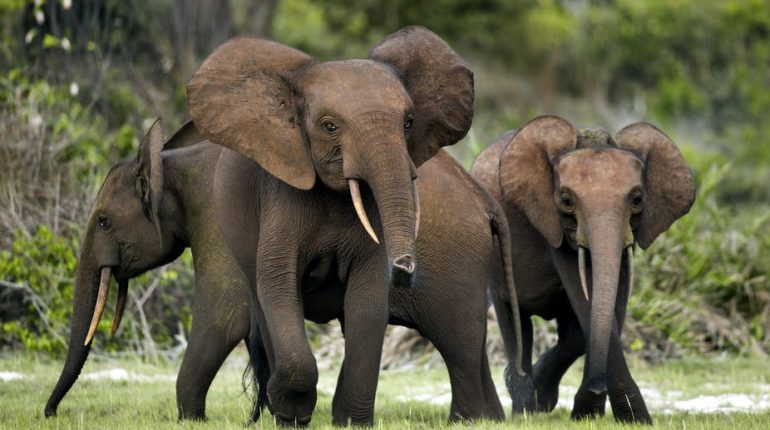
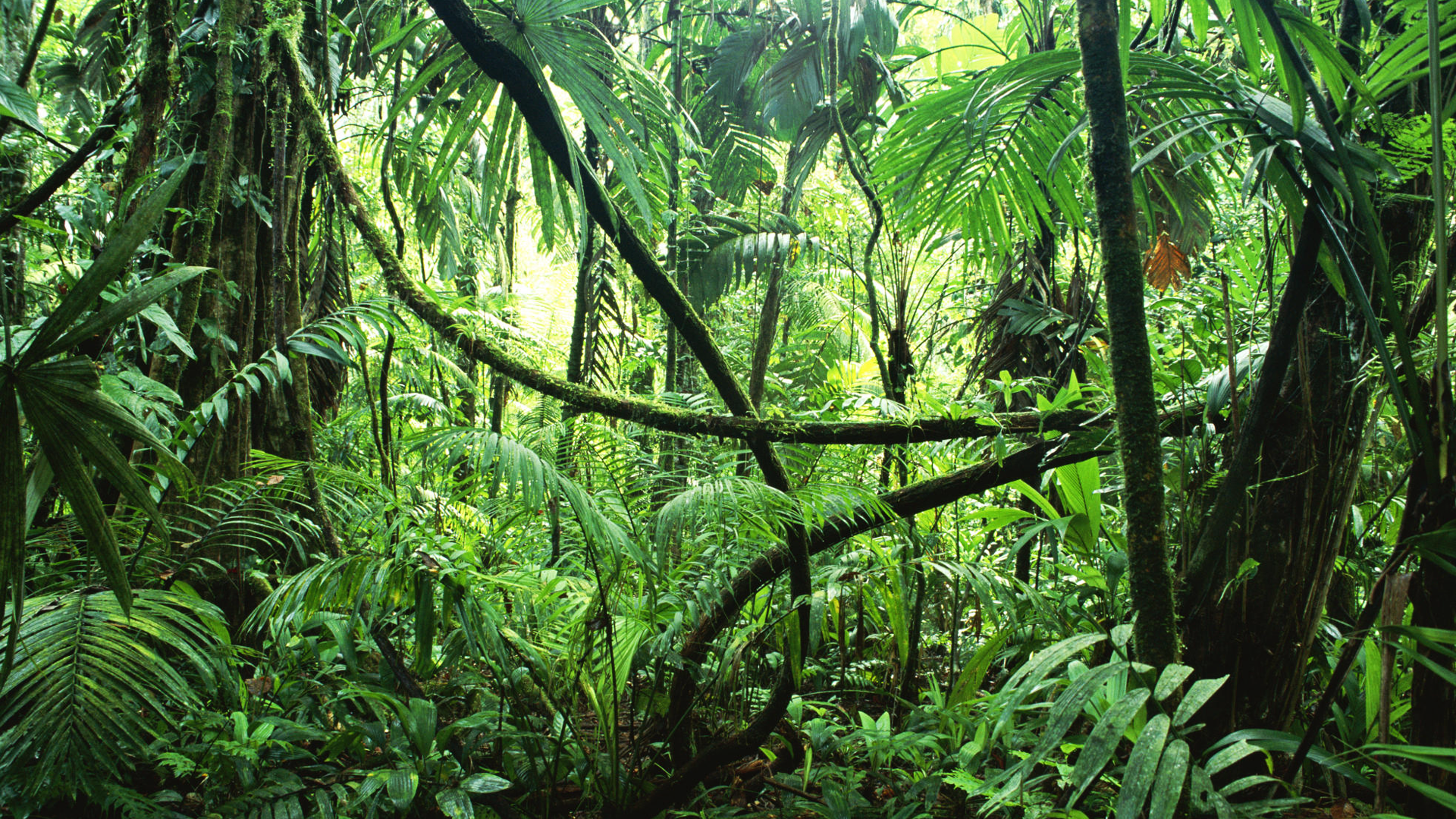
Here, ninety percent of the land is covered by trees, fostering a flourishing ecosystem where black panthers, gorillas, buffalos, hippos, antelopes, and elephants live together in harmony.
The rich forestlands absorb 140 million tonnes of carbon from the atmosphere each year – a figure that is equal to a quarter of the UK’s annual emissions.
Gabon’s forests have been left largely untouched, protected by strict national conservation laws. The country is one of the wealthiest in the region, profiting primarily from its vast oil reserves which generate 60 percent of its economic income. But as of late, attitudes towards oil are shifting due to climate change awareness.
The world, once reliant on fossil fuels, is beginning to transition to greener energy, causing oil prices to plunge and production processes to dwindle. Regions that depend on this sector now must begin looking to alternative means to keep their economy afloat.
In the past, Gabon may have been inclined to engage in nationwide deforestation. The abundance of valuable tropical timber within its borders could become a profitable export as hardwood furniture. Then cleared of trees, the jungle’s rich soil could be manipulated to foster a booming agricultural industry.
History, however, has become our best teacher. We’ve already seen the once densely forested regions of Brazil and The Democratic Republic of Congo face devastating environmental damage for the sake of economic gain.
Learning from these grave mistakes, leaders in Gabon are on a mission to ensure its forestland becomes commercially beneficial while maintaining its conservation.
Though logging is being explored as an option, Minister White remains adamant this is conducted sustainably, limiting clearance to just 1 percent of the forest. Illegal deforestation, which is a rare occurrence in Gabon, will be harshly monitored and stamped out.
But most of all, Gabon hopes to turn its ‘lungs of Africa’ into a profitable, international business which harnesses its natural power of clearing the air through carbon sequestration.
Gabon currently emits 40 million tonnes of carbon each year – leaving 100 million tonnes of carbon from other countries to be absorbed into its trees and soil. By creating carbon credits, nations that don’t have ecosystems or technology to offset their emissions can pay Gabon for protecting the ecosystem that completes this service for them.
Undoubtedly, developing an economic model for carbon sequestration services will be a hot topic at next month’s climate summit COP26. Implementation of a business model for this service would allow these countries – most located in developing regions – to earn a completely new revenue stream.
New schemes never come without uncertainty, and sceptics are wary that carbon credits could allow rich, high-emitting countries or companies to claim climate-neutrality without truly cutting their overall emissions. Likewise, the financial logistics of making this work on a large scale are still not fully realised.
That said, Gabon has already solidified itself as a leader in pioneering this project by striking a deal worth $100 million with Norway for the service of capturing a portion of their carbon emissions.
The leader of Gabon has expressed his opinion that a widespread move toward a carbon credit system is inevitable as we grapple with the global carbon problem.
Still, he stressed that the eagerness of nations to engage in this business exchange is a necessary condition for the ensured survival of the country’s natural landscape.
The region is already under threat and feeling the effects of a changing climate, with fruiting trees bearing less than ever before and animals venturing into nearby villages to feast on crops planted by local communities as their natural food supply declines.
Gabon’s chief climate negotiator, Tanguy Gahouma-Bekale will be tasked with convincing other nations at COP26 that a strong economic model around the preservation of forests as carbon sinks is a worth global investment.
He told Sky News, ‘these rainforests are helping to regulate the rainfall across Africa… they feed water into the Blue Nile. If you lose those ecosystem services, you lose the Blue Nile, you’ve got 100 million people in Egypt who can’t farm anymore.’
He continued, ‘the rainforest is the heart and lungs of Africa, and it is maintaining the stability of the African continent.’
It’s incredibly refreshing to see nations view their natural richness as an asset worth sustaining because of its contribution to protecting humanity and the planet – rather than chopping them down for the purpose of creating an exportable product.
In a couple weeks’ time, eyes will be on other nations to accept the business proposition Gabon is offering. If it is rejected across the board or if countries are too slow to act, the West African nation could be forced to carry out the desertification of its increasingly valuable green landscape.
Deputy Editor & Content Partnership ManagerLondon, UK
I’m Jessica (She/Her). I’m the Deputy Editor & Content Partnership Manager at Thred. Originally from the island of Bermuda, I specialise in writing about ocean health and marine conservation, but you can also find me delving into pop culture, health and wellness, plus sustainability in the beauty and fashion industries. Follow me on Twitter, LinkedIn and drop me some ideas/feedback via email.
Actor Jason Bateman recently caught heat for telling Charli XCX she might change her opinion on not wanting kids. Why are we still inferring that happily coupled, child-free women are unfulfilled?
I’d like to think we’ve made some strides in the motherhood conversation – and to some extent we have. But I still feel the tail winds of disappointment when I tell my elders there’ll be no children on the...
The ongoing Winter Olympic Games have seen many acts of defiance against the Trump administration. How will the situation play out when the US hosts in 2028?
When Baron Pierre de Coubertin revived the Olympics in 1896, one of his main aims was to promote mutual understanding among athletes. He believed that competing on the track instead of the battlefield could encourage peace and help prevent war.
However, countless...
Anxiety, depression, and emotional problems are on the rise across the globe, cutting across boundaries of culture, geography, and socio-economic status. The World Health Organisation says ‘one in seven’ have a mental health disorder in 2026.
According to the World Health Organisation, ‘one in seven adolescents worldwide has a mental health disorder.’ Such statistics obviously cannot be ignored.
This generation of teens is the first to be raised in an...
Why has the precedent that ‘British culture is dying’ invaded every aspect of our lives recently? From TikTok commentary to culture-war politics, who is really influencing the supposed shift in British culture?
Claims that Muslims and BAME communities are erasing British culture have become a popular rhetoric in recent political spheres in the UK, but also around the Global North as a whole. Popular, but not new.
Here's my take...
We use cookies to ensure that we give you the best experience on our website. If you continue to use this site we will assume that you are happy with it.
































 0 comments