The Przewalski horse is one of the rarest in the world and has just been cloned in Texas. It’s a breakthrough that could allow us to restore genetic diversity for many other species in the future.
US scientists have made a major breakthrough in restoring genetic diversity among horses with the creation of a Przewalski horse clone, the first of its kind to ever exist.
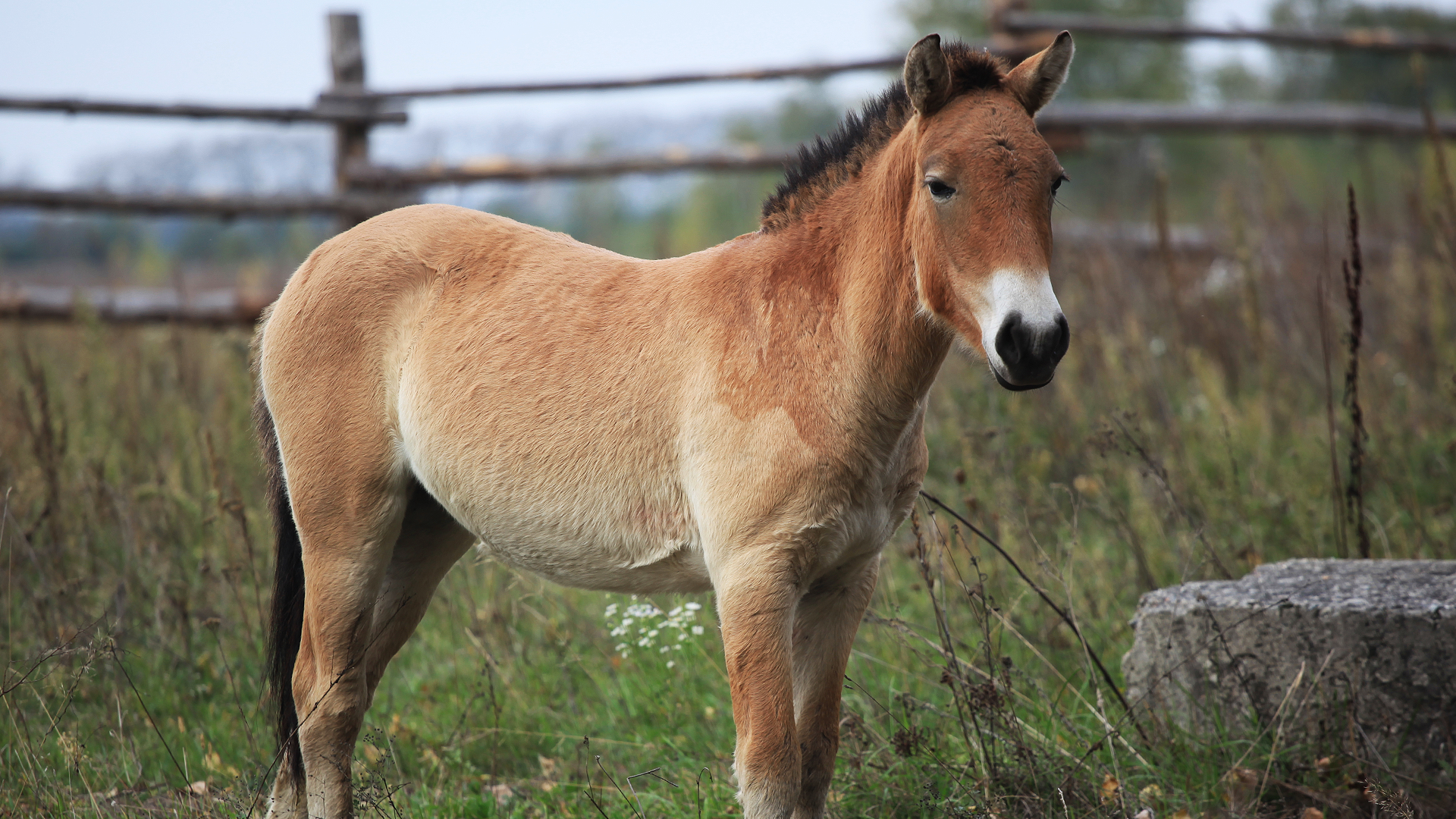
The horse is called Kurt and was born at Timber Creek Veterinary in Texas on August 6th of this year. He was created using frozen 40-year-old DNA cells and has all the usual features of this particular breed, with a stocky build and pot belly, as well as a white muzzle and a dark mane.
Kurt will be between four and five feet tall when he’s fully grown and needs to stay with his surrogate mother for at least another year. We’ve been gifted footage of him running around an open pen for now though, and my God is it adorable.
The Przewalski horse is the rarest equine breed in the world and is considered the last truly wild species. They were originally found in Europe but are now limited to Mongolia, China, and Kazakhstan after being artificially re-introduced to the wild over the last fifty years.
Interestingly, several of these re-introduced horses have been spotted inside the Chernobyl Exclusion Zone in the past few weeks, taking refuge at various abandoned structures in anticipation for the colder winter months. A safe haven for wild horses is probably the last thing anybody expected of a notorious nuclear disaster zone but hey, I’m certainly here for it.
There are only 2,000 left globally today and the last confirmed sighting of an untracked, truly wild Przewalski horse was all the way back in 1969. Hunting, extreme temperatures, and livestock competition are largely to blame for their falling population, but Kurt’s birth is a promising opportunity to boost those numbers and improve the gene pool for future offspring.
He was created using DNA that was cryogenically frozen 40 years ago at the San Diego Zoo’s Frozen Zoo, which houses over 10,000 living cell cultures, sperm, oocytes, and embryos for projects such as this one. It’s hoped that similar success can be found with other endangered animals in the future, improving the biodiversity of species that are in desperate need of help.
Why is this important to genetic diversity?
Creating Kurt was a collaborative effort between the Timber Creek facility, the San Diego Zoo, and Revive and Restore. The latter specialises in utilising genetics to preserve and restore endangered and extinct species.
Ryan Phelan, executive director at Revive and Restore, stated that ‘cloning can save species by allowing us to restore genetic diversity that would have otherwise been lost to time’, and noted that Kurt represented an ‘opportunity for genetic rescue’. The plan is to eventually introduce the horse to the Safari Park in San Diego, where his future offspring may be allowed to return to the wild. Time to get busy Kurt.
By creating horses that use brand new genetics, the Przewalski population will now have a larger gene pool and far more opportunity for diversity among future births. It’ll allow an even greater comeback for the species that could see population growth exceed 10,000 in a matter of decades. We may even be able to bring back extinct species of other animals – it’s all dependent on how many frozen samples we have stored in places like the San Diego Zoo.
For now, we should celebrate this exciting step forward. No word on whether we can start cloning all our pets just yet, though that may be a rabbit hole that’s not worth falling down – imagine the chaos of twenty identical cats running around your house.
I’m Charlie (He/Him), Deputy Editor and Senior Writer at Thred. I was previously the Editor full time at Thred before moving to Bristol in 2024. As a music and gaming enthusiast, I’m a nerd for pop culture. You can find me curating playlists, designing article headline images, and sipping cider on a Thursday. Follow me on LinkedIn and drop me some ideas/feedback via email.
Athletes in Italy have reportedly run out of condoms, which are offered out for free at the Olympic Village every year. More are ‘on the way’ say organisers, though athletes say the initial supply was unusually low.
There’s a crisis happening at the Winter Olympic village in Italy, and no, we’re not talking about the athlete who confessed to having an affair on live television.
Reports from anonymous athletes...
Despite concerns that streaming is killing the in-person experience, reports suggest Gen Z are gathering in front of the silver screen regularly.
Cinema attendance across the UK hasn’t exactly spiked. In fact, some of the year’s biggest films – by critical standards – saw dismal box office numbers.
Streaming has continued to shape our watching habits and dominate the entertainment industry. Netflix looks set to acquire Warner Bros, and our favourite...
LinkedIn has become an unusual breeding ground for thirst trap content. Is this peak cringe, or merely a symptom of life online in 2025?
I was just looking for inspirational quotes, I swear.
The social media flex is inevitable. Whether you’re looking to temporarily numb your brain on TikTok, have a quick peruse through Instagram, or look for job listings on LinkedIn, you’re all but guaranteed to stumble on people ‘thirst...
Last weekend, the right-wing political organisation Turning Point hosted its own, alternative NFL Super Bowl LX halftime show in protest of Bad Bunny’s official stadium performance. The reviews were less than stellar.
Turning Point USA, a right-wing political organisation founded by the late Charlie Kirk, has faced criticism and ridicule for its ‘All-American Halftime Show’ during the NFL Super Bowl LX this past weekend.
Positioned as an ‘alternative’ to the...
We use cookies to ensure that we give you the best experience on our website. If you continue to use this site we will assume that you are happy with it.
































 0 comments