







 0 comments
The return of the annual haze, worsened by the El Nino phenomenon has left Southeast Asia grasping at straws for Indonesian accountability.
It has been months since I have breathed a week’s worth of fresh air here in Malaysia. On some days, low visibility makes it difficult to see what’s right ahead of you, while nights are plagued with the smell of smoke.
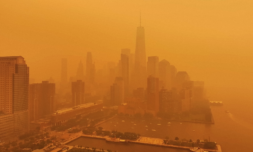
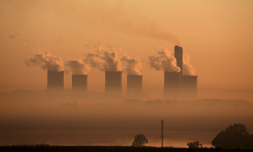
This is the stark reality of the transboundary haze; a recurring environmental crisis that blankets Southeast Asia, reminding us of the luxury that is clean air.
Between June and October, the Southeast Asian region experiences its driest season. Given that wet seasons make it difficult to sustain a large fire, farmers take advantage of this time to practice slash and burn farming.
This is an extremely destructive, illegal shortcut used to clear massive amounts of forests and peatland for agricultural production at a cheaper and faster rate. As peatlands are carbon-rich, surface fires also seep underground and ignite subterranean infernos that easily resist rainfall and surface firefighting.
The haze crisis this year has escalated to a level that was last seen in 2015 and 2019 and exacerbated by El Nino’s prolonged dry spells and higher temperatures.
While it was initially thought that 900,000 hectares had been burned across Kalimantan, Sumatra, and South Papua so far this year, recent estimates show the number to be much higher at nearly 2 million hectares. That’s an area more than 26 times the size of Singapore.
No thanks to smog-carrying winds, across Malaysia and Singapore the air pollution index has peaked countless times ranging around ‘Unhealthy (101-200)’ or ‘Very Unhealthy (201-300)’. With the air pollution index scaling up to ‘Hazardous (301+)’, Sarawak exceeded it and clocked a reading of 515.
Malaysia’s Ministry of Health revealed that since the haze started, there was a 167% jump in Upper Respiratory Tract infections, with asthma cases seeing a 127% increase, and conjunctivitis rising by 83%.
To prevent vulnerable populations and children coming into contact with harmful air, thousands of Malaysian primary and secondary schools in the severely affected states suspended physical classes and shifted to home-based learning. Timor-Leste, another neighbour of Indonesia also followed suit.
In Singapore, the health risks are similar to those in Malaysia, but schools are less likely to close. Instead, they have introduced precautions to limit the time students spend outdoors.
In ground zero, readings in part of Indonesia have frequently spiked past 400 to even over 1,200, with the ongoing wildfires turning skies orange red. As of late September, over 40,000 of its acute respiratory infection cases were attributed to children under five.
Given the dire state of the region, one would expect Indonesia to pull out all the stops to tackle a crisis that arrives every year on the dot. And on paper, efforts appear significant. They have deployed 60,000 personnel to put out the fires with 50 aircraft having been engaged in water bombing and cloud seeding.