0 comments
Used clothes have been enabling people to refine their style and earn money. Now that thrift fashion is reaching new heights on the internet, who continues to benefit the most?
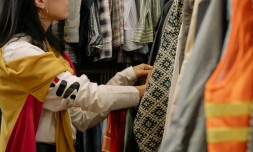
In Nairobi, a second-hand jacket can either be on sale in the market or on social media with all the elegance of a professionally curated thrift shop. It is the same type of clothing item, just sold via different channels.
Some may come to the market stalls or Instagram shops seeking thrifting due to a lack of other options, while others see the unique opportunity of acquiring something original. Sellers, meanwhile, are making sizable profit out of their trade. The motivations are diverse.
The reasons why people like thrifting are obvious. Younger generations can try something different and find one-of-one items. Thrift shops owners and sellers can build their business selling unusual things, selecting, washing, repairing, and displaying items in ways appreciated by customers.
However, when the most interesting item becomes selected by someone else and resold on the Internet for more money, can the same second-hand clothing remain budget-friendly to the people who’re reliant on the resell market.

More than one price for second-hand
Curated second-hand clothes may be more expensive because of the hard work involved. The seller has spent time traveling, selecting the item, washing it, repairing, taking photos and organizing the delivery. All of that work deserves to be paid.
Undeniably, though, it makes a huge difference to the person searching for a budget-friendly everyday second-hand shirt. If all the best pieces are sold by the price unreachable for the customer, the meaning of thrifting changes depending on who you are asking.
That doesn’t mean all online second-hand retailers are overpricing their products. A high price tag alone isn’t necessarily representative of the wider second-hand clothing market. Prices can vary significantly depending on location, quality, and the costs of running a business. To understand whether second-hand fashion is genuinely becoming less accessible, we need to look beyond individual prices and consider what people can realistically afford to buy and sell.
In Kenya, the consequences will be even broader than fashion-related. According to the Mitumba Consortium Association, the second-hand clothes and shoes industry creates more than two million jobs. Clearly, it’s not just those posting outfit snaps who’re affected.
People making reuse happen
A used garment does not attain a second life by itself. Somebody has to bring it or distribute it, unpack, sort, put it up for sale, bargain over it, and sometimes alter and repair it.
According to CNN news, it is evident from the case of Kantamanto market in Ghana where more than 30,000 people work. The Or Foundation collaborating with the community of the market estimates the number of workers in that way. These statistics show one thing that can become invisible under the gloss of thrift fashion; reuse is a skilled activity.
There is also a darker side of the business. The sellers do not always know in advance what they will get after unpacking the bale.
Low-quality clothes are difficult to sell, and those garments that are not suitable for reuse have to be disposed of somehow. There is debate over the extent of waste generated by the import of second-hand garments in different markets.
What is apparent, however, is that the burden of managing textile waste should not be silently placed upon traders and recipients of such materials. In order to differentiate between reused garments and textile waste, UNEP researches trade in used textiles in Kenya, Ghana, and other countries.