






 0 comments
After last year’s debacle, Coca-Cola has doubled down on its use of generative AI for its annually anticipated Christmas ad. The public reaction is even worse this time around.
‘Tis the season, it’s always the real thing’… except for when it’s not.
Halloween is officially over, and Guy Fawkes Night will have been and gone before you can sing a Katy Perry chorus. Next up for a lot of us comes Christmas, and the annual holiday rush has been commenced by yet another hyper-stylised Coca-Cola ad.
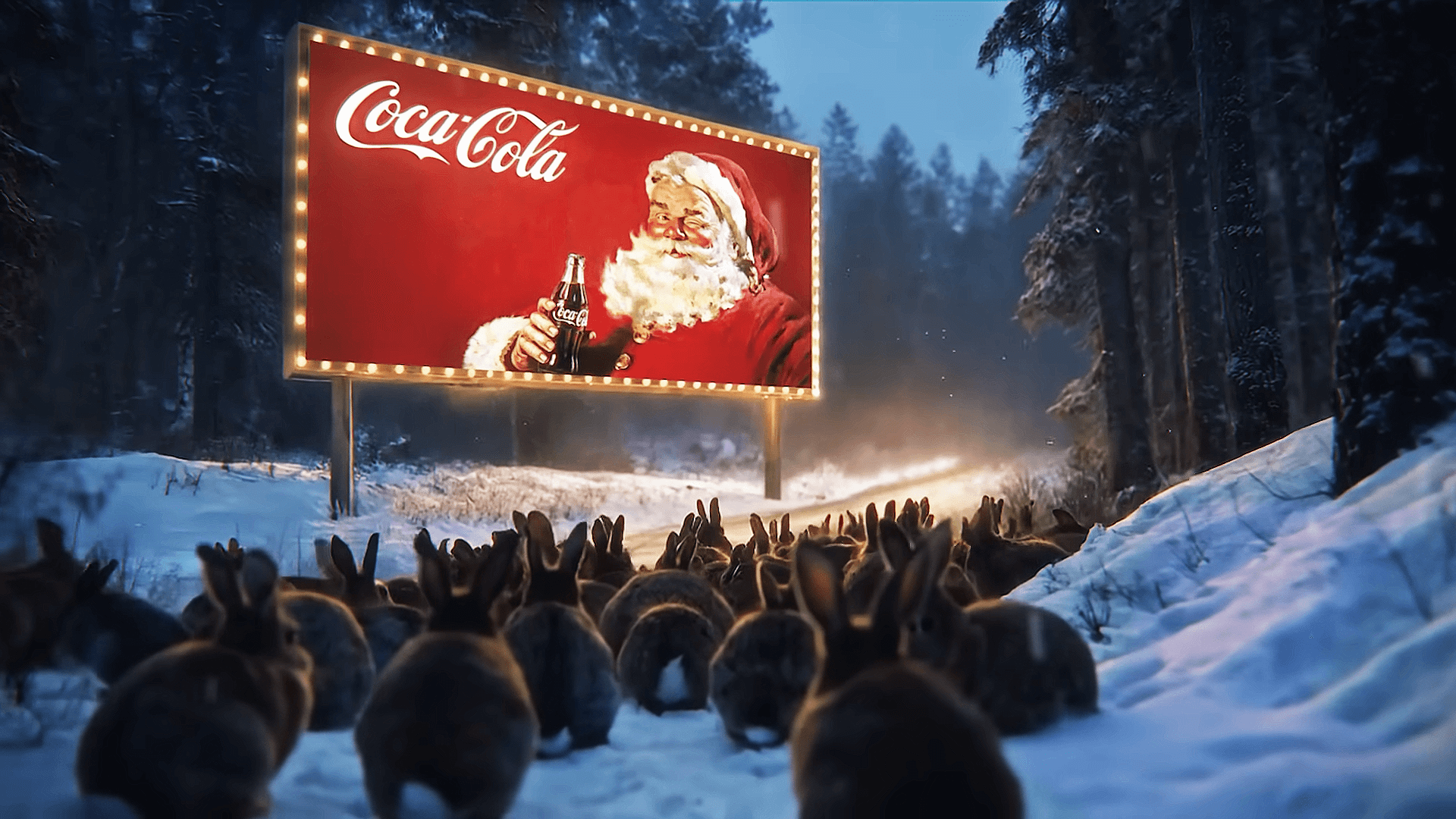
Like the last one, which was received about as well as overcooked turkey, the conglomerate has once again opted to use generative AI for the entirety of its ad, arguably creating an even dodgier animated festive jaunt than that of 2024.
The wheels on the familiar big red trucks are actually turning this year, but Coca-Cola’s attempt to sidestep incorporating vacant, uncanny humans by focusing on Christmas critters hasn’t swayed the court of public opinion.
There’s no consistent style in the animation, with shots jumping from realistic penguins to a doe-eyed, Disney-esque Panda. The movement of many of the animals is painfully unnatural too, almost as though flat images were animated instead of native 3D models.
Look at how the seals surface jarringly quick, the low-frame flight of the birds, and how the bunnies blend into an indistinct blobby mesh in certain frames.
It’s also painfully obvious that the design team was limited to including short shots of each rendered critter, as inconsistencies would inevitably appear with them appearing across numerous scenes. The natural assumption is that the onus was more on hiding the limitations of the tech, than building a memorable and compelling commercial.
The internet is also nigh-on unanimous that, ethical implications aside, the whole thing is a bit of a mess technologically speaking.
The ad arrives courtesy of Silverside and Secret Level, two AI studios who created the notorious promos last year. According to Coca-Cola, around 100 people were involved in the new project including five ‘AI specialists’ who refined more than 70,000 AI video clips to build the finished product.
Despite this rhetoric of collaboration, no doubt in lieu of humanising their work to some degree, the decision to double down on the use of AI has proved vastly unpopular for a multitude of reasons. Did an exec have a hunch that consumers would come around just 12 months later, or does Coca-Cola just not care what people think?
It would seem the risk is apparently worth the reward, with company Chief Marketing Officer, Manolo Arroyo, telling the Wall Street Journal that its latest campaign was cheaper and faster to produce than its non-AI predecessors. Who would’ve thought?
‘Before, when we were doing the shooting and all the standard processes for a project, we would start a year in advance,’ Arroyo said. ‘Now, you can get it done in around a month.’