






Menu Menu
[gtranslate]

did I just agree with Putin?

the west is falling, the future is in asia

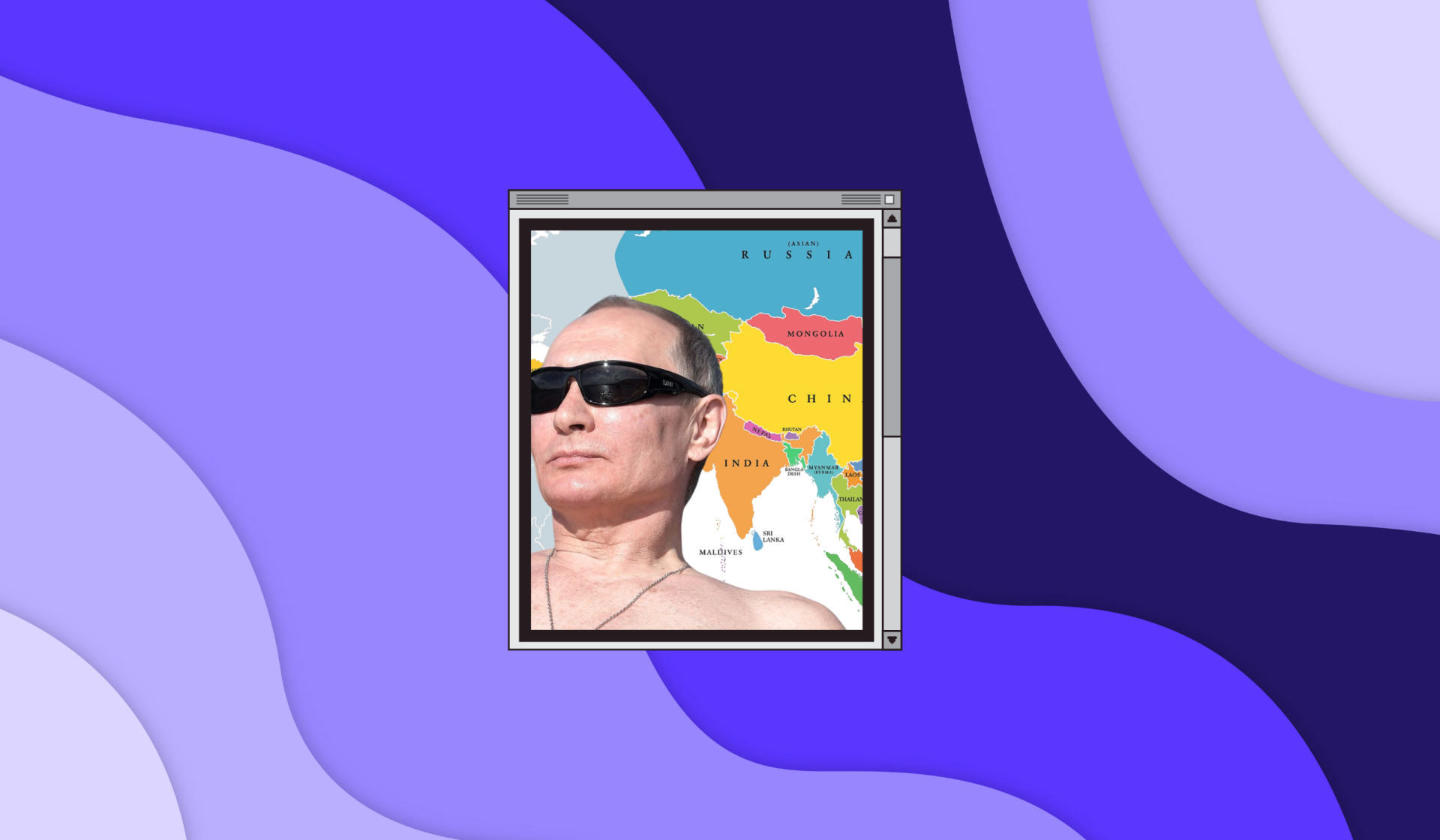
Before you freak out and think I’ve been radicalised by a raging dictator, I’m pretty sure the only thing me and Vladimir Putin truly have in common (besides us both being Libras, a commonality worth rebuking) is that I, too, believe the future of the world’s economic prosperity and social harmony lies in Asia.

In recent months, Putin has repeatedly been taunting the world’s most powerful western leaders by rubbing the fact that their countries are quickly becoming total messes in their faces. Not exactly novel behaviour, I’ll admit, but stick with me.

Back in August, the Russian leader stated that the world’s economic gravity is shifting toward Asia, calling it an opportunity to deepen cooperation through platforms such as the Shanghai Cooperation Organisation and BRICS.

Just a few weeks later, he’d declare that the world is entering its ‘polycentric era’ where no single power can successfully dictate rules. Putin was probably talking about feeling as if he’s got free reign to do whatever he wants now, like a child who’s just been allowed to stay home alone for the first time while their parents go out to dinner (because dictator mentality is worryingly similar to reckless, non-fully-formed-teen-brain energy), however, I’ve chosen to interpret his statements rather literally.

The truth is, America’s longstanding throne is no longer looking so shiny. One might even take the liberty of saying it’s borderline musty and crumbling. As for the UK, well, that’s a whole other tin of biscuits, but all you need to know is that social cohesion and economic growth projections haven’t looked this bleak in decades.

I won’t pretend like I’m an expert in global economics, politics, or trade. However, I will say – having lived in Europe and the Americas for most of my life while travelling to Asia on a number of occasions – that most people in the West have been drinking a version of ‘west is best’ Kool-Aid that’s been expiring for quite some time now… and a growing number of people are starting to taste the first hints of rancidity.

Take a look at this, for example. A poll conducted in July 2025 found that 78 percent of registered US voters believe the American Dream is ‘not attainable,’ compared to 15 percent who say it is ‘alive and well’. Younger generations are the most skeptical, with a Pew Research Center survey conducted in 2024 reporting that 61 percent of adults aged 50 and older believe the dream is still possible, while only 42 percent of people under the age of 50 agree.

This is a real problem when the American Dream has been central to the identity of people living in and migrating to the United States for many decades. If people don’t believe the US is a country that adequately lives up to its ethos of freedom, equality, and opportunity, or that anyone can reap the rewards of a comfortable and safe life through hard work and dedication… what even is America anymore?

So yeah, maybe I do agree with Putin on this one thing. As for the rest of his freaky thoughts and feelings? Let’s just place those to the side for now. I want to talk about the ways in which he’s probably right about Asia rapidly evolving into the most attractive and prosperous part of the world, from a layman’s standpoint.

And no, I am not saying this because of TikTok, SHEIN, Temu, Uniqlo, and Labubu dolls. I may be approaching this argument from a more personal perspective, but I’m deeper than that (I swear!).


Let’s talk food

There is no life without food, and to many, food is life. So let’s start here.

Almost everywhere you go in Asia, you will be spoiled for culinary choice. From Michelin star restaurants to street-side food carts and everything in between, you will not struggle to find a meal to suit your taste buds. There’s a menu for every budget, and to be honest, some of the most delicious dishes you can find will cost you the least. It’s not just a case of getting more bang for your buck because you’ve got foreign money, either. In most eateries, locals and tourists will share the same tables, slurp the same noodles.

There’s also overwhelming abundance of food. In most of Asia, socialising is centred around food, and no outing is truly complete without the inclusion of an ice cold drink, tasty snack, or hearty meal. Walking down the streets around midnight, you’ll see groups of locals – family, friends, teenagers, little babies(!) – sitting roadside and sharing the kind of spread American families reserve for special occasions, only it’s a normal Tuesday evening.

Off the back of discussing sheer abundance, we should talk about quality. There are brightly-coloured vegetables, juicy fruits, plant-based proteins, and sizzling meats on every corner. Locals and tourists queue together for their turn to get their fill, trading a few small-value cash notes for a warm plate piled high with fresh herbs or lathered in homemade sauces. Meanwhile, eating nutritious meals in places like the US and UK is ridiculously expensive, with healthier ingredients and meals often cost significantly more than processed snacks and fast-food options. Unfortunately, a £3 Gregg’s pizza slice becomes the obvious choice over a bleak £8 salad in Pret when you’re trying to save p’s.

In that vein, it’s hard not to think ‘what the f-ck have I actually been doing’ when you land in Vietnam and have the most delicious, fragrant, nutritious bowl of soup you’ve had in months for less than £1. In London, Sundays may have been reserved for my eternally sacred ‘rot in bed and eat pho’ sessions, but I cringe to think that set me back around £14 each time. What a FOOL I have been. And before anyone says, ‘Well, naturally, food local to the country will always be cheaper at the source!!!!,’ let it be known that a decent fish and chips in the UK costs well above a tenner these days, ok?

What I’m saying is, it feels like the biggest scam in the world to see eating healthy and well on a regular basis becoming a luxury in places like the US and the UK. Why are there adults with full-time jobs in America who are wholly dependent on food stamps? Why has providing free school meals in the UK been such a longstanding controversial subject? In Western countries with some of the richest populations in the world, why are these questions even having to be asked?

Social life

There’s misery and poverty everywhere in the world. I’m a tourist, not an idiot. I will not pretend like the parts of Asia I’ve travelled to are some kind of utopia where sorrow and struggle don’t exist. On the contrary, and on many occasions, these realities exist in plain sight.

It’s a known fact that Japanese office workers leave the office so late at night that they down a bowl of 10pm ramen before getting blackout drunk in the streets to numb the stress. Speaking to locals in Vietnam, a six or seven day work week is normal for many, with some workers only taking days off on requests made well in advance. In Thailand, you’ll see groups of 20-30 weathered men covered in concrete dust, huddled in the back of a speeding truck on a busy motorway after a long day of physical labour. All over, street food sellers rise at the crack of dawn to source fresh produce before serving an endless line of customers under the blazing sun, breathing in cooking smoke and harmful pollution from nearby road traffic all day long.

Still, people smile. They are warm. Unlike Western nations which have promoted individualism and a ‘me first’ mentality – to the point where run clubs, book clubs, whatever-you-can-think-of clubs are popping up in honest attempts to cultivate some semblance of community – people in Asian countries are tolerant, respectful, and open with one another.

No doubt, this way of life has been guided by principals rooted in religions like Islam, Christianity, Catholicism, or traditional philosophies such as Hinduism, Buddhism, and Confucianism. But while the global trend of declining religiosity is also impacting Asian countries, the value of community still holds strong amongst locals who see social harmony and cooperation as necessary obligations to uphold the well-being of everyone. It’s this kind of spirit that keeps a nation of people powering through even the most trying of times, and the West’s lack of it is perhaps part of why countries like the US and the UK are in their flop era right now.

I can’t help but feel that individualist culture and modern media has pitted us all in the West against each other. The 24 hour news cycle is having a damaging effect on our collective psyche, eroding our trust in one another, and making us feel as if other people are too crazy or weird or untrustworthy to be around. And while I’ve encountered my fair share of weirdos everywhere I’ve been, and seen enough phones snatched in videos filmed in central London to fill an Apple store, STILL, I don’t think that’s true. We only think it is, and so it’s become a self-fulfilling prophecy. The good thing about that is it means we have the power to change it by sheer will and collective effort.

I could go on and on about what I like about Asia, despite its immediately apparent flaws and issues. I love the transport – its ease, efficiency, and cost-friendliness. I could talk about how safe it feels to walk through major capitals like Bangkok or Ho Chi Minh City as a woman at night. Or I could talk about the wondrous nature, and how seeing lush green forests and waterfalls with your own eyes somehow undoes months of seeing nothing but concrete buildings and blue light screens for months on end. I won’t, though, mainly because I’m nearing the end of my word limit.

The moral of my Substack is: many people (including me sometimes!) have swallowed the spoon-fed the idea that everything is better at home, and that most faraway places are just too exotic or too messy to visit. But Putin has spoken (no doubt more economically-intentioned than I have, but still)… and I agree: Asia is the future.

And if you dare to step out of your bubble, you might actually be relieved – albeit a little shocked ­– to have had that bubble positively popped.

Thanks for reading and make sure to subscribe for the latest news on Gen Z and youth culture! Also, don’t forget to check out The Gen Zer for a weekly roundup of more trending insights, stories, and discussions.

Until next time!

Accessibility