Menu Menu
[gtranslate]

Albania appoints world’s first AI-powered minister

The nation did the unthinkable and put an AI entity in charge of public procurement in an effort to combat the nation’s high levels of corruption.

Artificial intelligence is everywhere. From aiding students in their studies to detecting diseases, our lives are becoming increasingly intertwined with AI. This also applies to governments worldwide, some of which use it to automate processes or even to make e-portals easier for citizens to use.

However, no one anticipated that AI would be used for purposes other than simplifying and expediting government procedures. Well, that was before Albania boldly announced the appointment of the world’s first AI minister. Its rationale? To tackle the nation’s high corruption rate.


Corruption in Albania

Globally, countries are ranked on the Corruption Perception Index (CPI), which measures the extent to which public authority is misused for private gain. The index is scored out of 100, representing a nation free of corruption. Albania, however, received a score of 42, placing it on the border of severe.

Though its government employed a task force equipped with the power to persecute those at the highest levels of command, the issue persists, especially when it comes to procurements. This sector frequently involves the government in substantial financial transactions with the public.

Often, this avenue is used by gangs to launder their organised crime funds, while, in other instances, the public may just end up bribing officials involved to approve public tenders. Either way, money is a tool used by corrupt individuals to make themselves rich, at the cost of the law.


 

‘Diella’ the minister

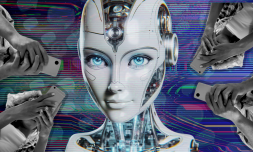
To combat corruption within the government, Albania’s Prime Minister, Edi Rama, introduced Diella. Developed by the AI lab in AKSHI, the National Agency for Information Society, she was appointed as the Minister for Public Procurements, who oversees the tenders.

As a virtual entity, she resides within the nation’s e-Albania portal, clad in traditional clothes. According to Rama, she has been assisting citizens with services and documents since January. He also stated that this new undertaking would make Albania a ‘country where public tenders are 100% free of corruption’.

Diella will be, in theory, responsible for reviewing all tenders that are submitted, and other ministries no longer have any say in approval decisions.

Is AI truly the answer to corruption?

As a virtual cabinet member, it may be true that she may just be able to prevent corruption within the country by eliminating human bias and manipulation. But truth be told, appointing such an entity with the belief that it would eliminate corruption in its entirety is a concerning perspective.

It goes to show the extent to which Albania’s government would go to simply bring down the stats, rather than actually addressing the deep-rooted systemic corruption. To add to this, no details were provided regarding human oversight or safeguards to prevent manipulation of the AI itself.

It’s vital to note that corruption is essentially a habit. Implementing AI isn’t going to stop, but rather motivate individuals to find a way to continue their corrupt practices. With technology continually advancing, who’s to say that someone wouldn’t figure out a way to manipulate Diella, or that the technology itself can be implicitly trusted to perform without hitches.

Ideally, Diella’s appointment should only be taken as a short-term opportunity to bring down corruption stats, but not to entirely eradicate it in the long term. While Albania’s anti-corruption efforts through Diella are commendable, more work needs to be done to flush out corruptive mindsets from the people themselves.

This isn’t a job for AI, but rather for us humans. Computers can’t fix everything.

Accessibility