Reggaeton is widely recognised by its uptempo beats and raunchy lyrics, but there is another side to the genre we see less often. Through live events and powerful lyrics, reggaeton artists have used music as a tool to call out political corruption, discrimination, and to generate a feeling of solidarity.
Reggaeton, a blend of reggae, hip hop, and dancehall, first began in Panama in the late 1980s.
Starting out as a lyrical variation of Jamaican dance hall, which preceded the Hispanic genre fusion by 40 years or so, the genre-fusion became famous in the 1990s in Puerto Rico.
It was here that it evolved as a voice and a means of expression for marginalised figures in the community.
In particular, Reggaeton was embraced by those seeking to oppose pervasive police brutality – the kind still fought against today.
Among those creating waves in the Puerto Rican underground scene was Tego Calderon.
Calderon began his musical career in the late 1990s, as a rapper by the name of Tego Tec, but became famous on the reggaeton scene for his use of authentic Afro-Borinquen rhythm.
Surprisingly, Calderon disliked reggaeton at first; he considered it to be an appropriation of Jamaican music that lacked creativity or authenticity.
However, since crossing over into the reggaeton genre with his single Cosa Buena (Good Thing), 2001, Calderon has maintained his commitment to dealing with racism, political corruption and religion in his highly politicised music.
Perhaps one of the best examples of this is Calderon’s song Loiza, released in 2002 as a single and in 2003 as part of his album El Abayarde. The album’s title is a reference to the colloquial term used for restless kids in Puerto Rico – of which Calderon includes himself.
In Loiza, the Puerto Rican rapper speaks about the neighbourhood where he grew up. He protests against the violence directed towards black people by reclaiming marginalised spaces as his “pueblo” (town).
The song also attacks the educational systems in his country which permit the prevalence of racism by ‘‘satura(ndo) la mente a ninos inocentes, con educación inconsistente” (saturating the minds of innocent children with an inconsistent education).
Certainly not for the faint hearted, his lyrics also seem to offer violent revolution as a solution to the systemic racial inequality when he sings ‘en lo claro la justicia se obtiene con cascajos’ (clearly justice can be obtained with rocks).
Instead, the album’s – and still to this day the artist’s – most popular song was Pa’Que Retozen, (for those who revel) which emulates the better known ‘cultura machista’ (cultural misogyny) often associated with reggaeton.
Machismo y el perreo
A large part of this association finds its beginnings in the reggaeton dance style ‘perreo’ (doggy).
Many of the lyrics in reggaeton also overtly sexualise and objectify women – and in some cases even (arguably) perpetuate violence and femicide, as Thred’s Eunice Tovar explores.
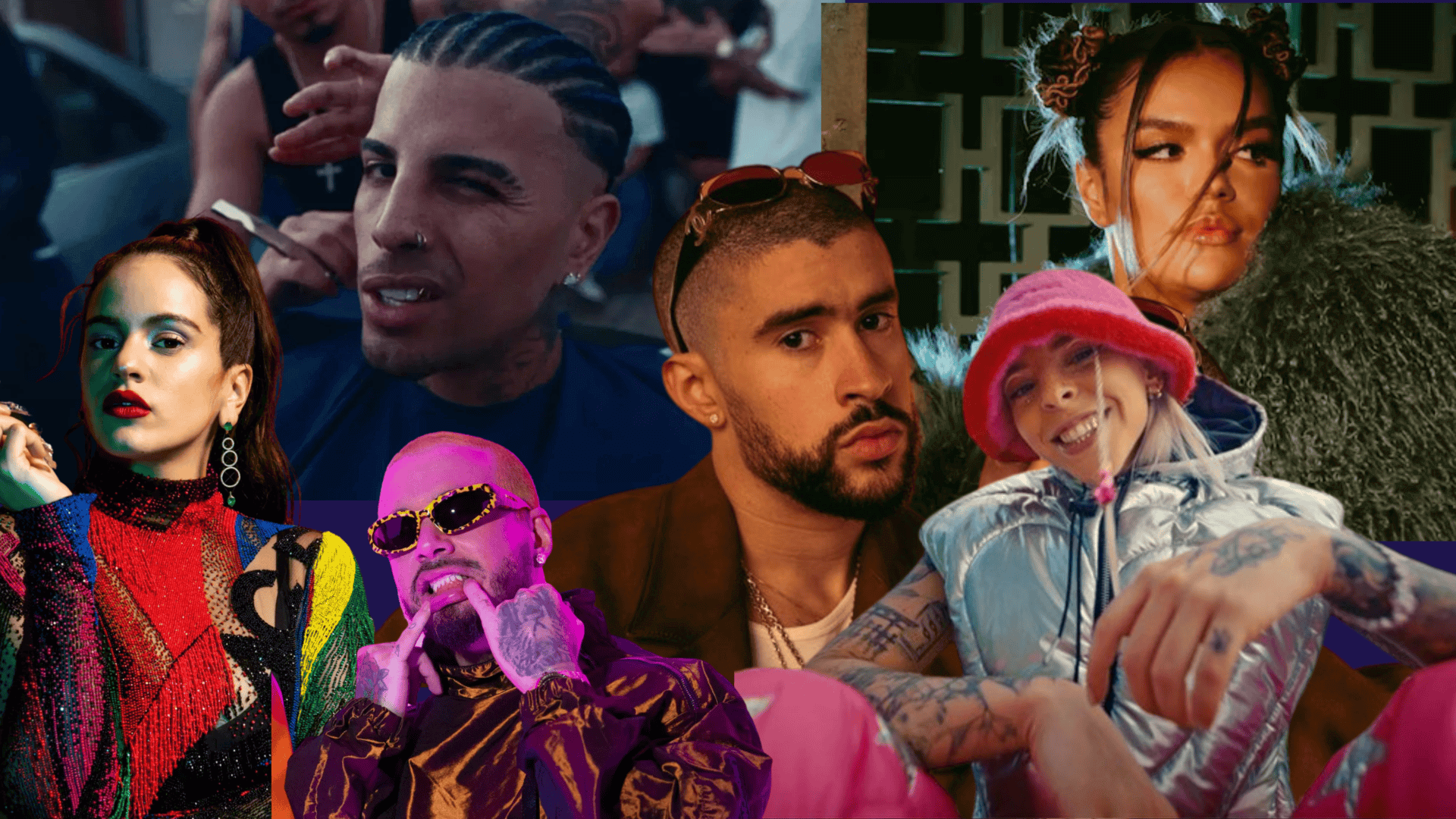
From Bad Bunny singing about “las tetas y el culo te operes”, (“the tits and the arse that you operate”) to Maluma’s lyrics which tell us that his “cuatro babys, siempre (le) dan lo que quier(e), chin*** cuando (él) les dice”, (“four babies, always give (him) what (he) wants, f*** him when he tells them”), there is no doubt that ‘machismo’ is a large part of the culture of reggaeton.
That’s not to say that either of these artists are, to their core, misogynists; to do so would be wrongfully forcing these artists to admit a guilt similar to that which racist law courts attempt to evoke in innocent black people who also happen to be fans of hip hop and drill music.
Nevertheless, far from remaining explicitly political, through its diasporic evolution reggaeton has come to gain popularity mostly as a form of pop culture, distancing modern interpretations of the genre further away from its original political activism and strong racial identity.
For instance, we’ve seen the genre’s appropriation by white singers (it’s “blanqueamiento”) such as when Spanish artist Rosalía was awarded “Urban Song of the Year” at the Latin Grammys in 2019.
Her winning song Con Altura also featured one of Latin America’s biggest reggaeton stars J (José) Balvin who, although originally from Colombia, has been criticised for whitewashing the genre.
Although to his credit, as Annabel Nugent writes in The Independent, rather than give in to the anglicisation of his songs, Balvin “has stuck to his guns; there is not one English song in his repertoire.”
In his 2017 song Mi Gente, Balvin espouses a sense of solidarity with the marginalised in his lyrics as he sings ‘mi música no discrimina a nadié’ (my music doesn’t discriminate against anybody).
Despite the criticism that reggaeton often receives thanks to its machista lyrics and its association with the ‘pijo’ population in Spain, it’s offered more than just a dance beat to many marginalised communities.
The politics of reggaeton
The choice taken by singers like Bad Bunny (real name Benito Antonio Martínez Ocasio) and J Balvin to refuse to sing in English is in itself a political act.
However, on his 2022 album Un Verano Sin Ti, (a summer without you) the former, originally from Puerto Rico, took it further by criticising the blackouts and gentrification impacting his home.
In El Apagón, (the blackout) he even threatens to ‘a Pipo le dé un bofetón’ (give Pipo a slap). ‘Pipo’ was the nickname for the then governor of Puerto Rico, Pedro Pierluisi. Pierluisi failed to minimise energy disruptions during his time in office, as he’d promised the country’s residents.
And in his most recent album, DeBÍ TiRAR MáS FOToS (“I should take more photos”) released earlier this year, Bad Bunny continues to denounce the gentrification of Puerto Rico by comparing it to the United State’s colonisation of Hawaii in the 19th century.
In LO QUE LE PASÓ A HAWAii, he sings about hearing the ‘jíbaro llorando’ (Puerta Rican farmers crying) who ‘no quería irse pa’ Orlando, pero el corrupto lo echó’ (“didn’t want to go to Orlando, but were thrown out by the corrupt”).
While reggaeton certainly isn’t without its problems, it would be unfair to reduce the voracious blend of styles and lyricism, and to overlook the inherent politicism of the genre, from underground Panama in the 90s to Bad Bunny in 2025.
Perhaps most importantly, especially given the tendency of the state to use music tastes to manipulate and incriminate marginalised individuals, we should view reggaeton as a powerful genre of solidarity rather than division.
The sheer diversity of the genre is visible through the female-led reggaeton collective Motivando a la Gyal.
So enjoy reggaeton. Enjoy ‘bailando perreo’ and moving your body to Latin beats. The genre is meant to be a celebration of community and freedom of expression after all. But when you do, remember how lucky you are to be able to.
Remember to respect your fellow reggaeton lovers, and most of all, remember what the music stands for, and how powerful it can be.
Annie (She/Her) – Originally from Newcastle Upon-Tyne, Annie’s writing focuses mostly on class and feminist issues, with a particular interest in sex-culture, identity politics, and current affairs. She studied both her undergraduate and postgraduate degrees in English literature at the University of Manchester. (Yes, it was a lot of reading. No, it didn’t ruin books for her). Follow her on Twitter or Instagram, or feel free to get in touch via email.
Recruiters are debating on TikTok whether it’s okay to bring iced coffee into a job interview, highlighting discrepancies in professional standards between different generations and industries.
Would you bring iced coffee into a job interview?
A debate has been underway on social media this week as Gen Zers and older professionals consider whether it’s ‘inappropriate’ or an unnecessary restriction that makes new, potential employees uneasy.
It began when TikToker @caitlinrecruiter uploaded...
From Substack to explainer TikToks, everyone’s craving thought-provoking content. But is our hankering for brain food a reaction to AI or evidence of a deeper desire for fulfillment in the modern age?
What is a ‘thinkfluencer’? Consider them the talking head in your pocket: a bastion of knowledge on often niche topics, sharing facts and figures with the help of a teeny tiny handheld mic. These types of influencers have...
Rapper and musician Macklemore has been removed from Ed Sheeran’s ‘The Loop’ tour after making comments on stage regarding Palestine. He took to Instagram to explain and defend his position, arguing that ‘there is no neutral position between the oppressor and the oppressed.’
Macklemore has reportedly been dropped from Ed Sheeran’s ‘The Loop’ tour following his comments on Palestine during a recent performance.
https://www.youtube.com/watch?v=UmSErSKL874
He had been the opening act for the...
Researchers from consumer group ‘Which?’ say they’ve successfully listed 10 Downing Street on Booking.com as part of a security test. The property was ‘available’ for two months before being removed.
Fancy a stay on Downing Street? Consider yourself a future Prime Minister and need to trial run your accommodation? We’ve got you covered.
Well, not really, but consumer group ‘Which?’ says it successfully listed 10 Downing Street on popular property and...
We use cookies to ensure that we give you the best experience on our website. If you continue to use this site we will assume that you are happy with it.






























 0 comments