Last year, ocean conservationists grew worried as nations failed to sign the High Seas Treaty for the fifth time. But over the weekend, the UN achieved momentous success – it received signatures from leaders of 193 countries to protect one of the planet’s largest and most precious resources.
It’s the day many were starting to believe would never come.
After more than two decades of negotiating, the UN has finally reached a deal with world leaders to protect the high seas from a history of lawlessness and exploitation.
Late on Saturday evening in New York, the UN conferences’ president Rena Lee announced that a legally binding agreement to protect the high seas had been reached after five rounds of negotiations.
‘The ship has reached the shore,’ she declared proudly.
The historic treaty will be essential to achieve pledges written in the 30×30 pledge, which strives to protect one third of all sea and one third of all land on Earth by 2030.
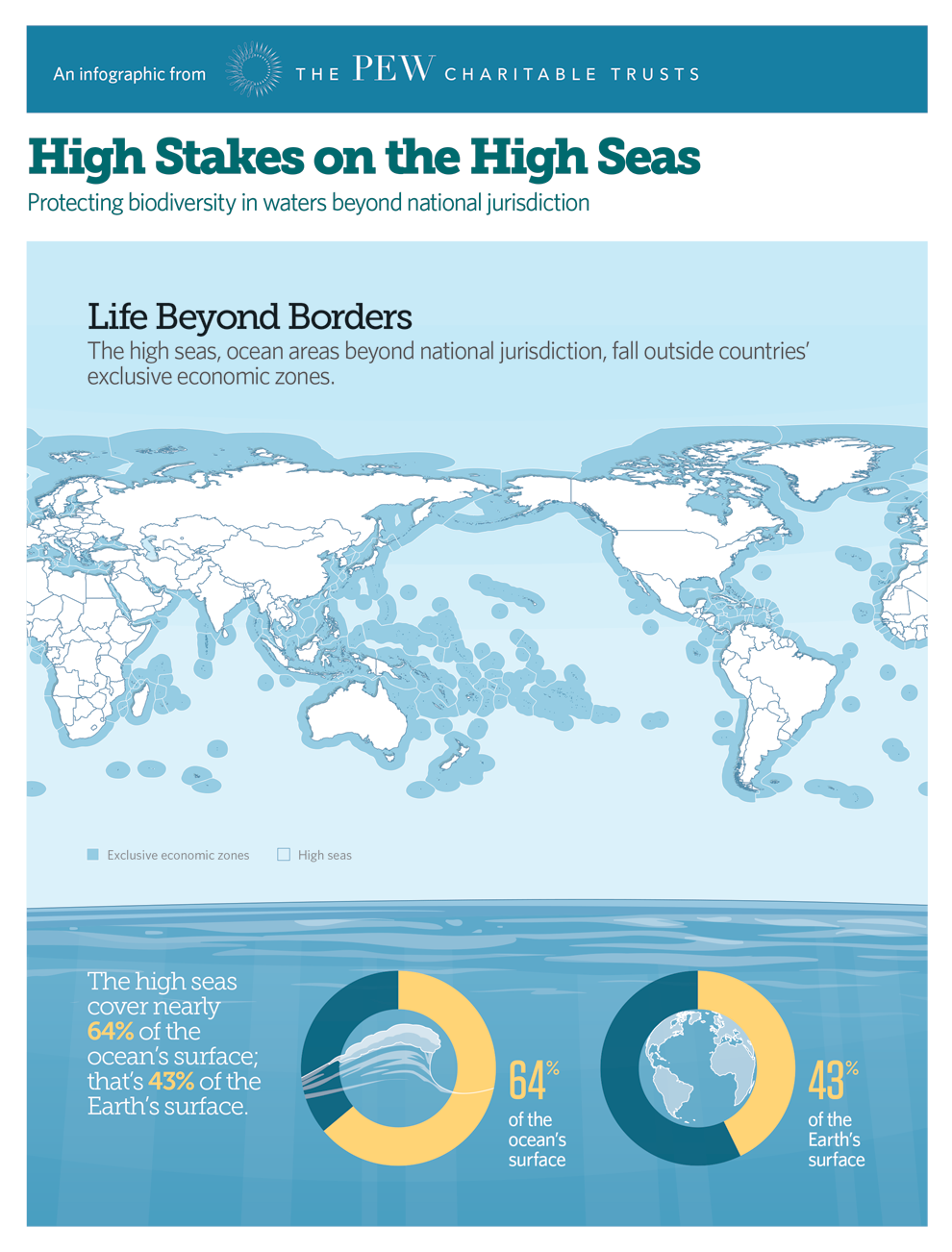
The ‘high seas’ refers to any ocean mass labelled as international waters.
Until now, the high seas have not been subject to any rules or regulations set by national governments, as they technically do not belong to anyone or any nation.
That said, the high seas are incredibly massive. They make up nearly half of the earth’s surface and account for 60 percent of its total ocean mass.
Oceans are also one of our most vital carbon sinks. They produce half of the oxygen we breathe while absorbing 20 percent of global carbon dioxide emissions annually. On top of all this, they capture 90 percent of the heat produced by greenhouse gases.
It’s clear to see how these colossal ocean ecosystems play a significant role in keeping our planetary ecosystem in balance. The UN has branded oceans as the ‘world’s greatest ally against climate change,’ so it’s only right that we enforce measures to protect them.
Why has the treaty taken so long to form?
Negotiations have become further complicated in recent years, as the subject of how to appropriately achieve climate justice has taken centre stage.
As new discoveries are made about the ocean, discussions have overlapped with sensitive political issues, in particular, how to fairly allocate ocean resources between developed and developing nations.
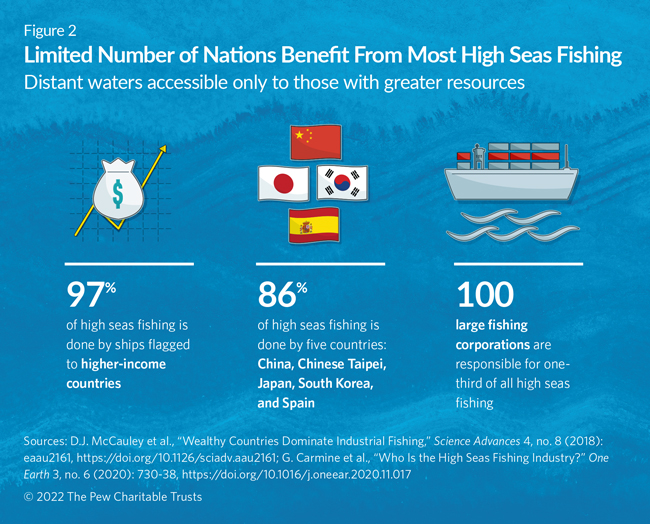
This has been a key motivation for creating the treaty in the first place, as just five countries have managed to scoop up the lion’s share of fish populations from the high seas due to their geographic advantage and access to large fishing boats.
Although conservationists have heralded the signing of the treaty, they warn that there are some areas that need improvement.
For example, certain loopholes could be identified, as countries agreed that existing bodies currently responsible for regulating activities such as fisheries, shipping and deep-sea mining could continue to do so.
At the moment, this part of the treaty enables them to avoid carrying out environmental impact assessments laid out in the texts.
There was also a disagreement between developing and developed nations on how to fairly share marine genetic resources (MGR) and any profits that come from them.
MGR is the genetic material of deep-sea marine sponges, krill, corals, seaweeds, and bacteria. These genetic materials have attracted the attention of both medical and cosmetic companies, which seek to use MGR’s regenerative properties in their products.
No doubt, there will be follow-up meetings on how to properly allocate these resources. It’s likely that the Global North and Global South will have different opinions, which was a key reason the treaty has taken so long to be signed in the first place.
The treaty outlines three additional focuses.
These include area-based management tools, environmental impact assessments, and the transfer of marine technology and building of capacity.
Thanks to the treaty, new restrictions will be placed on the amount of fishing allowed to take place within the high seas. It also addresses marine-based activities such as deep seabed mining, as well as deep sea carbon capture and storage.
It also addresses the safeguarding of marine animals, as well as communities that rely economically on fishing and marine tourism. Until now, efforts to protect marine species such as dolphins, whales, and communities that interact with them have been governed by a muddled collection of legal restrictions.
With the new treaty, there are clear rules that protect both marine and human life in these areas – a huge step forward for ocean conservation and policy which allows us to live in harmony with nature.
The real work is just beginning
With agreements now in place, the journey begins to reach the 30×30 target in only seven years.
The environmental organisation Greenpeace has reported that 11 million sq km of the ocean will have to be put under protection each year until 2030 in order to do so.
With careful and proper implementation, the High Seas Treaty should prevent the collapse of the undersea ecosystem, restore the balance of fish supplies globally, and help to mitigate climate change.
Laura Meller, who campaigns for oceans through Greenpeace said, ‘Countries must formally adopt the treaty and ratify it as quickly as possible to bring it into force, and then deliver the fully protected ocean sanctuaries our planet needs.’
With the High Seas Treaty finally signed, let’s hope we see action implemented immediately. Our most valuable climate ally depends on it.
Deputy Editor & Content Partnership ManagerLondon, UK
I’m Jessica (She/Her). I’m the Deputy Editor & Content Partnership Manager at Thred. Originally from the island of Bermuda, I specialise in writing about ocean health and marine conservation, but you can also find me delving into pop culture, health and wellness, plus sustainability in the beauty and fashion industries. Follow me on Twitter, LinkedIn and drop me some ideas/feedback via email.
Cameroon’s historic win in the Women’s Africa Cup of Nations is much bigger than just another victory in football. The Indomitable Lionesses beat Malawi 3-0 in Rabat, Morocco, securing their first ever WAFCON title.
With Cameroon becoming one of the four nations to have won the continental championship after three final defeats, the team’s triumph is about to inspire many other African girls.
For years, the football world had been perceived...
As conditions aboard the USS Abraham Lincoln raise concerns over soldiers’ mental health, a worrying pattern is emerging of military ambition being placed above the welfare of soldiers.
For nearly nine months, the USS Abraham Lincoln has been stationed near the Middle East, aiding the US in its campaign against Iran.
Though its deployment was initially intended as a seven-month routine mission, its purpose quickly shifted amid rising tensions...
The US congresswoman is sharing her journey to freeze her eggs, and in doing so opening up conversation around the trade-offs professional women face. It’s also driving backlash from the right.
Alexandria Ocasio-Cortez (or AOC as she’s often dubbed by the media) has become a major play for Democratic Socialists in the US.
After campaigning alongside Bernie Sanders and amassing a huge following amongst young voters on social media, AOC has...
President William Ruto proposes full funding of tuition for all students accepted into universities, colleges, and TVET institutions within the country’s national placement process, starting from the September 2026 intake.
The proposal of free tuition is meant to replace the country’s Student-Centred Funding Model, which consists of scholarships, loans, and household contributions based on the needs of a family.
However, it is important to point out that it is still...
We use cookies to ensure that we give you the best experience on our website. If you continue to use this site we will assume that you are happy with it.































 0 comments