As the world turns away from Russian gas, the EU is determined to build up its solar industry. Nations and engineers are already making crucial moves to ensure this happens.
Everybody loves the sunshine, as Roy Ayers once said.
And why wouldn’t we, when it could be our forever solution to relying on environmentally damaging, non-renewable resources for energy?
Following warnings of impending doom from thousands of environmental researchers – just check out our article on the latest IPCC report – the EU has said it will do ‘whatever it takes’ to phase out non-renewable energy in favour of solar power.
Lucky for us, countries such as Greece, France, and Spain have already got a head start on such projects, and one engineer may have just found the answer to solar energy’s biggest weak spot.
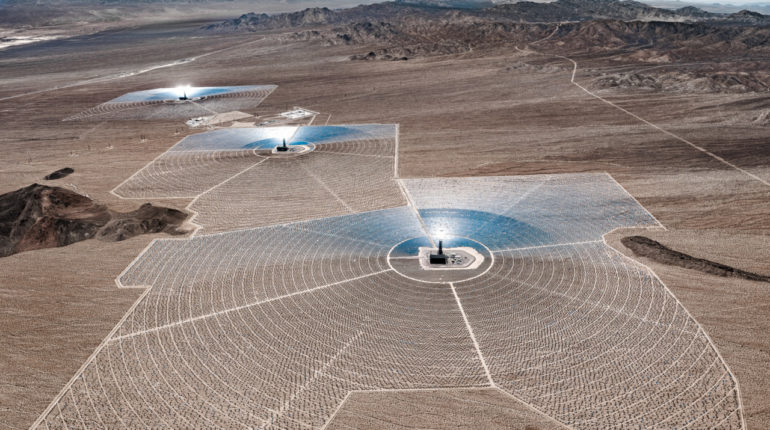
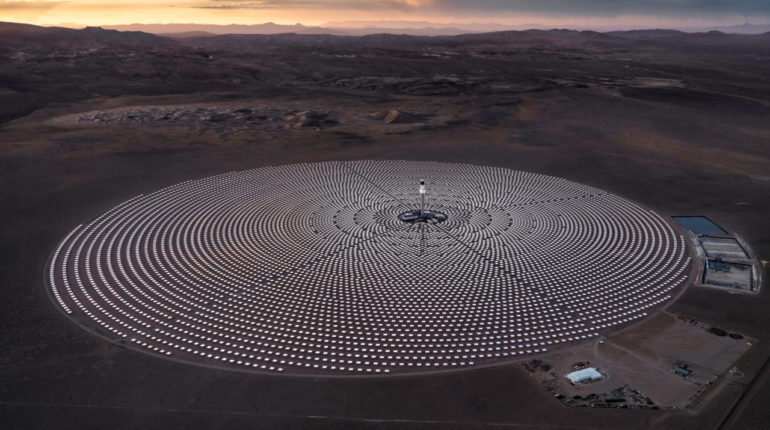
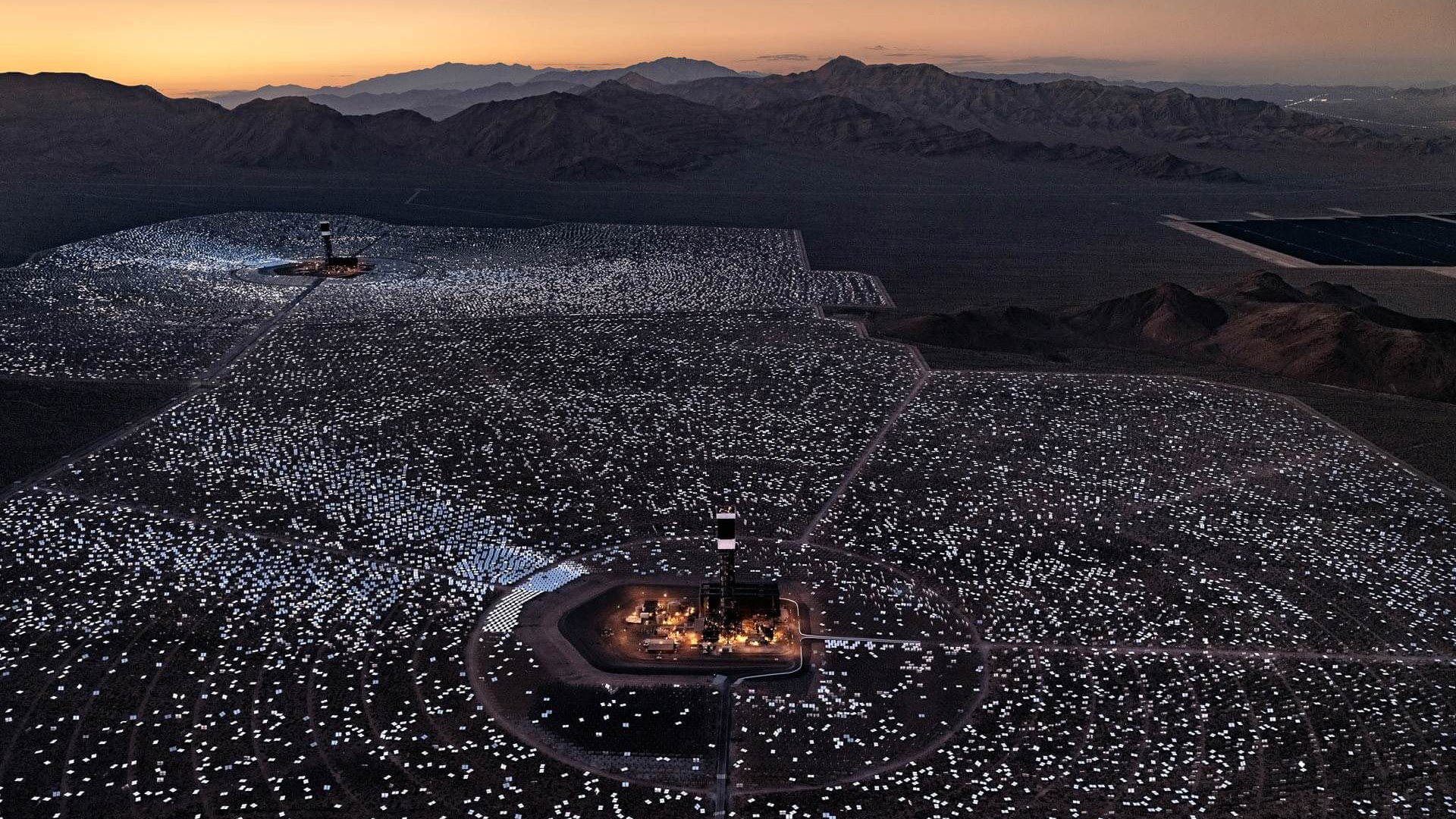
Yesterday, Europe’s largest double-side solar farm was opened in Greece.
Harnessing power from 250 days of sun each year, the plant will provide electricity to 75,000 households and will be connected to the national grid in coming weeks.
Prime Minister Kyriakos Mitsotakis has committed to speeding up permits for further renewable energy projects to ensure Greece continues slashing its environmental impact from its use of imported fossil fuels.
The European nation has already met its 2020 green energy goal by switching to 21.7 percent renewables and is pushing to increase this figure to 35 percent by the end of the decade.
This, Mitsotakis says, will be facilitated by capturing cheap and clean energy from the sun, the wind, and the water. Go Greece!
Perfect news, I’d say, since an independent thinktank called Ember has said that if the expansion rate of renewable energy sectors continues at its current global rate, we will manage to secure our safety from 1.5C planetary heating by 2030.
Credit: Tom Hegen
Future solar panels might not require visible sunlight
The idea that we’ll one day be utilising solar panels that don’t need direct sunlight seems a little counter intuitive at first.
But Carvey Ehren Maige, a student at Mapua University in Manila, has designed a new type of panel called AuREUS that absorbs unseen ultraviolet light from sun hidden behind dense cloud cover.
The panels are multi-coloured, due to their use luminescent particles from fruit and vegetable waste. They can be placed on the windows and walls of homes and businesses to generate power for the entire building.
For European nations that don’t get as much sun as Greece or Spain, these panels could come in handy to meet current green targets. The panels are now being trialled at a hospital in the Philippines which regularly experiences power outages during storms.
You’d think a war would side-line concerns over climate change, but because Russia is one of the world’s biggest gas suppliers, countries have been forced to scale up renewables in order to stop financing Russia’s advances.
By the sounds of it, the EU is more motivated than ever to make a serious change. We can only hope this momentum continues well into the next decade.
Deputy Editor & Content Partnership ManagerLondon, UK
I’m Jessica (She/Her). I’m the Deputy Editor & Content Partnership Manager at Thred. Originally from the island of Bermuda, I specialise in writing about ocean health and marine conservation, but you can also find me delving into pop culture, health and wellness, plus sustainability in the beauty and fashion industries. Follow me on Twitter, LinkedIn and drop me some ideas/feedback via email.
With America’s space ambitions only continuing to grow, Trump is turning his focus to the industry’s workforce that could keep the US ahead of adversaries like China.
In both his terms in office, aside from immigration and anti-wokeness, President Donald Trump’s focus has increasingly turned towards the space front. In 2019, he established the US Space Force (USSF), emphasising the growing importance of space to national security.
But this interest...
People are flocking to the platform as online alternatives replace mainstream media. But Gen Z already knew that.
Which chat show host has the monopoly on late-night entertainment? Ask anyone under the age of 35 and they’ll tell you it's not a TV presenter, but a YouTuber.
Amelia Dimoldenberg, the mastermind behind breakout show Chicken Shop Date, has said her YouTube show is finally being taken seriously in the industry, as...
Ukrainian studio 4A Games has endured arguably the worst set of circumstances a game development cycle has ever seen. The war with Russia not only made work on Metro 2039 incredibly difficult, but also fundamentally changed the game the team wanted to make.
There’s something uniquely grim about developing a post-apocalyptic game while occasionally having to stop and hunker down because of real-life air-raid sirens.
That was the reality endured by...
After months of escalating concerns that AI music is flooding streaming platforms like Spotify, the Australian Recording Industry Association (ARIA) has said it will be banning any tracks that are not human-made from the charts.
The Australian Recording Industry Association (ARIA) has announced that songs made predominantly using AI tools are to be banned from the charts.
Starting immediately, all songs must be ‘substantially human-made’ to count in the chart listings....
We use cookies to ensure that we give you the best experience on our website. If you continue to use this site we will assume that you are happy with it.































 0 comments