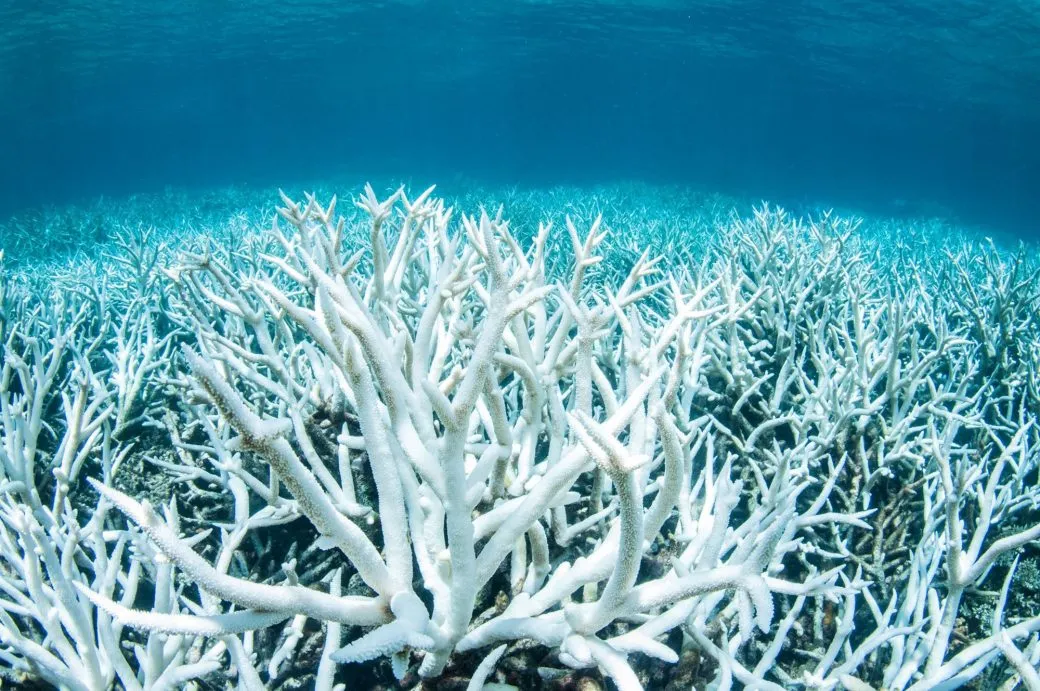
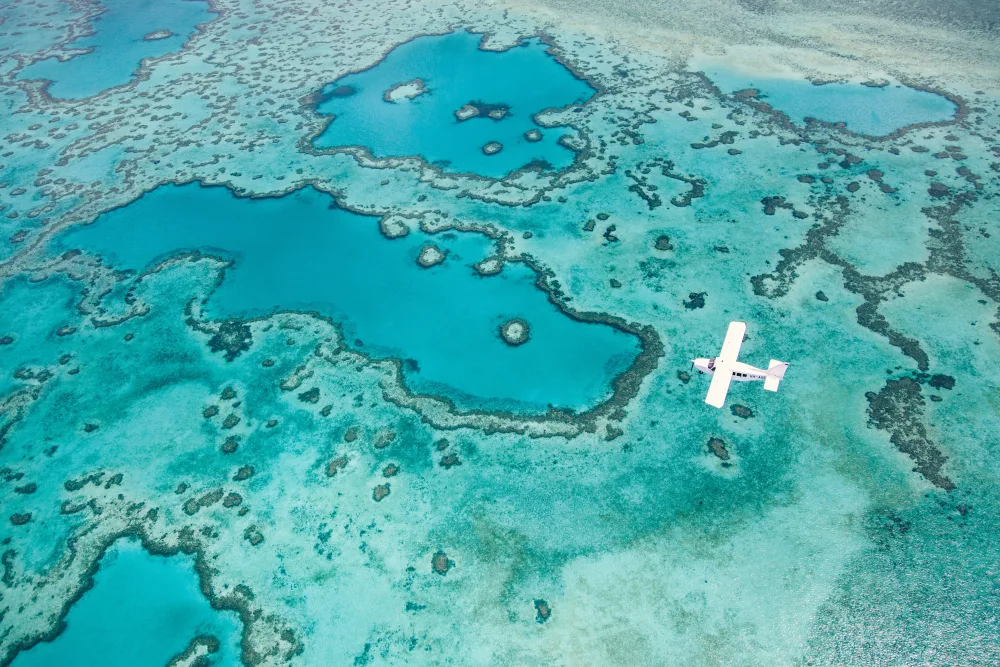
Last year, scientists said that Australia’s Great Barrier Reef couldn’t survive another bleaching event. According to experts in the field, it’s happening right now.
After the mass coral bleaching event of 2020, marine biologists said that another coral bleaching event could cause irreversible, long-term damage to the Great Barrier Reef.
Scientists had hoped that cooler temperatures caused by La Niña conditions would prevent it from happening on a wide scale this year, giving the fragile corals enough time to recover and regenerate.
Unfortunately, their hopes were shattered in recent days as experts in the field of marine biology and reef research began reporting that the sixth mass bleaching event has begun.
After learning that sea surface temperatures were measured at ‘above average’ with ‘low to moderate bleaching’ occurring in several areas, UNESCO sent two scientists on a ten-day long mission to the heritage site to monitor the status and health of the reef.
Still in progress, the monitoring project was requested by the Morrison government which had previously lobbied against the UN’s scientific advice to place the Great Barrier Reef on the list of ‘in danger’ world heritage sites.
The Morrison government has also unsuccessfully tried to stop the UN climate report from stating that the reef is in crisis. It believes that ‘widespread recovery of coral at key sites’ are a demonstration that the reef is not too far gone and should not be classified at this level.
This partial recovery has been made possible primarily by fast-growing species of coral, however many experts are wary that these types of coral are especially susceptible to storms, heat, and reef-dwelling animals that feed on them.
And things have started looking bleak. A professor from the James Cook University, Professor Terry Hughes said the current bleaching event is ‘not mild or local’ with ‘strong bleaching all along the reef’.
Experts noticed the corals losing colour around December but had assumed all was well when they bounced back, regaining colour over the last two months. However, in recent weeks a ‘flood of reports from the field’ have raised that the situation is worsening.
UNESCO’s team will not be able to confirm the extent of damage caused by the bleaching event until the investigation is finished at the end of this week.
Unfortunately, the public will have to wait to hear the details.
Official reports from the mission won’t be released until May, shortly before the World Heritage Committee comes together for a scheduled meeting in June.
There have been five mass bleaching events in the years between 1998 and 2020, with Professor Terry Hughes saying that at least 98 percent of the corals making up the Great Barrier Reef have bleached at least once.
Perhaps knowing this brings hope that recovery is possible, especially as Australia ventures into cooler months ahead. For now, knowing the status of the reef is a waiting game.
In the meantime, we’ll hold onto the positive news that the Morrison government has put forward $1billion in funding over the next decade, specifically for local reef conservation efforts.
Deputy Editor & Content Partnership ManagerLondon, UK
I’m Jessica (She/Her). I’m the Deputy Editor & Content Partnership Manager at Thred. Originally from the island of Bermuda, I specialise in writing about ocean health and marine conservation, but you can also find me delving into pop culture, health and wellness, plus sustainability in the beauty and fashion industries. Follow me on Twitter, LinkedIn and drop me some ideas/feedback via email.
Experts suggest the disappearance of London’s iconic red buses will hit the poorest the hardest.
Like most major cities, London is built on a sprawling public transport system. Boasting the tube, black cabs and an iconic route of red bus services, England’s capital is one of the most famous and efficient transport hubs in the world. But experts warn it’s at risk of rapid decline.
Outside of zone 1, red buses...
Alleged victims will be granted new measures including private entrances and waiting rooms, along with specialist ‘trauma-enforced training’ for court staff.
Andy Burnham has announced the rollout of new specialist rape courts in England and Wales, building on measures that are currently only available in limited locations.
At least one courtroom in every Crown Court will be dedicated to handling rape and cases involving serious sexual offences over the next...
From cutting student loans to stopping small boats, Reform UK used its 2026 conference to tell Britain what its first 100 days in government could look like. But behind the pledges, protests and political drama, what did the conference actually mean for Gen Z?
If there was one message Reform UK wanted people to leave Birmingham with, it was this: we are preparing for government.
Its 2026 annual conference at Birmingham’s...
The value of personal attractiveness is established much younger than you might think. But what does this mean for girls growing up in an image-obsessed era?
We check our appearance around 38 times per day. That pastime was once reserved for mirrors, and now extends to every reflective surface in our vicinity. Phone screens are the obvious preference – whether via their front-facing cameras or shiny black lock screens.
Social media...
We use cookies to ensure that we give you the best experience on our website. If you continue to use this site we will assume that you are happy with it.






























 0 comments