A company called Nueva Pescacnova has just invested €65 million to build a gigantic octopus farm in the Spanish port of Las Palmas in the Canary Islands.
With all that’s happening in the human realm at the moment, it might be a little difficult to consider why the welfare of an eight-legged sea creature would be something worth lobbying for.
However, scientists and environmentalists worldwide are horrified to learn that a Spanish company called Nueva Pescanova is launching the world’s first octopus farm, with the goal of serving them up on dinner plates around the world.
You may remember that back in November, UK MPs won the fight to categorise octopuses as ‘sentient beings,’ or in simplified terms: living, conscious organisms that are capable of perceiving and feeling – just as humans do.
Despite this deepened understanding of how octopuses behave, learn, interact, and feel both pain and pleasure, the company has proposed its plan to produce 3,000 tons of octopus annually, beginning at the start of this summer.
Scientists and animal experts around the world are labelling the farm ‘an environmental disaster.’
Research and evidence have shown that octopuses are extremely intelligent beings. Octopuses have over 500 million neurons, many of which reside in their information-absorbing tentacles, making them as cognisent as a dog or a three-year-old human being.
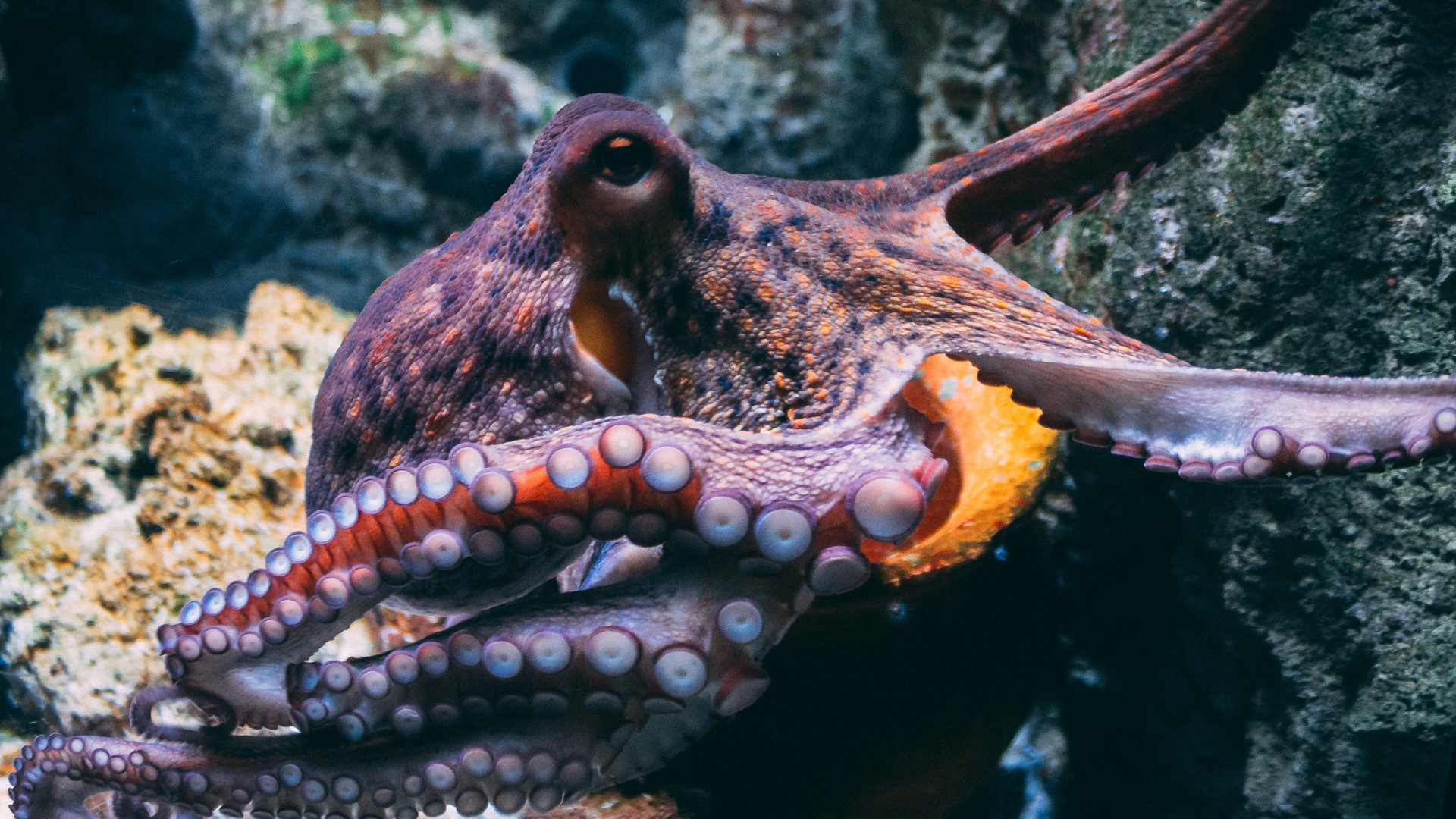
They adapt to their surroundings through interaction, exhibiting shape-shifting capability, changing the colour of their bodies to camouflage, and collecting items from the ocean floor like shells and coconuts to hide from predators.
Despite their curious and inquisitive nature, they are solitary, shy animals. When unwillingly placed together in captivity, octopuses have become highly aggressive, eating each other or carrying out self-mutilation.
Experts believe that large-scale farming of octopuses in enclosed spaces will certainly result in a high mortality rate. Making matters worse, the Spanish company has refused to disclose the size of the tanks, what the animals will be fed, or how they will be killed.
At present, there is believed to be no ‘humane method’ to kill an octopus. In areas of Europe where appetites for octopus are high, most are either clubbed to death, boiled alive, suffocated, or frozen.
What does legislation say?
The UK’s animal welfare laws were only expanded to include octopuses once the nation left the EU. If Brexit was good for anything, I guess we can at least count protecting this species as a victory.
According to The European Union’s animal welfare laws, though, octopuses still aren’t protected as they are considered invertebrates due to their skeleton-less bodies.
International groups of researchers are condemning current plans to farm, with environmental groups urging governments of other nations to join in convincing Spain to disallow the project.
It’s true, Spain is looking to refine and strengthen its current animal protection laws, but current modifications have yet to include stronger protection for octopuses.
In light of this, the Nueva Pescanova isn’t doing anything wrong legally. The question of whether this is ethical, though, will likely be answered depending on if that person proceeds to benefit from octopus farming.
Meeting the market demand for octopus
The global value of the octopus trade has doubled over the last decade and is now worth some £2 billion. It’s a lucrative industry, one responsible for causing dwindling populations of the animal off the coasts of Mexico, the Mediterranean, and Asia.
Each year, an estimated 350,000 octopuses are now captured from the wild – a ten-fold increase in the last seventy years – though it’s possible the number could be much higher.
Of course, humans have domesticated everything from fruit to vegetables and livestock. In striving to be more sustainable, aquafarming octopuses seems like a suitable solution which helps to meet demands without depleting wild populations.
But as we stare directly in the face of humanity’s most widespread resource and environmental crisis, we should know by now that industrial farming hasn’t been in our best interest.
The head of the World Wildlife Foundation has said that to farm octopuses ethically, companies would need to create an environment almost identical to their natural habitat. This, he has said, would ‘likely be too expensive to be profitable.’
Today, aquaculture industry has become so popular that half of the seafood we consume is sourced from fish farms. If you haven’t, do read this piece on salmon farming – I’m sure you’ll never look at your sushi order the same way again.
These existing aqua-farms have proven that this aquaculture offers little beyond disease ridden environments, horrible quality of life for the animals, and less-than-nutritious protein for humans.
Despite our own protective laws and calls from scientists and environmentalists, the UK government has yet to speak up against the plans for octopus farming. Without neighboring contestants, we’re still unsure where the Spanish government will land on this matter.
But if you needed your own stronger convincing for stopping octopus farming ventures before they start, I’d recommend setting aside an hour for Netflix’s Oscar award-winning documentary My Octopus Teacher.
Deputy Editor & Content Partnership ManagerLondon, UK
I’m Jessica (She/Her). I’m the Deputy Editor & Content Partnership Manager at Thred. Originally from the island of Bermuda, I specialise in writing about ocean health and marine conservation, but you can also find me delving into pop culture, health and wellness, plus sustainability in the beauty and fashion industries. Follow me on Twitter, LinkedIn and drop me some ideas/feedback via email.
Cameroon’s historic win in the Women’s Africa Cup of Nations is much bigger than just another victory in football. The Indomitable Lionesses beat Malawi 3-0 in Rabat, Morocco, securing their first ever WAFCON title.
With Cameroon becoming one of the four nations to have won the continental championship after three final defeats, the team’s triumph is about to inspire many other African girls.
For years, the football world had been perceived...
As conditions aboard the USS Abraham Lincoln raise concerns over soldiers’ mental health, a worrying pattern is emerging of military ambition being placed above the welfare of soldiers.
For nearly nine months, the USS Abraham Lincoln has been stationed near the Middle East, aiding the US in its campaign against Iran.
Though its deployment was initially intended as a seven-month routine mission, its purpose quickly shifted amid rising tensions...
The US congresswoman is sharing her journey to freeze her eggs, and in doing so opening up conversation around the trade-offs professional women face. It’s also driving backlash from the right.
Alexandria Ocasio-Cortez (or AOC as she’s often dubbed by the media) has become a major play for Democratic Socialists in the US.
After campaigning alongside Bernie Sanders and amassing a huge following amongst young voters on social media, AOC has...
President William Ruto proposes full funding of tuition for all students accepted into universities, colleges, and TVET institutions within the country’s national placement process, starting from the September 2026 intake.
The proposal of free tuition is meant to replace the country’s Student-Centred Funding Model, which consists of scholarships, loans, and household contributions based on the needs of a family.
However, it is important to point out that it is still...
We use cookies to ensure that we give you the best experience on our website. If you continue to use this site we will assume that you are happy with it.
































 0 comments