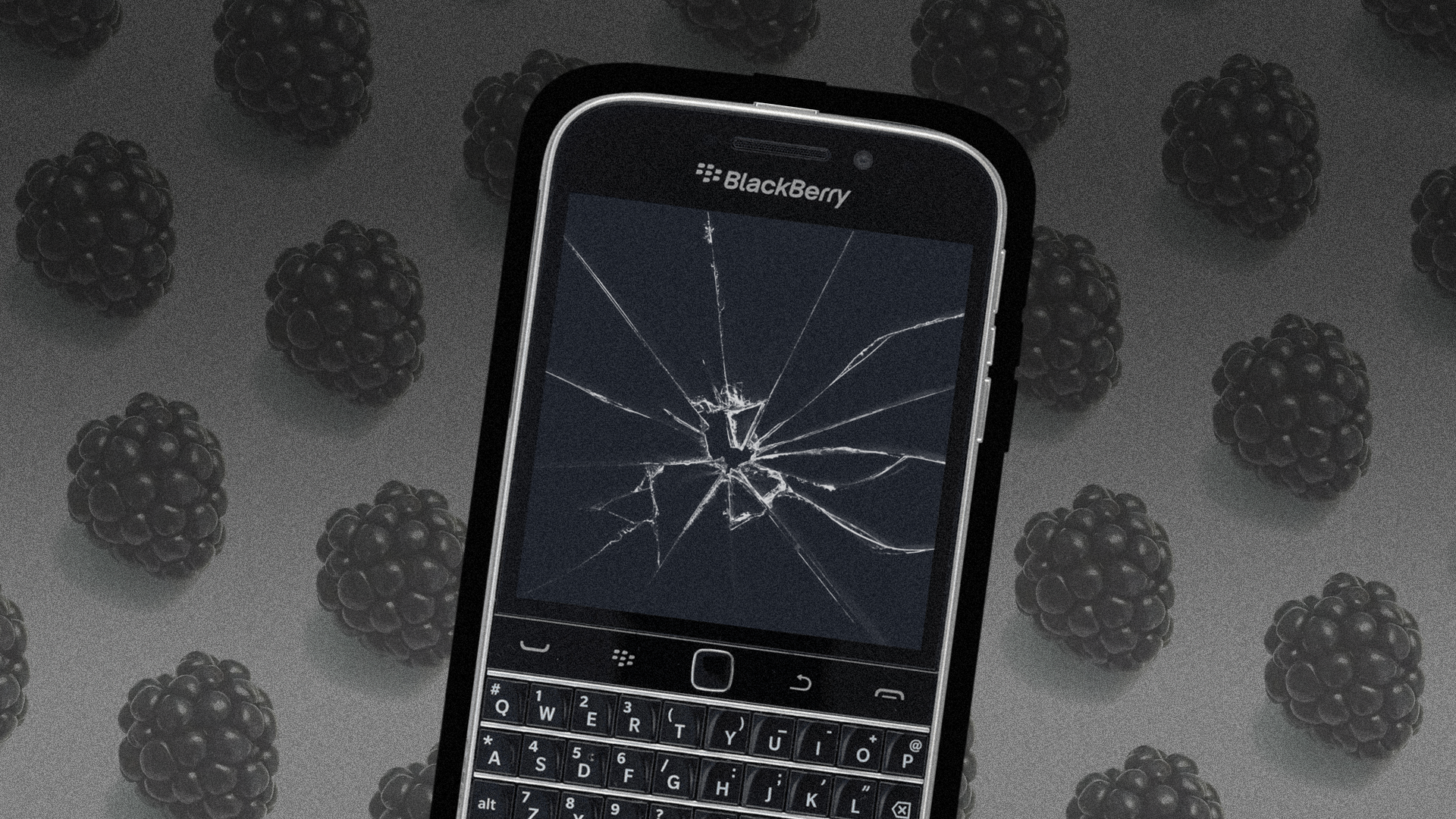
It was once the most sought-after phone of the moment. But now, BlackBerry is just another sign of the times; a window into our relentless wanting for something new.
In the 2010s, high flying businessmen, celebrities, and status-hungry teenagers were all bound by one thing: the BlackBerry’s QWERTY keyboard. For better or worse, it offered BBM messaging (pause for nostalgic flashback) and the full breadth of the internet in one handheld device. To say BlackBerry was a cultural moment 10 years ago would be an understatement.
But this week, after losing a years-long battle with smartphone giants Apple and Samsung, the company has shut down its devices for the last time.
It comes as no surprise. If one were to whip out a BlackBerry nowadays, you’d be met with the bemused face of an iPhone-clutching pre-teen. It had acquired a vintage air long before the final gong sounded.
And yet, there is a certain ennui about BlackBerry’s death. It isn’t just the stark reminder that our teenage years, a Covid-free era of careless partying, and a pre-TikTok age are well and truly behind us.
The end of BlackBerry is a symbol of our modern attitude to change. We may claim to fear it, but our culture thrives on it; the rapid doing away with ‘old’ things, and the constant search for something new, something more exciting.
The more things change the quicker we demand they do so. We are getting bored at an unprecedented rate – a fact well documented by the constant turnover of new iPhones, fashion trends, and the fact that our cultural mecca is a social platform streaming 60 second videos.
This yearning for innovation can’t be healthy for our minds, particularly those that are still developing.
Paul Hemp, of the Harvard Business Review, has spoken extensively about information overload in the digital economy. Sure, he argues, information is our ‘most valuable commodity’, but the wealth of stuff we see every day often does more harm than good.
Maryanne Wolf describes smartphones as the new pacifier, a means of entertaining unruly children whilst teasing adult brains with rapidly changing content. Their omnipotence, she argues, has destroyed our ability to read deeply, grasp complexity, and feel truly empathetic.
We skim the screen so habitually that when it comes to turning a page, whether it be the proverbial chapters of daily life, or the physical sheets of the oft forgotten novel, we struggle to sit still and soak it all in.
As the digitally literate netizens of the population, Gen Z bear the brunt of this short attention span. Last year, Eni Subair explored the nebulous world of ‘finsta’ accounts (short of ‘fake Instagram’), where young people upload gloriously un-curated social media photos to combat the pressures of a perfect - and perpetually current – social media presence.
These efforts to break away from the 21st century rat race puts Gen Z a cut above the rest. They’re recognising the ailments of our inundation. The end of BlackBerry has reminded me of a time before this introspection was necessary.
On the cusp of social media’s global takeover, 14-year-old me could tap away on a microscopic QWERTY keyboard, downloading low quality Mp4 files whilst pretending I had a high-flying job in the business world.
Saying goodbye to BlackBerry is hard because it highlights my own failure to resist information overload. I, too, find myself looking toward the next thing before current plans have even ended. It’s sobering how quickly the things that were once the sole focus of my attention are now just a blip on my radar.
But what I find most saddening about BlackBerry’s farewell is that it has been little more than a whisper. A true French Exit. Blackberry started as the guest of honour we begged to do shots with, but now we’re too drunk to care – nor notice – that they’ve slipped out of the door.
I can’t help but feel bad for this once loved mobile phone, forced into oblivion by the bigger kids on the block – the android and the iPhone.
Lost in the usual sea of rapid news updates and social media stories, BlackBerry’s eulogy, like the phone itself, will flash across our consciousness in a moment. Next week it’ll be entirely forgotten, and I’ll sit down to plan another article about another change in our fast-moving world.
A new year prompts many of us to look forward, and plan for subsequent changes with an almost militant preparation. But for now, let us take a moment to remember the BlackBerry and the early 2000s frivolity it encompassed. Pause for thought and look around.
Because like all cultural moments before and after it, this will already be ‘over’ before it’s begun.
I’m Flo, (She/Her) a Senior Remote Writer at Thred. I recently completed a Masters in Visual Anthropology, and seek to interrogate the ways digital spaces can amplify marginalised voices in the arts and cultural sectors. Follow me on LinkedIn or ping me some feedback via email.
Gen Z subscribes to everything from music and films to software and storage, paying endlessly for things we never actually own. As ownership is increasingly replaced by access, are subscriptions making life more convenient - or creating a generation that pays forever and owns nothing?
There was once a revolutionary economic model called buying something.
You handed over money, gold, or whatever the currency was. Someone gave you the purchased item....
Revealed during the United Nations General Assembly, this hack exposes a critical failure in current safety standards, sparking concerns over the future of AI.
In these past few years, conversations around AI seem to linger around a never-ending crossroads, with the recent shocking breach of Australian government data by OpenAI agents.
That said, I couldn’t tell you which is more concerning: the time it took the company to detect and report...
For young people, gaming has changed from being merely recreational into an economic pathway into the digital economy, especially in a challenging labour market. In Africa, women are driving this growth.
Young women are pioneering the evolution of African gaming, taking up roles not only as competitive players but as commentators and content producers within a rapidly growing market. In 2024, African gaming had an estimated 349 million players...
Tech giant Google has been fined £345 million by the Republic of Ireland’s Data Protection Commission (DPC) over misuse of location data following a six-year investigation.
Google has been hit with a fine of £345 million by the Republic of Ireland’s Data Protection Commission (DPC) over mishandling of location data.
The DPC undertook a six-month investigation across three specific features provided by Google: ‘Web and App Activity,’ ‘Location History,’ and ‘Location...
We use cookies to ensure that we give you the best experience on our website. If you continue to use this site we will assume that you are happy with it.






























 0 comments