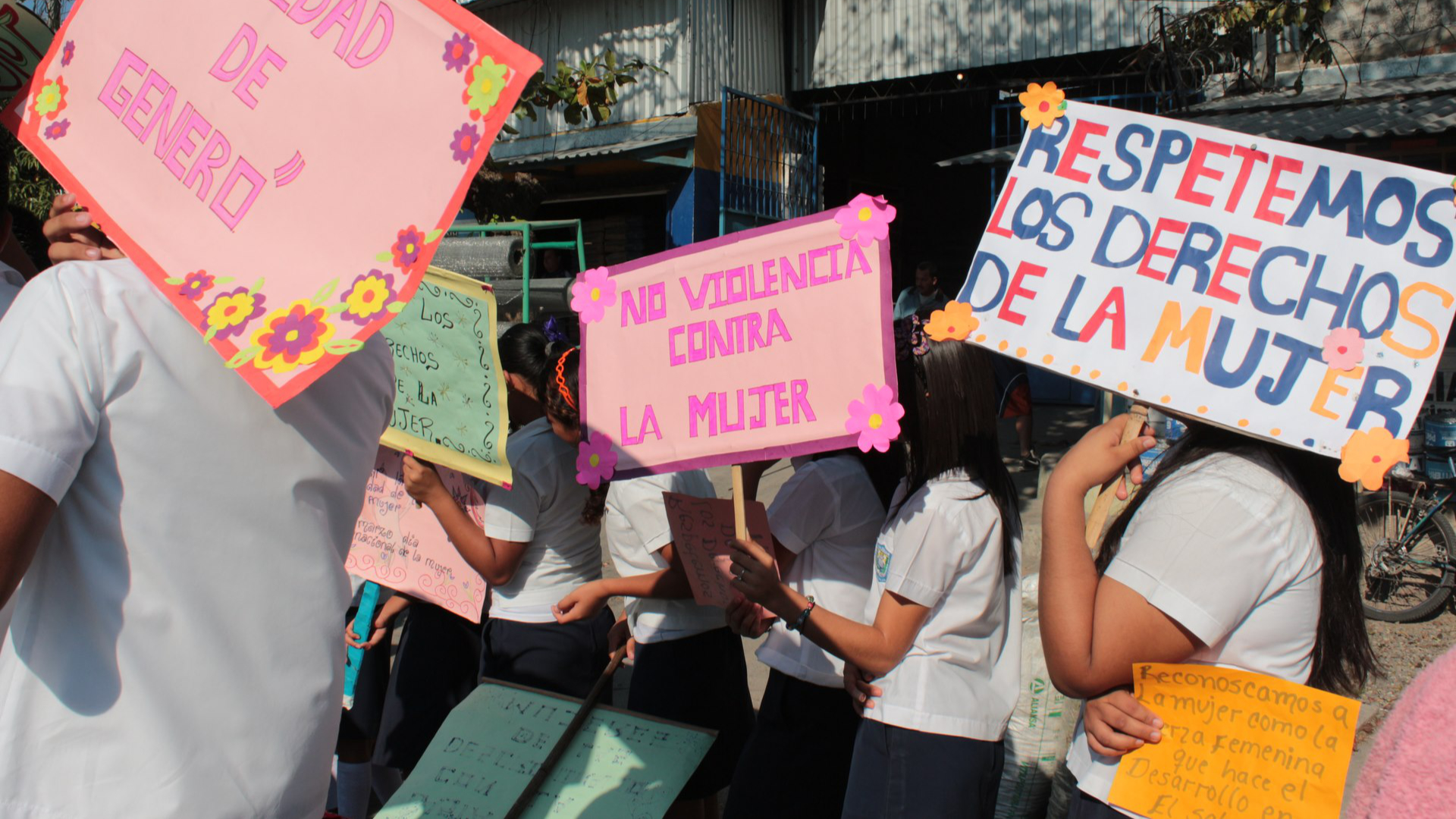
La Siguata, which translates to ‘the woman’ in Uto-Aztecan Nahuatl language, is a safe haven for those campaigning for equality in one of the most dangerous places on Earth.
No matter where you are in the world, committing to a life of activism requires going against the grain, challenging the status quo, and taking action that has potential to frustrate local communities and policy makers.
But in certain parts of Central America, where political instability and social tensions are high, fighting for equality has cost a great number of women their lives.
The situation is particularly bad in Honduras, where a presence of structural and patriarchal violence has become engrained into society and normalised to the point of invisibility. In 2016 alone, more than 450 women were victims of femicide – but 95 percent of cases were not formally investigated by police.
As officials have continued to fail the community, women are taking matters into their own hands. Several groups have banded together to establish safe spaces for women activists who are campaigning on the front lines.
Opening its doors early last year, La Siguata is sanctuary which offers ten day retreats for women who are campaigning for stronger gender and environmental protection laws in the region.
Located in the mountains above the capital of Tegucigalpa, the sanctuary is surrounded by fruit trees, flowers, and lush foliage. The natural environment offers a chance for guests to disconnect from the harsh concrete city it overlooks.
Since 2009, the human rights situation in Honduras has ‘deteriorated drastically’ and it has been labelled ‘one of the most dangerous places on Earth to be a woman’. As a result, activists fighting for an end to femicide and increased gender equality frequently experience burnout and feelings of endangerment.
La Siguata offers a protective environment for women to heal from trauma and exhaustion that comes with being an activist on the front lines. Visitors are offered holistic approaches to achieving spiritual and physical restoration, so they can return to their work with a renewed sense of strength.
Throughout their stay at the centre, women are invited to participate in artistic and various spiritual activities, both collaboratively and individually. They are also encouraged to spend time relaxing in hammocks and enjoying each other’s company around a firepit.
Upon the completion of their stay, women are given a customised self-care guide to take home with them. La Siguata is just one of a handful of these sanctuaries in Honduras, protecting members of dozens of women’s rights groups in the county.
Honduras has seen some improvements over the last decade, with rates of violence dropping by half. Despite this, the nation still has one of the highest homicide rates in the world.
In day-to-day life, a sexist, machismo culture still persists, with men twice as likely to be employed than women. When women are hired, they are paid far less than their male colleagues, leading to difficulties in gaining financial independence. It is also worth mentioning that basic healthcare for women, like access birth control and a right to have an abortion have been restricted completely.
Sanctuaries such as La Siguata have become essential for women to feel empowered and protected in Honduras. Their motto, ‘you for me, me for you,’ signifies the guiding principle of the centre: solidarity.
These spaces – and the work of the women who run and visit them – are a key component for creating the kind of safe and secure future women in Honduras deserve.
Deputy Editor & Content Partnership ManagerLondon, UK
I’m Jessica (She/Her). I’m the Deputy Editor & Content Partnership Manager at Thred. Originally from the island of Bermuda, I specialise in writing about ocean health and marine conservation, but you can also find me delving into pop culture, health and wellness, plus sustainability in the beauty and fashion industries. Follow me on Twitter, LinkedIn and drop me some ideas/feedback via email.
Alleged victims will be granted new measures including private entrances and waiting rooms, along with specialist ‘trauma-enforced training’ for court staff.
Andy Burnham has announced the rollout of new specialist rape courts in England and Wales, building on measures that are currently only available in limited locations.
At least one courtroom in every Crown Court will be dedicated to handling rape and cases involving serious sexual offences over the next...
From cutting student loans to stopping small boats, Reform UK used its 2026 conference to tell Britain what its first 100 days in government could look like. But behind the pledges, protests and political drama, what did the conference actually mean for Gen Z?
If there was one message Reform UK wanted people to leave Birmingham with, it was this: we are preparing for government.
Its 2026 annual conference at Birmingham’s...
The value of personal attractiveness is established much younger than you might think. But what does this mean for girls growing up in an image-obsessed era?
We check our appearance around 38 times per day. That pastime was once reserved for mirrors, and now extends to every reflective surface in our vicinity. Phone screens are the obvious preference – whether via their front-facing cameras or shiny black lock screens.
Social media...
Records that were long withheld by the city now reveal that the officials knew about Ground Zero’s toxic air in the years following 9/11 and chose to mislead the public.
On September 11th, 2001, Americans were initially met with confusion when the North tower was first hit. Minutes later, when the second plane struck the South Tower, that confusion quickly turned into fear.
While the collapse of both towers would reshape...
We use cookies to ensure that we give you the best experience on our website. If you continue to use this site we will assume that you are happy with it.






























 0 comments