World leaders have referenced saving the planet for ‘our children and our children’s children’ many times at COP already. But are young people being adequately included at the summit?
Today’s youth are the least to blame for the climate crisis, but without drastic changes, we will be the ones left to deal with the consequences of a warmer, more polluted world.
The average age of leaders attending COP26 is over 60, meaning that even if we’re successful in reaching net zero targets by 2050, most will be on their way out of here by that time – if they are alive at all.
Putting it mildly, it’s been difficult to accept that the people negotiating terms for our future likely won’t be around to see it. This has undoubtedly been the driver of apathy amongst leaders when putting climate change solutions into action.
And although the Scottish government invested £950k to involve children and young people in conversations on COP Fridays, many young activists are struggling to get into the event because of issues with visas, Covid restrictions, or costs of accommodation and travel in Glasgow which have risen ‘astronomically’ during the event.
It’s only right that young people make their voices be heard by any means necessary.
Despite warnings of no-entry from port authorities, a group of activists from Namibia, Uganda, Mexico, and Bangladesh boarded Greenpeace’s ship The Rainbow Warrior, and sailed along the River Clyde toward the port nearest to COP26.
The group has been in online contact for two years but had never met in person. Maria Reyes, 19, from Mexico said: ‘Even if it’s the first time we’ve met, there’s something that’s connecting us. It’s powerful for us coming from the most affected regions because we live it.’
Twenty-four-year-old Namibian activist Jakapita Kandaga echoed the same sentiment, saying: ‘We’re tired of not being listened to and we’re tired of being ignored. We are from the most affected areas, and you cannot discuss and decide on our futures without us being present.’
Scotland Police overruled port authorities’ warnings and allowed the boat to continue to its destination, in a move that the young activists called ‘important’ and ‘positive.’
Taking a new tone
But getting into the ‘exclusive zone’ where official talks are taking place has proved difficult.
Young activists have expressed feeling ‘tokenised’ by leaders, without being given a prominent voice in decision making and negotiation processes.
We know it’s not because young people aren’t informed enough about climate to make demands. One of the key requests of young activists is for politicians to stop ignoring the science, which has driven youth passion surrounding climate matters.
Greta Thunberg, who wasn’t officially invited to the event, showed up anyway with a fiery message for leaders in attendance, saying: ‘you can shove your climate crisis up your arse.’
In recent months, Miss Thunberg has expressed her disdain for COP events at liberty, noting that most discussions have never really materialised into substantial action.
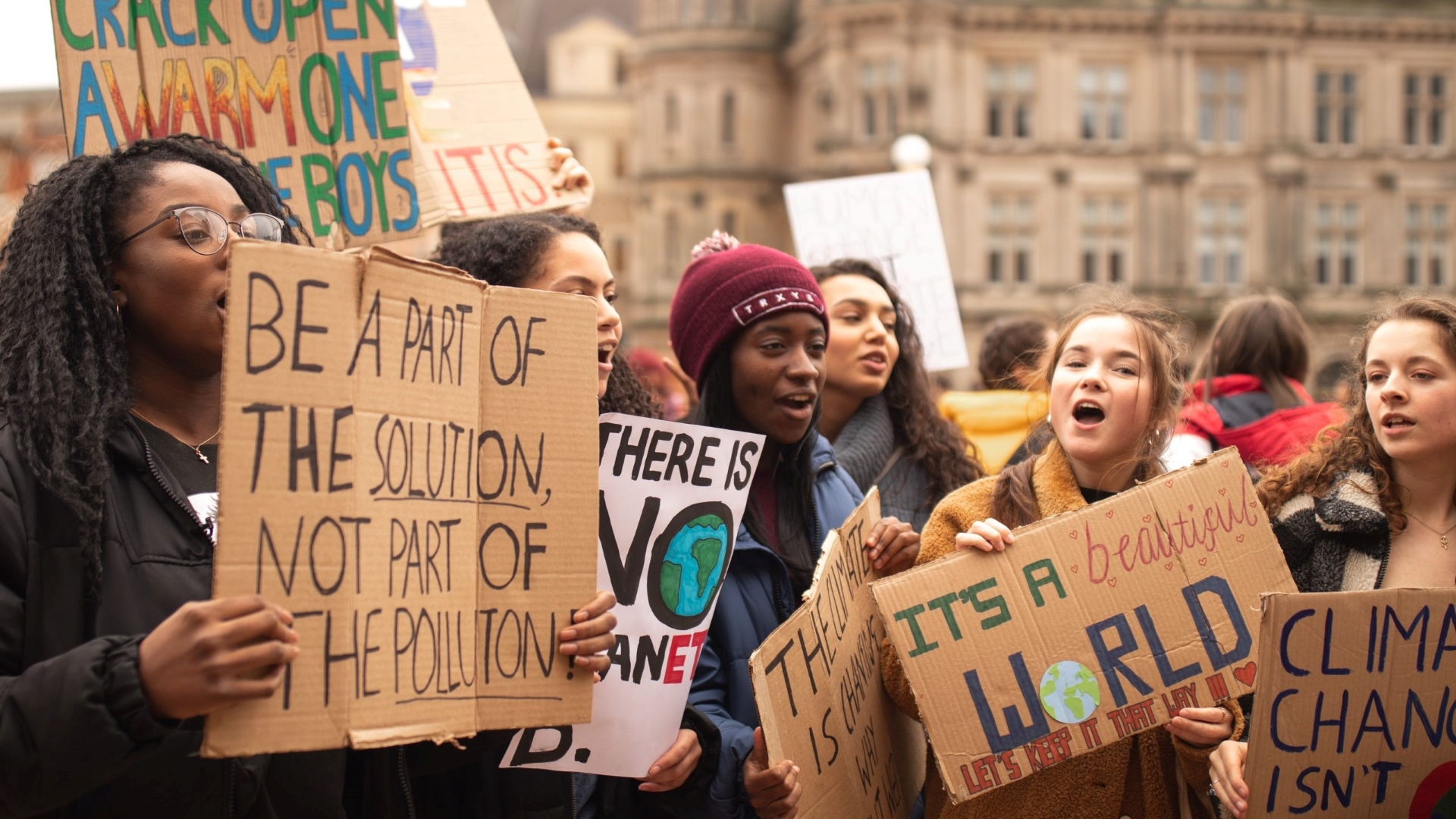
‘Change is not going to come from inside there, that is not leadership. This is leadership. This is what leadership looks like,’ Greta said, in reference to the crowd of young people standing up for the climate outside the COP venue.
Talk is cheap in a crisis and world leaders need to #StopFailing.
This week the Rainbow Warrior took 4 youth climate activists from 3 continents to #COP26 so their voices can be heard.
After decades of climate talks we’re still edging ever closer to catastrophe. ⏳ pic.twitter.com/VYBXRFcgNM
While the frustrations of young climate activists outside of this year’s climate summit are one hundred percent valid, the silver lining is that world leaders have led the discussion with our future in mind.
Boris Johnson’s opening statement stressed that any form of failure at this year’s COP (and in following through with their commitments) would be unforgivable, especially in the eyes of future generations.
So far, we’ve heard from one 15-year-old activist called Vinisha Umashankar. Awarded the Earthshot Price by Prince William for her solar-powered ironing cart to cut coal usage in India, her speech touched on the urgency of preserving Earth for current and future generations.
We hope to hear from many more amazing young activists at COP26 this week – and for now, you can watch Vinisha’s inspiring speech here.
Deputy Editor & Content Partnership ManagerLondon, UK
I’m Jessica (She/Her). I’m the Deputy Editor & Content Partnership Manager at Thred. Originally from the island of Bermuda, I specialise in writing about ocean health and marine conservation, but you can also find me delving into pop culture, health and wellness, plus sustainability in the beauty and fashion industries. Follow me on Twitter, LinkedIn and drop me some ideas/feedback via email.
Actor Jason Bateman recently caught heat for telling Charli XCX she might change her opinion on not wanting kids. Why are we still inferring that happily coupled, child-free women are unfulfilled?
I’d like to think we’ve made some strides in the motherhood conversation – and to some extent we have. But I still feel the tail winds of disappointment when I tell my elders there’ll be no children on the...
The ongoing Winter Olympic Games have seen many acts of defiance against the Trump administration. How will the situation play out when the US hosts in 2028?
When Baron Pierre de Coubertin revived the Olympics in 1896, one of his main aims was to promote mutual understanding among athletes. He believed that competing on the track instead of the battlefield could encourage peace and help prevent war.
However, countless...
Anxiety, depression, and emotional problems are on the rise across the globe, cutting across boundaries of culture, geography, and socio-economic status. The World Health Organisation says ‘one in seven’ have a mental health disorder in 2026.
According to the World Health Organisation, ‘one in seven adolescents worldwide has a mental health disorder.’ Such statistics obviously cannot be ignored.
This generation of teens is the first to be raised in an...
Why has the precedent that ‘British culture is dying’ invaded every aspect of our lives recently? From TikTok commentary to culture-war politics, who is really influencing the supposed shift in British culture?
Claims that Muslims and BAME communities are erasing British culture have become a popular rhetoric in recent political spheres in the UK, but also around the Global North as a whole. Popular, but not new.
Here's my take...
We use cookies to ensure that we give you the best experience on our website. If you continue to use this site we will assume that you are happy with it.
































 0 comments