




























 0 comments
glasses at the ready, everyone

A major solar eclipse set social media ablaze this week, as Europeans geared up for a ‘once-in-a-generation’ celestial event. Opinions were mixed, with some left disappointed. Has everything become pre-packaged as online content?
Did you watch the solar eclipse this week?
Europeans were treated to a rare, near-total block of the sun on Wednesday, as the most intense solar eclipse since 1999 swept over Europe and some parts of Canada. Excitement took hold here in London; long queues formed outside shops as the public scrambled to buy eclipse glasses and, inevitably, shortages ensued.
Social media was flooded with information on timings and prime locations to get the full experience, with the eclipse reaching its peak at roughly 7 pm in the UK’s capital. Couldn’t get hold of any glasses? No problem. News outlets offered handy guides on how to join in without directly staring at the sun and burning your eyes, suggesting colanders and poking holes in cereal boxes. It was, by all intents and purposes, jolly good fun.
I probably don’t need to tell you this, given that it’s likely been all over your social media feed today.
Influencers jetted off to countries like Spain for the afternoon just to get a glimpse of a total eclipse, for example, racking up millions of views on Instagram and TikTok. Others used the occasion as a photo opportunity, with one creator filming an orchestrated skateboarding stunt with the sun’s blockage serving as an amazing backdrop. Naturally, some jumped on the trend and created convincing AI-generated images of the eclipse’s crescent shadows (these had us fooled for a minute, in particular).
As with most social media events, many detractors were underwhelmed by the whole thing. Londoners especially seemed a bit miffed at the lack of any real darkness, and jokingly asked for a refund on their glasses. Commenters were largely in agreement and felt that, despite substantial media frenzy, the eclipse fell flat. Debate has been fierce today, with some calling it ‘incredible’ and others a complete waste of time. Jokes about staring with your eyes unprotected have made the rounds, too. Trust Gen Z to make a meme out of anything, eh?
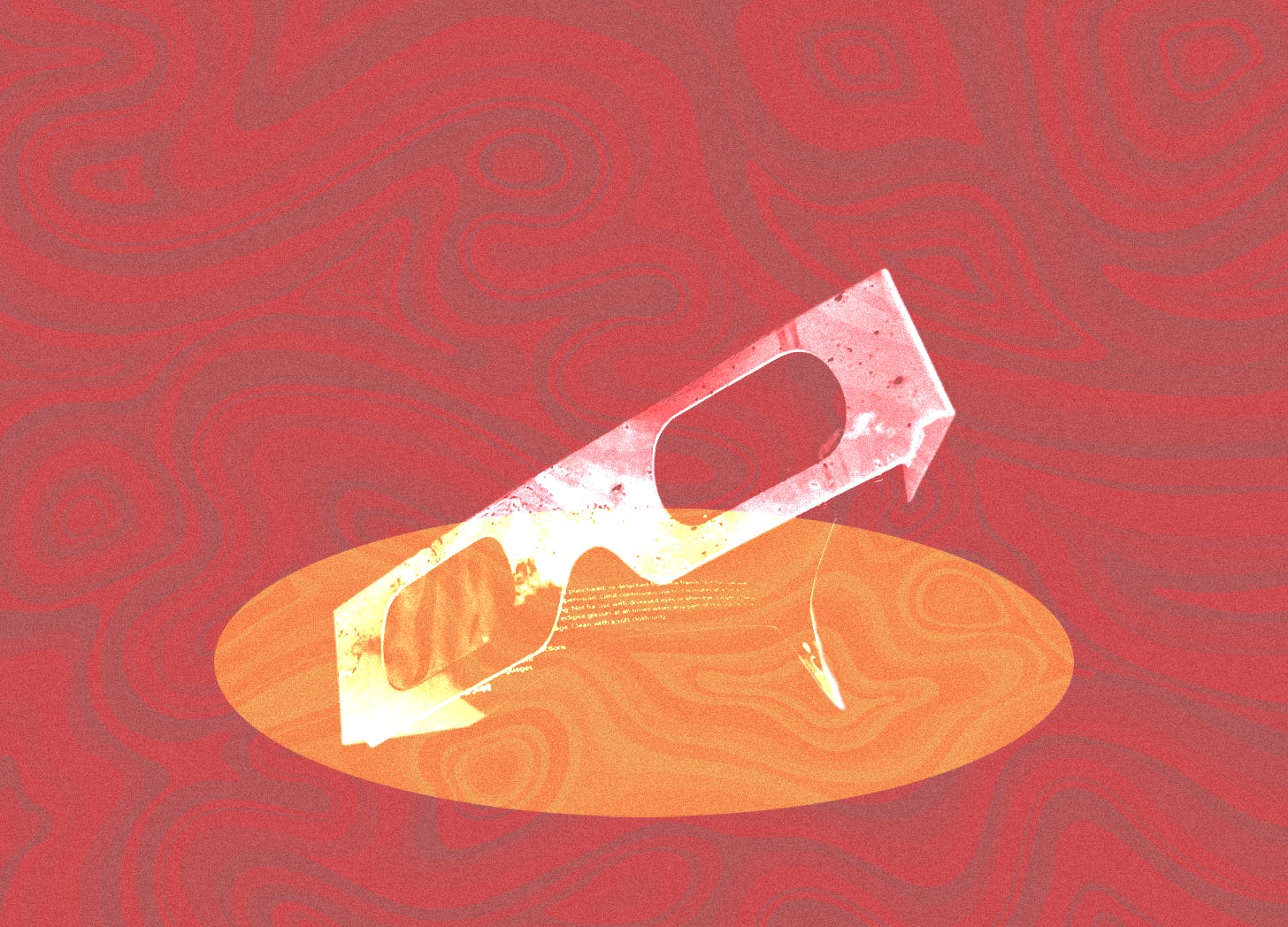
Whichever side of the fence you fall, it’s hard not to notice how cluttered spectacles like an eclipse have become in our modern era. The last time we experienced a similar event in the UK was 1999, when most of us would have walked outside, looked with our glasses on, and maybe taken a photo or two with a disposable camera. Besides maybe watching the evening news on television (how archaic does that sound these days), there wasn’t much else to it.
By comparison, an eclipse in 2026 is an ideal moment for content. There is intense discussion online before, during, and after, ranging from creative photography to outlandish conspiracies and misinformation. A widespread buzz for a spectacular celestial moment now sparks greater feelings of ‘missing out,’ doing things wrong, or comparing our viewing to everyone else’s. We’ve immediate access to the total eclipse from other countries via short-form videos online, spurring envious feelings from anyone who didn’t get the ‘full’ blackout.
Our enjoyment is immediately public and, in some cases, performative, with content creators optimising as best they can to boost their personal brand.
Doesn’t all this sound exhausting? Despite the eclipse being a natural phenomenon that should bring us closer to our place in the cosmos, it has instead acted as a microcosm of modern social behaviours. We can’t help but take pictures, share them online, pose for selfies, create AI-adjacent content, and argue with one another about whether it was even any good. Gen Z have grown up with this kind of chatter about everything. No wonder we’re all exhausted.
Of course, I’m not saying that all content is bad. I’ve loved seeing inventive posts that take in the full beauty of this whole ordeal, and the buzz is infectious. It’s the inescapable necessity to turn all modern events and trends into discussion points for clicks and engagement that feels a little uncanny. We are all glued to our algorithms, after all. Still, if it means I can view a man skateboarding on a roof in front of a full solar eclipse now and then, there is at least a small silver lining.
See also:
- Why is Gen Z fixated on…frozen yoghurt?
- TikTok finally admits it has an ‘AI Slop’ problem
- Why FIFA embraced IShowSpeed at the World Cup



