






 0 comments
This year’s biggest Grammys winners all hail from the same state-run Croydon school. Their stories are a ‘brilliant celebration’ of free arts education.
What do Olivia Dean, Raye, and Lola Young all have in common? Yes, they all won Grammys at this year’s awards, and yes, they all hail from London. But what’s most surprising is that they all studied at the same school in Croydon.
The BRIT school is a bastion of creative arts education in the UK, and somewhat of a unicorn. It’s state-funded, and open to anyone (though the application system is highly competitive). These kinds of institutions are few and far between – particularly in England where government cuts have culled creative subjects across secondary schools and universities.
Last year, a report by UK arts organisations described a ‘chronic lack of availability for affordable and sustainable studio spaces for artists, primarily due to low pay for the artists, rising rent, limited property availability and insecure tenure.’
This gross lack of investment in the arts begins in the education system, where GCSE arts entries have fallen by 40-48% since 2010. Between 2011 and 2024, there was also a 27% decrease in the number of arts teachers in English state-secondary schools.
Since it first opened in the 90s, the BRIT school has nourished creative talent across arts, theatre and music – with some of the world’s biggest stars having studied there. Standouts include Adele, Amy Winehouse, and Loyle Carner, though the full list of successful BRIT alumni is exhaustive.
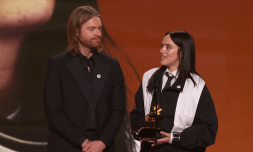
The 2026 Grammy awards were a celebration of everything the BRIT school stands for, highlighting the importance of accessible arts education and demonstrating what can happen when young talent is encouraged.
Olivia Dean, who took home the prestigious award for Best New Artist, commuted from her family home in Haringay, North London, to the BRIT school everyday when she studied there at 14-years-old. She recalls falling asleep on the two hour train journey each morning.
Stuart Worden, a teacher at the school since 1994 and its principal since 2012, said this years Grammys were ‘a brilliant celebration’ of free arts education. ‘These women are fantastic role models of what’s achievable if you give young people access to the arts,’ he said.
Dean is the first British singer to win Best New Artist since Dua Lipa in 2019, while Lola Young’s breakthrough hit ‘Messy’ topped global charts, and Raye is already a seven-time Brit award winner.
‘None of these are overnight successes,’ said Worden. ‘They’ve all played small venues, they’ve worked on records for years.’
It’s thanks to spaces like the BRIT school that talented artists have access to an infamously exclusive industry. After Dean, Young and Raye swept the Grammys, the head of Universal Music UK said the triple success was a ‘pivotal moment’.
In total, the BRIT school’s students have collectively sold more than 250 million albums and won 15 Brit awards. And despite criticism that the institution has manufactured ‘cookie-cutter’ pop artists, more experimental performers like King Krule, Kae Tempest and Black Midi have begun to shift perceptions.