Social media hasn’t been around for long, with the first platforms emerging less than thirty years ago. In this short time, they’ve become a breeding ground for annoying bots, rampant online hate, and the poor mental health of their users. Will they survive another year?
By now, anyone with access to social media platforms will be well aware of the dangers they pose to our mental health.
An ever-expanding mountain of psychological and sociological studies have proven that time spent on platforms like Instagram and TikTok increase users’ risk of anxiety, depression, negative body image, and poor self-esteem. Meanwhile, documentaries produced by widely-used streaming companies have made these ominous findings common knowledge.
Back in 2023, the tech research company Gartner found that 50 percent of users will either abandon or significantly limit their social media usage by 2025. Is it possible that the last couple of years have finally made us realise that it really is that damn phone?
Looking at trends in popular online discourse, I’m inclined to think so. Across Substack and in mainstream news media, too, countless articles have preached the same message: ‘screen time bad, real world activities good’. While these writers aren’t wrong, few have offered any meaningful or realistic solutions.
Even with the adoption of ‘dumbphones’ and abstinence from social media use, the reality is that very few of us will be able to fully abandon life with a little computer in our pocket. For those living in large cities (nearly 80 percent of people do) and for people who drive, the need for navigation apps like Citymapper and Google Maps will ensure that smartphones remain our first choice.
That said, I truly believe the way that we use our smartphones is about to change. We may not see millions of users delete their social media accounts outright or overnight, but I’m predicting that constant engagement with these platforms will become a thing of the past for many.
I also believe it could be Gen Zers who will lead this change.
I’m lucky (and old) enough to remember a time before smartphones and social media, when Palm Pilots were considered cutting edge technology and having a hot pink Motorola Razr felt like a genuine status symbol.
For Gen Z, smartphones have always been in their orbit. Social media, by default, has also been constant presence in their lives.
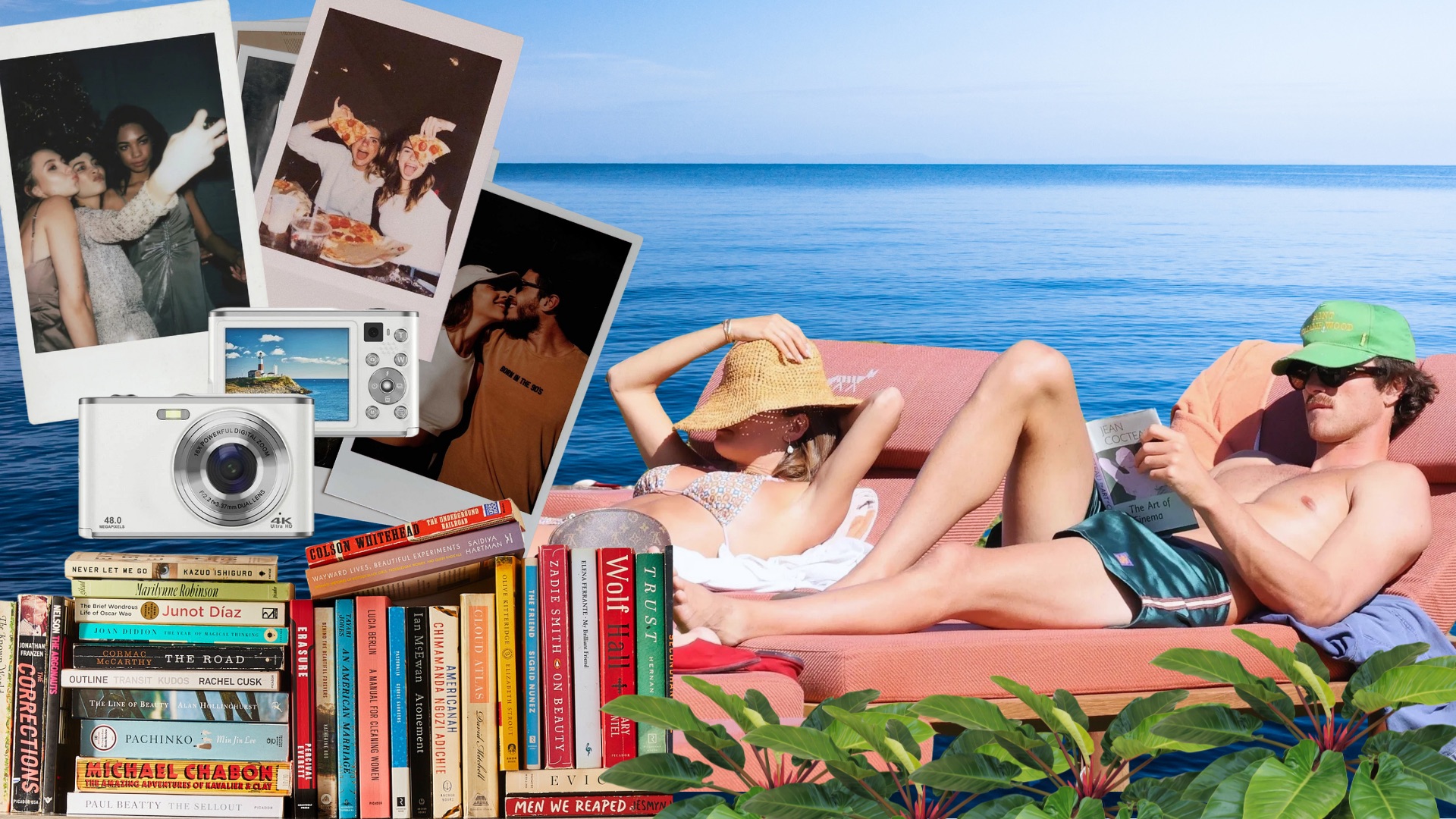
Yearning for a reality they’ve never lived, Gen Z is reviving hobbies that have been on the decline since we all began fostering ‘community’ online. Running clubs and book clubs might as well have been buzz-phrases of the year, with young people looking for ways to connect with their age mates outside of liking and sharing their posts.
Then, of course, there’s concerns over brain rot, which is a genuinely real thing. Our attention spans have dwindled down to virtually nothing and most of us struggle to retain important information. In all of this apparent ‘nothingness,’ many people are on a search for meaning.
Curiosity is a form of intrinsic motivation that drives humans to seek out new experiences. With so many young people wondering what their life (and their personal, emotional, and mental well-being) might look like without social media, a trend of going without it for long periods is likely to emerge.
But is a trial run on life without social media enough? Many will find it is not.
The lie of the social media detox
In the article The Social Media Detox is a trap, Carly Burr writes: ‘I’m tired of wasting my time, tired of feeling like I’m missing out on my own life […] What if we don’t need to keep dipping in and out of this world that leaves us feeling off? What if, instead of a break, we just…let it go?’
It seems that people of all ages are beginning to relate to this statement, but it hits home harder for young people who’ve spent most of their living memory posting, scrolling, or the more likely alternative, doing a mix of both.
Despite Big Tech constantly innovating, we’ve reached a point where mainstream social media platforms are nothing but mirrors of one another. All of them host the same features, and sometimes, even the same content. There’s no doubt the unoriginality of current platforms has caused social media to lose its novelty.
That said, it’s not just boredom. It’s exhaustion. Social media platforms have evolved so far from what they originally were – a means to share updates and stay in touch with others – instead becoming a digital shopping mall where advertisements take priority over human content.
Twitter, now X, has become a platform that leverages far-right ideologies within a specially-designed algorithm and promotes visual content we probably shouldn’t just be stumbling upon without warning (including hardcore pornography, violence, and other disturbing videos).
Our Instagram feeds are primarily made up of sponsored posts, advertisements, or photoshopped images that skew our understanding of what normal human beings look like. Comment sections of viral posts are often filled with hate, criticism, or abuse, an online behaviour that unfortunately seems normal to encounter on the internet, but has proven to be damaging for anyone who reads them.
If we’re being one hundred percent real, unless we’re making enough money on social media to cover our monthly expenses, none of these platforms bring any genuine value to our lives.
It’s a truth I believe we all know, but may be afraid to admit due to FOMO (fear of missing out).
However, reading the testimonies of those who have left social media behind for good, it’s clear there isn’t a single person who believes they’re missing out on something.
Whether it’s the result of finally waking up to the pointlessness of today’s social media platforms, a desire to choose what content you watch instead of leaving it up to the algorithm, or a decision to dedicate free time to more meaningful activities – quality time with friends and family, developing hobbies, or upskilling – people are waking up.
So is the future of social media doomed? I think it would be a stretch to say that. There will always be people with a million different reasons for enjoying these platforms, but in 2025, it seems a lot of us will be minimising or logging off once and for all.
Deputy Editor & Content Partnership ManagerLondon, UK
I’m Jessica (She/Her). I’m the Deputy Editor & Content Partnership Manager at Thred. Originally from the island of Bermuda, I specialise in writing about ocean health and marine conservation, but you can also find me delving into pop culture, health and wellness, plus sustainability in the beauty and fashion industries. Follow me on Twitter, LinkedIn and drop me some ideas/feedback via email.
The new judge is dismantling diet culture with big bites and no nonsense. We need more of this on TV, now more than ever.
I’ve always loved Nigella Lawson. I’m a fellow foodie, I’m a writer – which means I’ve devoured her written recipes as fervently as the dishes themselves – and I’m also a woman. Nigella has always represented the essence of womanhood in my eyes. She’s confident and unapologetic...
Gen Z subscribes to everything from music and films to software and storage, paying endlessly for things we never actually own. As ownership is increasingly replaced by access, are subscriptions making life more convenient - or creating a generation that pays forever and owns nothing?
There was once a revolutionary economic model called buying something.
You handed over money, gold, or whatever the currency was. Someone gave you the purchased item....
Recruiters are debating on TikTok whether it’s okay to bring iced coffee into a job interview, highlighting discrepancies in professional standards between different generations and industries.
Would you bring iced coffee into a job interview?
A debate has been underway on social media this week as Gen Zers and older professionals consider whether it’s ‘inappropriate’ or an unnecessary restriction that makes new, potential employees uneasy.
It began when TikToker @caitlinrecruiter uploaded...
From Substack to explainer TikToks, everyone’s craving thought-provoking content. But is our hankering for brain food a reaction to AI or evidence of a deeper desire for fulfillment in the modern age?
What is a ‘thinkfluencer’? Consider them the talking head in your pocket: a bastion of knowledge on often niche topics, sharing facts and figures with the help of a teeny tiny handheld mic. These types of influencers have...
We use cookies to ensure that we give you the best experience on our website. If you continue to use this site we will assume that you are happy with it.






























 0 comments