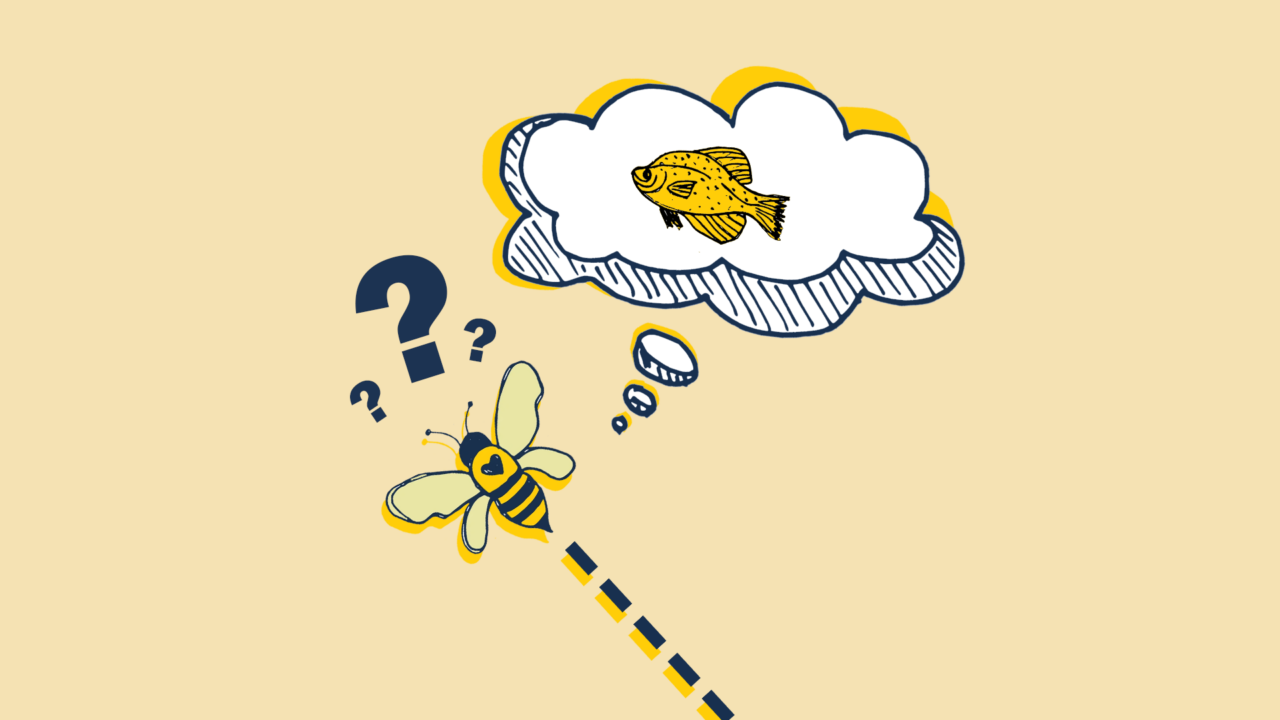
A new court ruling has decided that some species of bee can now legally be considered fish in order to provide extra protection under the California Endangered Species Act.
Consider yourself an expert on bees? Are you an academic on all things honey, hives, and bumbling?
Those clued up on the iconic winged pollinators may want to brush up on their knowledge after this weekend, as a California court ruling now classifies some species of bees legally as fish. Yes, fish.
Although it may sound absurd, the move is intended to help provide bees with extra legal protection and ensure they’re covered by the California Endangered Species Act (CESA).
It had previously been decided by a lower court that CESA only protected ‘birds, mammals, fish, amphibians, reptiles, and plants’ and did not include bees or bugs.
This argument was pushed by agricultural organisations who would be impacted by extra regulations for insects. The Almon Alliance of California, the California Farm Bureau Federation, and five other agricultural groups had successfully confirmed that CESA does not protect insects in November 2020.
Now, the appeals court has allowed the Californian Fish and Game Commission to list four bumblebee species as officially ‘fish’ and therefore legally viable for extra protection – even though they’re not aquatic.
They were able to do this because California’s fish and game code – the outline in which plants and animals are protected – classifies a ‘fish’ as a ‘wild fish, mollusc, crustacean, invertebrate, amphibian, or part, spawn, or ovum of any of those animals’. Quite a mouthful, that.
Crucially, the term ‘invertebrate’ within this definition is ambiguous enough to argue that bees should be included.
The four bumble species in question had already been classified as endangered, but were only regarded as ‘land invertebrates’ and not fish in 2018. This meant they weren’t covered by CESA as they were officially only insects. Still with me?
Judges ruled that ‘although the term fish is colloquially and commonly understood to refer to aquatic species, the legal definition is not so limited.’ The room for interpretation and inclusion of bees as fish grants new protections that will help population numbers – which have been steadily declining in California due to climate change.
This new ruling will also be a setback for agricultural groups, who likely do not want added measures and restrictions on current agricultural practices. It fundamentally means that, in essence, bees are indeed fish in California. Which is hilarious.
Frogs technically fall under the definition of a fish too, as they’re classed as ‘amphibians’- which are listed.
Pamela Flick, Californian program director at Defenders of Wildlife, said that it was a ‘great day for California’s bumble bees’ in a statement. Let’s hope the bees – sorry, fish, I think? – are able to recover and boost numbers with these new protections.
I’m Charlie (He/Him), Deputy Editor and Senior Writer at Thred. I was previously the Editor full-time at Thred before moving to Bristol in 2024. I have since returned to London. As a music and gaming enthusiast, I’m a nerd for pop culture. You can find me curating playlists, designing article headline images, and sipping cider on a Thursday. Follow me on LinkedIn and drop me some ideas/feedback via email.
Gen Z subscribes to everything from music and films to software and storage, paying endlessly for things we never actually own. As ownership is increasingly replaced by access, are subscriptions making life more convenient - or creating a generation that pays forever and owns nothing?
There was once a revolutionary economic model called buying something.
You handed over money, gold, or whatever the currency was. Someone gave you the purchased item....
Recruiters are debating on TikTok whether it’s okay to bring iced coffee into a job interview, highlighting discrepancies in professional standards between different generations and industries.
Would you bring iced coffee into a job interview?
A debate has been underway on social media this week as Gen Zers and older professionals consider whether it’s ‘inappropriate’ or an unnecessary restriction that makes new, potential employees uneasy.
It began when TikToker @caitlinrecruiter uploaded...
From Substack to explainer TikToks, everyone’s craving thought-provoking content. But is our hankering for brain food a reaction to AI or evidence of a deeper desire for fulfillment in the modern age?
What is a ‘thinkfluencer’? Consider them the talking head in your pocket: a bastion of knowledge on often niche topics, sharing facts and figures with the help of a teeny tiny handheld mic. These types of influencers have...
Rapper and musician Macklemore has been removed from Ed Sheeran’s ‘The Loop’ tour after making comments on stage regarding Palestine. He took to Instagram to explain and defend his position, arguing that ‘there is no neutral position between the oppressor and the oppressed.’
Macklemore has reportedly been dropped from Ed Sheeran’s ‘The Loop’ tour following his comments on Palestine during a recent performance.
https://www.youtube.com/watch?v=UmSErSKL874
He had been the opening act for the...
We use cookies to ensure that we give you the best experience on our website. If you continue to use this site we will assume that you are happy with it.






























 0 comments