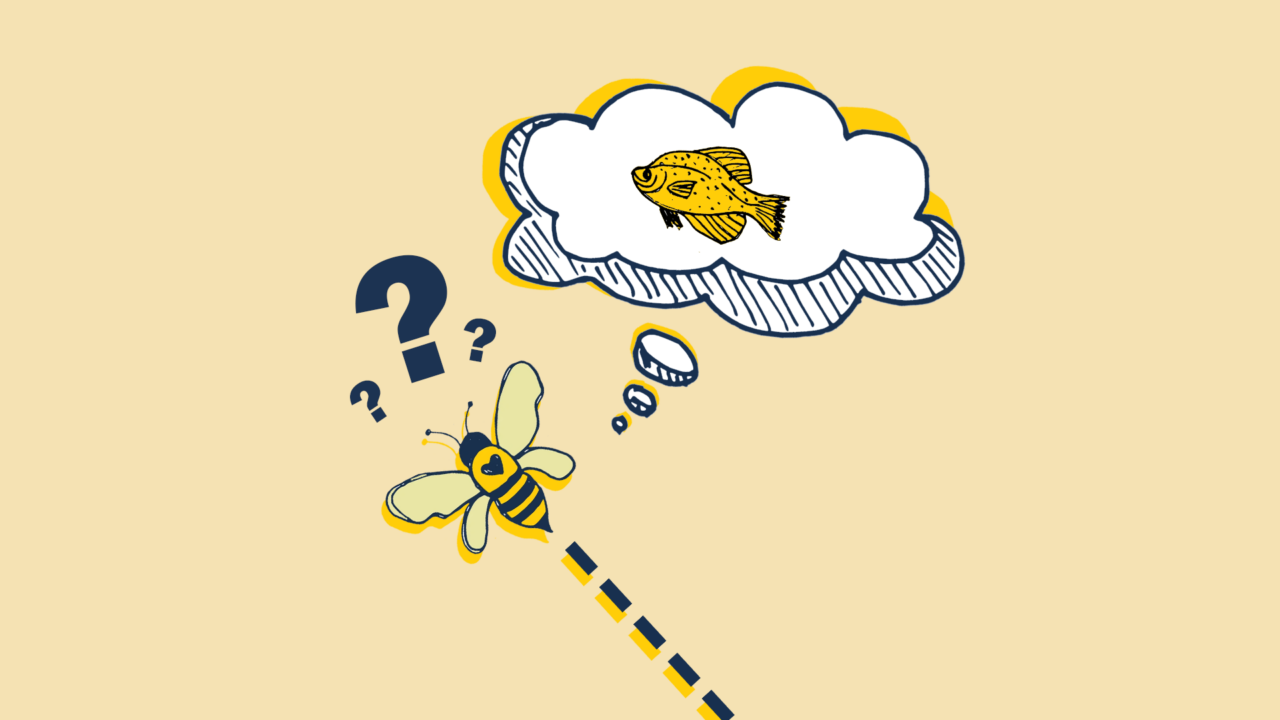
A new court ruling has decided that some species of bee can now legally be considered fish in order to provide extra protection under the California Endangered Species Act.
Consider yourself an expert on bees? Are you an academic on all things honey, hives, and bumbling?
Those clued up on the iconic winged pollinators may want to brush up on their knowledge after this weekend, as a California court ruling now classifies some species of bees legally as fish. Yes, fish.
Although it may sound absurd, the move is intended to help provide bees with extra legal protection and ensure they’re covered by the California Endangered Species Act (CESA).
It had previously been decided by a lower court that CESA only protected ‘birds, mammals, fish, amphibians, reptiles, and plants’ and did not include bees or bugs.
This argument was pushed by agricultural organisations who would be impacted by extra regulations for insects. The Almon Alliance of California, the California Farm Bureau Federation, and five other agricultural groups had successfully confirmed that CESA does not protect insects in November 2020.
Now, the appeals court has allowed the Californian Fish and Game Commission to list four bumblebee species as officially ‘fish’ and therefore legally viable for extra protection – even though they’re not aquatic.
They were able to do this because California’s fish and game code – the outline in which plants and animals are protected – classifies a ‘fish’ as a ‘wild fish, mollusc, crustacean, invertebrate, amphibian, or part, spawn, or ovum of any of those animals’. Quite a mouthful, that.
Crucially, the term ‘invertebrate’ within this definition is ambiguous enough to argue that bees should be included.
The four bumble species in question had already been classified as endangered, but were only regarded as ‘land invertebrates’ and not fish in 2018. This meant they weren’t covered by CESA as they were officially only insects. Still with me?
Judges ruled that ‘although the term fish is colloquially and commonly understood to refer to aquatic species, the legal definition is not so limited.’ The room for interpretation and inclusion of bees as fish grants new protections that will help population numbers – which have been steadily declining in California due to climate change.
This new ruling will also be a setback for agricultural groups, who likely do not want added measures and restrictions on current agricultural practices. It fundamentally means that, in essence, bees are indeed fish in California. Which is hilarious.
Frogs technically fall under the definition of a fish too, as they’re classed as ‘amphibians’- which are listed.
Pamela Flick, Californian program director at Defenders of Wildlife, said that it was a ‘great day for California’s bumble bees’ in a statement. Let’s hope the bees – sorry, fish, I think? – are able to recover and boost numbers with these new protections.
I’m Charlie (He/Him), Deputy Editor and Senior Writer at Thred. I was previously the Editor full time at Thred before moving to Bristol in 2024. As a music and gaming enthusiast, I’m a nerd for pop culture. You can find me curating playlists, designing article headline images, and sipping cider on a Thursday. Follow me on LinkedIn and drop me some ideas/feedback via email.
Where do we draw the line when it comes to on-screen depictions of real people?
Ryan Murphy could never be labelled a people pleaser. Most of his projects flagrantly piss off at least one demographic, and if not outright offensive to some fraction of society they’re usually critiqued on the basis of quality. But that hasn’t stopped him dominating the past decade of TV.
We love to hate Mr. Murphy and...
TikTok mini-dramas featuring anthropomorphic fruits have taken the internet by storm. Should we be concerned?
AI has birthed some seriously strange phenomena. Whether it’s Victoria Beckham break dancing at her son’s wedding, or a video of the Gaza strip showered in gold casinos thanks to Donald Trump and Elon Musk’s entrepreneurial input (yep, that one did actually happen – and yep, the President of the United States did share it on...
Noticed pistachios everywhere recently? It’s no coincidence. Their rise is part of a years-long rivalry between the US and Iran that holds new weight in the face of war.
You’ll have heard of Dubai chocolate. The viral dessert has had TikTok under its kadayif covered thumb for over a year. You may even have tried your hand at making it – a simple recipe comprised of chocolate, tahini, shredded filo dough...
Timothée Chalamet’s dismissal of ballet and opera raises a lot of questions around the survival of the arts.
Has Hollywood’s golden boy tarnished his crown? Timothée Chalemet was a shoo-in to win the coveted Best Actor trophy at this year’s Oscars. It’s his third nomination in the category, and despite having just turned thirty, a win for Chalamet feels like it’s been a long time coming.
Few leading men have established...
We use cookies to ensure that we give you the best experience on our website. If you continue to use this site we will assume that you are happy with it.
































 0 comments