Last week, we peeled back the curtain on the emotional climate at COP26 by exploring the fear-fuelled question – is this our last chance? This week, we will be taking a deep dive into the theme of powerlessness and its accompanying question – where is my seat at the table?
At COP26, Force of Nature went to every corner – the Blue Zone, the Green Zone, the New York Times Climate Hub, the UK Youth Climate Cafe, the trailblazing campaigners in the streets, and everywhere in between – to gauge the emotional climate.
This precious, powerful and fragile planet is everyone’s home, and thus everyone is a stakeholder in the debate about how best to manage the threats that it currently faces.
However, the power has evidently been unfairly distributed; those who are most affected are often those who are left out of the conversation.
MAPA (Most Affected People and Areas) regions were massively underrepresented at the UN Climate Change Conference in Glasgow.
According to Island Innovation, a third of Pacific islands announced they were unable to send senior delegations due to COVID-19 regulations (underscoring the inequality in vaccine distribution); these nations, Small Island Developing States (SIDS), are the least responsible for climate change – but are some of the most impacted.
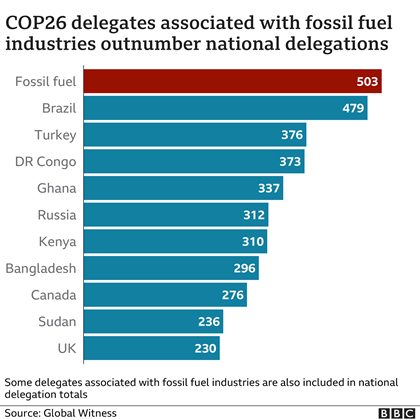
Only four Pacific island nations sent their leaders, Fiji, Papua New Guinea, Tuvalu and Palau. The rest either have limited or no representation, largely due to COVID-19 restrictions. Meanwhile, the fossil fuel industry had the largest delegation at COP26.
As Ugandan climate justice activist Vanessa Nakate points out:
‘There is so much to learn about the climate crisis, and learning about the climate crisis means learning from the voices that are on the front lines. And we have seen how continuously activists from the global south, who are speaking up from the most affected communities — their voices are not being platformed.
Their voices are not being amplified. Their stories are being erased … This is a problem. We can’t have climate justice if voices from the most affected areas are being left behind. #UprootTheSystem’
This underrepresentation was reflected in the lack of advocacy for loss and damage, which refers to the destruction caused by extreme weather events. Finance specifically for loss and damage was excluded from the final Glasgow Climate Pact, failing to provide support and reparations to the world’s most affected countries as they plan for a changing world.
Likewise, many youth activists felt frustrated by the lack of legitimate voice given to them in the outcomes of COP. Over 100,000 people took to the streets on the Global Day of Action on November 6th, mirroring the feeling of futility felt by so many.
Entry to the coveted Blue Zone, where the climate legislation is created, proved to be nigh impossible. This prompted the proliferation of fringe events, hoping to engage the attention and empathy of decision-makers and the public alike.
The greatest irony is that this was lauded to be the “most inclusive COP yet” – and indeed, it felt like there was an attempt by organizers to create visibility around the diversity of voices platformed in official delegation spaces.
Events such as the High-Level Climate Champions plenary heard speeches from indigenous leaders, frontline communities and youth activists. While this feels like a step in the right direction, it is clear at this point in the climate conversation, anything that is not transformational is tokenism – and being given a platform is not the same as being heard.
For many of the individuals who were pointed at as being evidence of the “inclusivity” of COP were in fact put on stage, given a microphone and expected to use their slim window of airtime to divulge a stream of trauma.
Take the following example: an esteemed marine explorer is platformed in conversation with the CEO of Bezos Earth, a stupendous syndicate of corporate greenwashing. After a few minutes of nudge-in-the-ribs banter, they pass the microphone to a group of Amazonian Indigenous leaders who, amidst a steely ring of irony, give a greeting and an acknowledgment in their native tongue.
Designed, presumably, to elicit emotion amongst the uncomfortably buttoned-up delegates present, it was in fact a cruelty to tokenize and romanticize the lived experience of frontline communities without making a legitimate attempt to democratize the conversation.
Events like COP26 highlight a recurring “emotional constipation” amongst people in power who have difficulty responding to the emotional climate.
The “Emotional Climate” – How does the climate crisis make people feel? Is this eco-anxiety?
Many people felt powerless during COP26 because they didn’t feel that they held any power, influence or sway over closed-door processes.
Quote from a young activist in FoN’s community:
Do you ever feel powerless to make a difference? Tell us why?
I feel powerless constantly. As much as I wish it were not true, I think we’ve reached a point where small scale activism from an unqualified teenager like me will never be enough to avert the climate crisis that is looming, and I think action is needed on [a] huge scale and I feel like I can’t implement that change.
These decisions need to come from world leaders, even business leaders, and I have very little power to affect their decisions.
The climate crisis is a crisis of leadership, humanity and connection, but it is not often that we are given license to express how vulnerable we feel. This COP saw Alok Sharma, CO president, visibly fighting back tears and expressing that he was ‘deeply sorry’ for the way the process had unfolded.
One of the most common beliefs that we hold about the climate crisis, and our role in it, is that we are “too small to make a difference”. A recent study has shown immediate government inaction on climate issues is “inextricably linked” to “eco anxiety” in people under the age of 25.
While feelings of powerlessness prevent us from taking action on the issues we care about, one-off conferences like COP26, which force us to shout and clamour for the attention of a privileged few, contribute to our feelings of eco-anxiety.
What do we do now?
The question at hand is, in a movement where the issue has been often-constructed as lack of awareness, why is it so hard for people to get involved in an event like COP26?
The answer is that climate leadership does not start, or end, at conferences like COP; and thus, the challenge becomes to put faith in climate leadership that is taking place outside the walls of conferences such as COP.
Why are health consent forms written at the level of a sixth grader in order for people to be able to sign off on their medical procedures, but the health of our planet is decided and communicated in a method accessible to only a privileged few?
While the agreements written in Glasgow were a component of climate action, people in power benefit from the strictly codified nature of negotiation rooms; it is more convenient to them for these spaces to be inaccessible, and indeed, undesirable.
Feeling powerless can stop us before we even start. Luckily, there are an incredible number of people refusing to fall silent and building coalitions outside closed-door rooms.
Strong emotions are proof of our empathy; and any solutions to the myriad of problems facing us will come from those of us who have been brave enough to take the time and energy to feel these scary and disorienting feelings.
From our research: What climate stories need re-writing?
At Force of Nature, we have identified self-limiting beliefs that we all hold about the climate crisis and our role in it, that keeps society sleep-walking towards the abyss. These key climate stories keep the system moving towards graver inequality and climate collapse.
“The problem is too big, and I am too small.”
“Nobody else feels the way that I do.”
“The system is too broken.
Re-writing these stories allows us to challenge the historic seats of power by re-claiming the narrative.
CALL YOUR MOTHER
Force of Nature is helping people share their emotions about the climate crisis, in order to challenge these climate stories and take agency on the issues they care about.
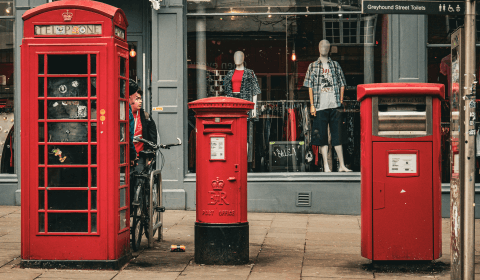
The team was on the ground in Glasgow, spreading the word about the Call Your Mother campaign – a guerrilla public engagement project, spread by stickers, posters and QR-codes, and a roving green phone booth.
The activation is linked to a digital interface where users can answer questions about their messy climate emotions and interact with others who feel the same way. Go to www.callyourmother.earth/ to record your message. Recording your message gives you a seat at the table by reclaiming your story.
Eco-anxiety is a normal and rational response to the depth of the crisis. It is the difficult emotions that have been felt for years by individuals experiencing the climate crisis, and is exacerbated by the perceived inaction of those in power.
Eco-anxiety does not just look one way – it shows up in a diversity of emotional responses. Hope, despair, urgency, anger and grief may all be aspects to eco-anxiety.
Eco-anxiety is not the issue; how we recognize these emotions, and then how we build community, action and hope with them, is the important part.
Next week’s piece on the Emotional Climate at COP26 will be about the exercise of hope, and explore the question that seems to be in everyone’s heart: “How do I find it?”
This article was originally written by Sacha Wright, Research and Curriculum Coordinator for Force of Nature. Click here to view her LinkedIn and click here to view the FoN Twitter page.
Sacha Wright is the Research and Curriculum Coordinator for Force of Nature. Click here to view her LinkedIn and click here to view the FoN Twitter page.
Actor Jason Bateman recently caught heat for telling Charli XCX she might change her opinion on not wanting kids. Why are we still inferring that happily coupled, child-free women are unfulfilled?
I’d like to think we’ve made some strides in the motherhood conversation – and to some extent we have. But I still feel the tail winds of disappointment when I tell my elders there’ll be no children on the...
The ongoing Winter Olympic Games have seen many acts of defiance against the Trump administration. How will the situation play out when the US hosts in 2028?
When Baron Pierre de Coubertin revived the Olympics in 1896, one of his main aims was to promote mutual understanding among athletes. He believed that competing on the track instead of the battlefield could encourage peace and help prevent war.
However, countless...
Anxiety, depression, and emotional problems are on the rise across the globe, cutting across boundaries of culture, geography, and socio-economic status. The World Health Organisation says ‘one in seven’ have a mental health disorder in 2026.
According to the World Health Organisation, ‘one in seven adolescents worldwide has a mental health disorder.’ Such statistics obviously cannot be ignored.
This generation of teens is the first to be raised in an...
Why has the precedent that ‘British culture is dying’ invaded every aspect of our lives recently? From TikTok commentary to culture-war politics, who is really influencing the supposed shift in British culture?
Claims that Muslims and BAME communities are erasing British culture have become a popular rhetoric in recent political spheres in the UK, but also around the Global North as a whole. Popular, but not new.
Here's my take...
We use cookies to ensure that we give you the best experience on our website. If you continue to use this site we will assume that you are happy with it.
































 0 comments