






 0 comments
Across Africa, thousands of deaf individuals remain at a disadvantage when it comes to accessing education, healthcare, and work – simply because no tool exists to enable them to communicate. But a young Kenyan entrepreneur is demonstrating that locally-made technology can change that paradigm.
Globally, according to the Burgeon Project, there are 466 million individuals living with hearing disabilities, and this is expected to almost double by 2050.
Sub-Saharan Africa has an even larger burden, with hearing disability prevalence of 4 times the level found in high income countries. Estimates show Kenya has around 600,000 deaf and hard of hearing people, and of those, approximately 340,000 are Kenyan Sign Language (KSL) users.
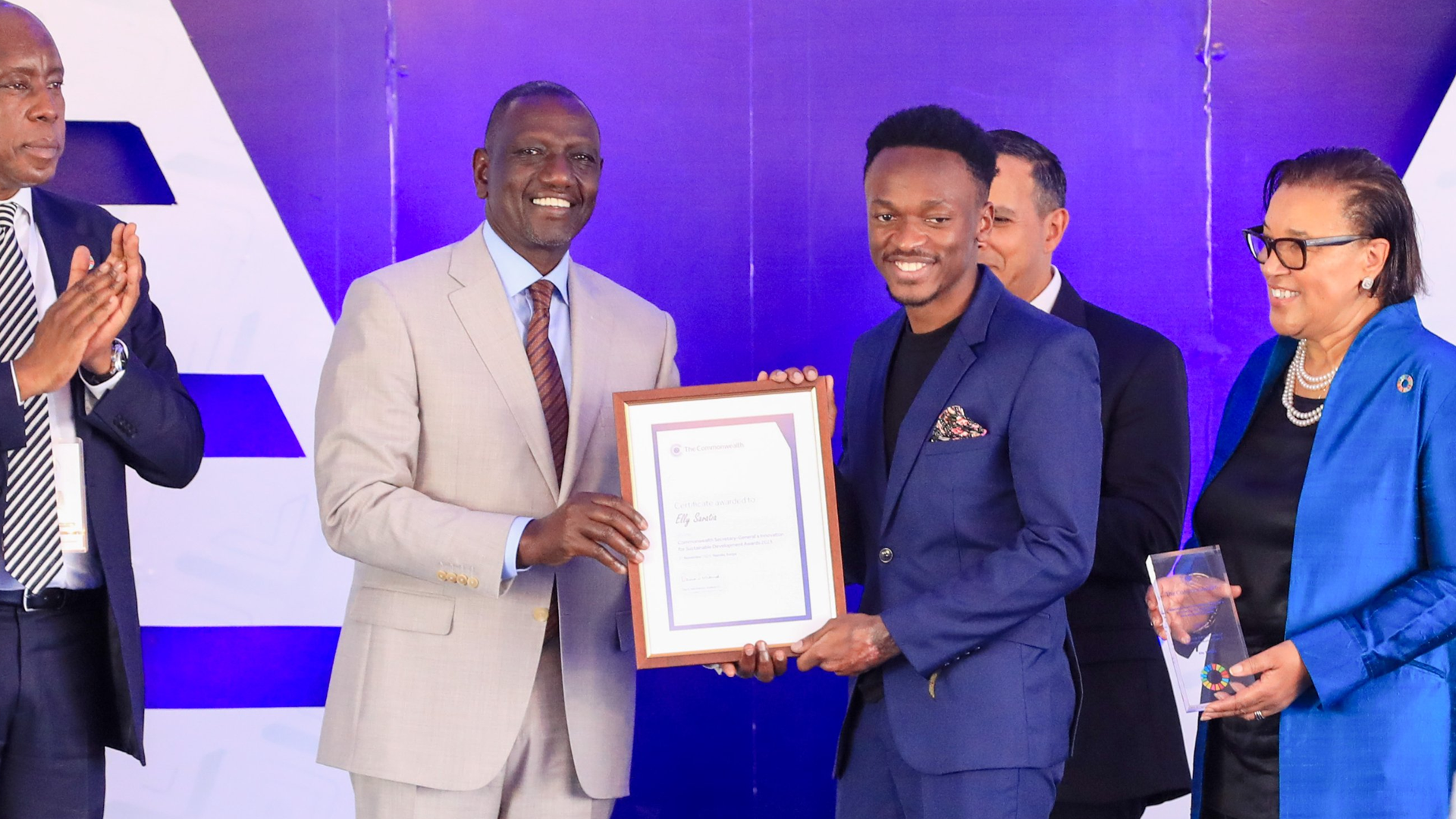
At only age 24, Eloy Savatia is the founder of Signvrse, a Nairobi-based startup, that created Terp 360, the continent’s first AI-powered sign language translation platform. Terp 360 utilizes digital avatars to translate spoken and written English into KSL, which will create a seamless way to communicate in hospitals, schools, and the workplace, and will help to connect the deaf community.
Terp 360 has already reached over 2,000 users and is already creating a significant change for accessibility in a region that has very little innovation focused on enabling access to education and communication with deaf people.
For years, the deaf community in Kenya has been marginalized, due to the absence of appropriate tools. As examples, in schools, many deaf students have had to endure incomplete lessons due to the absence of proper translation being provided. In medical settings, deaf patients struggle to articulate their condition during consultations without an interpreter. And in workplaces, job opportunities are lost simply because employers lack the means to communicate.
Terp 360 is trying to solve that. By real-time translating English into KSL, opportunities that were previously impossible are opening up. Teachers are now testing it to improve how lessons are delivered, healthcare workers are using it to better serve deaf patients, and businesses are beginning to explore how it can make workplaces more inclusive.
Building Africa’s largest sign language dataset
One of the most exciting aspects of Terp 360 is what’s happening behind the scenes. Signvrse is building Kenya’s largest sign language dataset, which could become a vital resource for AI development across Africa.
African sign languages are rarely included in global accessibility technologies. Tools developed in the West often prioritise American or British sign languages, leaving African users excluded. By focusing on KSL first, and aiming to expand into other African sign languages, Savatia is ensuring that local communities are not left behind in the AI revolution.
This work isn’t just about translation today, it’s about creating a foundation for long-term digital inclusion. In the future, this dataset could help train more advanced AI tools that recognise, translate, and even generate African sign languages across multiple platforms.
Signvrse’s work has already gained recognition beyond Kenya, with global accessibility advocates seeing Terp 360 as a model that can be adapted for other countries.