Climate breakdown and wildlife loss are ‘ruining ecosystems that underpin the economy,’ says a new report published by EU officials.
Soaring temperatures and melting glaciers may be the quintessential things that come to mind when people start to think about climate change, but natural consequences such as these only scratch the surface of what’s to come.
The truth is, life in a warmer world will transform and threaten national economies, trade relationships, cultural traditions, and more. A new report published by EU officials stresses this reality, specifically highlighting Europe’s precarious position at present.
The report, titled ‘Europe’s environment and climate: knowledge for resilience, prosperity and sustainability,’ examines the role the climate and natural environment play in ensuring health, resilience and prosperity for people living in EU member states.
Published every five years since 1995, the recently released seventh edition shed light revealed how European nations are struggling to meet 2030 targets in a high number of areas, placing ‘the future prosperity, competitiveness, and quality of life’ of their citizens.
Its findings should act as a guide for European leaders striving to meet the EU’s vision for a sustainable Europe by 2050.
To begin, the report highlighted how consumption and production patterns across Europe are impacting the continent’s natural environment. It found that more than 80 percent of protected habitats are currently in a ‘poor’ or ‘bad’ state due to unsustainable behaviours, with between 60-70 percent of soils degraded.
Healthy ecosystems are not only vital for ensuring food and water security, they are also important financial security, with nearly three-quarters of businesses in the EU producing goods and services dependent on their surrounding ecosystem.
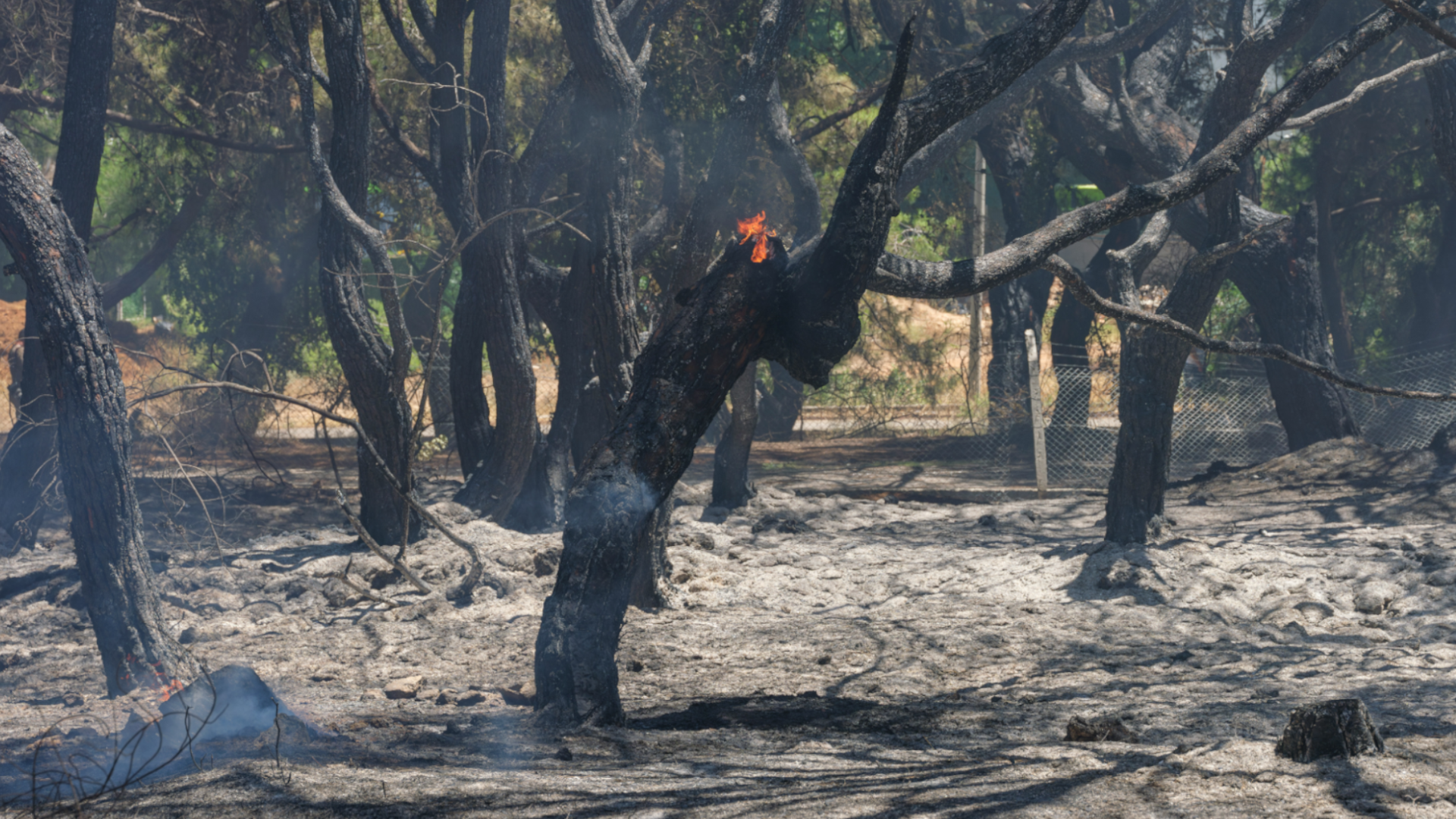
The report also discovered that EU member states have lost a significant portion of their carbon sinks over the last decade. Economic activity such as logging, in tandem with ageing forests, more frequent wildfires and droughts, and pests such as the bark beetle, have contributed to the loss of major forests and other woodlands.
Emission levels were also examined. Though the EU is a world leader in this area, successfully cutting its domestic greenhouse gas emissions by 37 percent since 1990 by reducing fossil fuel use and doubling its share of renewables since 2005, it revealing a reduction stagnation in key areas.
Both agriculture and transport sectors have failed to significantly slash their annual emissions, remaining basically unchanged since 2005. The report notes the oxymoron of current food systems which undermine the very ecosystems they depend on, by driving pollinating species decline and soil degradation.
The report also warns of a lack of action on climate adaption for all EU member states. Despite an increased risk of extreme weather events, insufficient measures have been put in place to mitigate danger and protect citizens, especially vulnerable groups such as the elderly, young children, and low-income communities.
Noting that Europe is the fastest-warming continent on the planet, the paper’s authours highlight the economic cost of inaction, writing: ‘Weather- and climate-related extremes caused economic losses of assets estimated at €738 billion in the 27 Member States of the EU over the period 1980-2023, with over €162 billion in costs from 2021 to 2023 alone.’
Last but not least, the paper discusses water. Already, one in three Europeans is impacted by water stress, a factor that is guaranteed to worsen as the climate changes.
It lists the agriculture sector as most responsible for threatening surface and groundwater, with fertiliser and pesticide runoff degrading water quality, promoting excessive algae growth, depleting oxygen levels and driving the loss of aquatic life.
Why is this report significant?
Climate change denial is growing in the political world, and Europe is certainly not immune. As far-right parties attract popularity in various parts of the EU, many green agendas are being scaled back.
In fact, US lawmakers have been urging EU leaders to ditch environmental policies that block certain imported goods from entering their countries, while applying pressure on nations to buy US-tapped fossil fuels.
All of this said, significant progress towards a sustainable future has been made in Europe. The growth of environmentally protected areas in Europe rose to 26.1 percent of land and 12.3 percent of sea in 2022 – slow progress, but at least there’s some improvement.
On top of this, EU policies enforced to reduce pollution and improve air quality have been immensely successful, with a 45 percent reduction in premature deaths attributable to fine particulate matter from 2005 to 2022.
The EU’s 37 percent reduction in overall fossil fuel use and widespread adoption of renewables clrealy demonstrates how effective policy implementation can drive change, while enacting measurable progress towards sustainability.
This report should motivate EU leaders to celebrate the progress achieved by meaningful climate policies, while seriously considering the researchers’ suggestions on pathways to achieve climate neutrality.
It’s anybody’s guess what the 2030 edition of this paper might look like. But with the report’s inclusion of the economic cost of environmental breakdown – it should motivate even the most climate denying political candidate to act.
Deputy Editor & Content Partnership ManagerLondon, UK
I’m Jessica (She/Her). I’m the Deputy Editor & Content Partnership Manager at Thred. Originally from the island of Bermuda, I specialise in writing about ocean health and marine conservation, but you can also find me delving into pop culture, health and wellness, plus sustainability in the beauty and fashion industries. Follow me on Twitter, LinkedIn and drop me some ideas/feedback via email.
Less 20-somethings are getting married today than ever. As Gen Z ditches wedding rings, it begs the question: what has changed?
There’s little I love more than the sweet sound of an orchestra playing a doting love song, as a couple makes it down the aisle, ready to make the ultimate commitment and say: ‘I do’. Yet nowadays, it seems like my generation is more inclined to say ‘I don't’...
Louis Theroux’s manosphere documentary has raised questions about how we tackle a toxic community that spreads in the shadows and thrives in the spotlight.
It was only a matter of time before Louis Theroux shuffled into frame and imparted his gauche two cents on the manosphere. The documentarian is beloved for his awkward silences, an approach that has allowed him to carve out a hefty filmography of deep-dives into some...
Companies in the Global North are increasingly purchasing carbon credits to offset their emissions, while projects across Africa are encouraging farmers to adopt climate friendly practices that can generate those credits.
The process is theoretically simple. Farmers plant trees or adopt other practices that help to sequester carbon dioxide directly from the atmosphere. This is then measured and sold to companies as credits to help them offset their own impact...
Staff and students at the University of Kent were devastated by a fatal outbreak of meningitis last week, which left two people dead and more than 10 hospitalised.
The incident has thrown a community into chaos, as students begin to worry about those they’ve come into contact with and University staff try to manage the outbreak. Hundreds of young people have since begun queuing for antibiotics, while in-person exams...
We use cookies to ensure that we give you the best experience on our website. If you continue to use this site we will assume that you are happy with it.
































 0 comments