Emergency and rescue services from around the world are on the ground in Turkey in the wake of the deadliest natural disaster in a century. This morning, the first convoys reached affected areas of Syria, but major hurdles stand in the way of reaching millions who need help.
Today marks three days since a 7.8 magnitude earthquake hit the South-eastern region of Turkey. Powerful quakes were also felt across Syria, with Lebanon, Cyprus, and Iraq also recording tremors.
In hard-hit Turkish cities, citizens expressed initial frustration at their government’s slow response in mobilising teams to locate people beneath the rubble of collapsed buildings. But as of today, local and international rescue groups have pulled more than 8,000 survivors from the debris. Searches are still ongoing.
Meanwhile, getting aid to Syria has been complicated. UN representatives say relief teams were conflicted about how to provide help within a nation fractured by civil war, with supplies and rescue missions needed in both government and opposition-occupied territories.
Over the last nine years, only one small channel on the Turkish border has allowed international aid to reach Syria. Named the Bab al-Hawa crossing, it is opposition-held. But today, the first vehicles are making it through, carrying supplies for the 11 million people who desperately need it.
While this is good news, hurdles are arising as Syria had been experiencing a severe fuel crisis well before the earthquake. Spokesmen from the civil defence White Helmets group say rescue aid is now utilising the last of its already-low fuel reserves.
The total confirmed death toll in both countries has now surpassed 19,700. Searches for more survivors will continue, but freezing cold temperatures, snow, and rain are making it difficult for both rescue teams and those who have survived.
The first 7.8 earthquake hit the city of Gaziantep in southern Turkey at around 4.20 AM on Monday morning, while most people were asleep in their beds.
About ten minutes later, a second 7.5 magnitude earthquake hit.
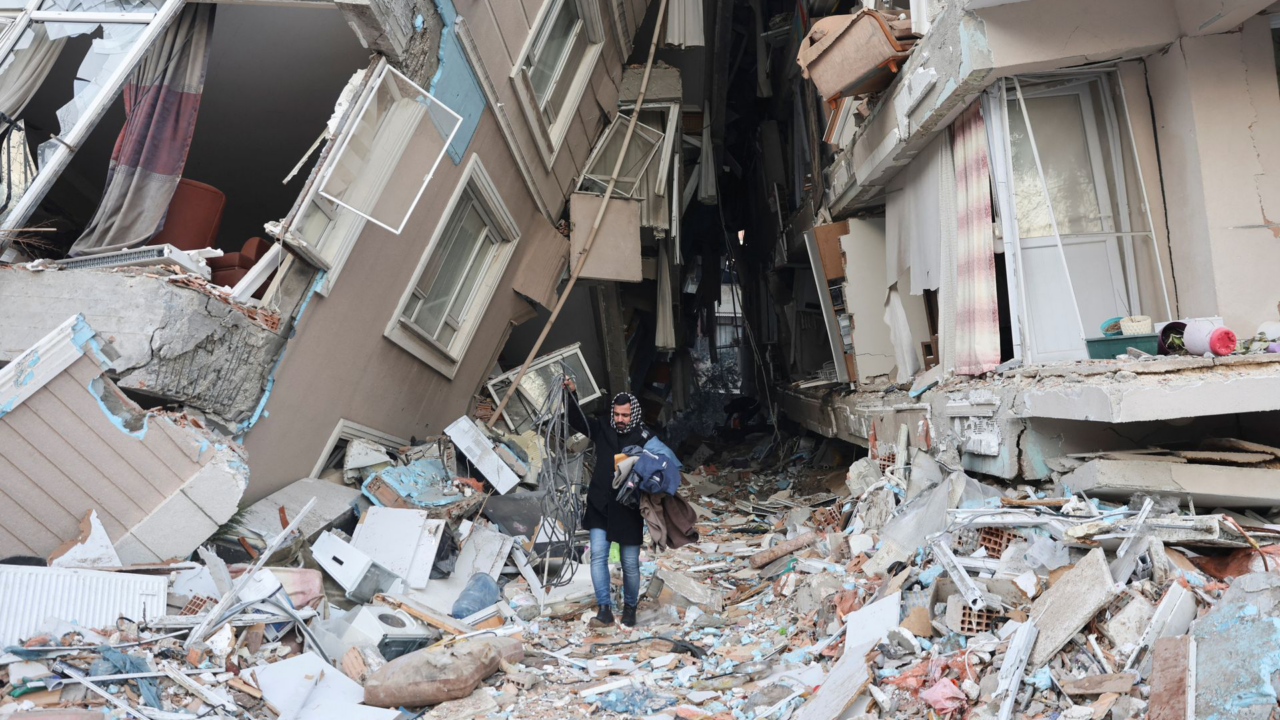
Within four hours, authorities reported that over 140 buildings had collapsed in Malatya, the largest city in the Eastern Anatolia region of Turkey. In nearby Kahramanmaras, an entire neighbourhood of high-rises fell, with only a few lucky buildings continuing to stand around them.
By Tuesday, 6,000 to 7,000 buildings had been reported damaged or completely demolished across the South-east.
With local rescue efforts quickly overwhelmed by the scale of the event, and 120 more aftershocks recorded in Turkey during these missions, the event would soon be realised as the world’s deadliest natural disaster in a century.
So far, 250,000 people have been left homeless. Many are sleeping in cars or outdoors in the cold, while those whose homes still stand fear staying inside overnight over concerns their homes will collapse around them.
The situation in Syria has become dire after three days without UN aid. The first convoys crossed the border today, with many staff aware that earthquake survival rates drop to 5-10 percent after the 72 hours period. They also face truck shortages, blocked roads, and other logistical issues during the journey.
In both Syria and Turkey, power and internet outages are making communication with family and friends difficult. Fuel shortages are also going to be major hurdles in offering relief.
Science behind the quake
Unfortunately, Turkey is located along a very dangerous tectonic plate fault line.
Geologists, scientists, and even politicians say that although this week’s earthquake is devastating, it is ‘not a surprise’ that a quake of this kind occurred. This is because the tectonic plates are overlapping rapidly, at a rate of 2cm per year.
In 1999, Turkey experienced an eerily similar disaster when 7.4 magnitude earthquake hit the seaside town of Izmit.
Buildings collapsed, killing 17,000 people and rendering more than 250,000 homeless. It resulted in the Turkish government enforcing stronger building measures and putting compulsory earthquake insurance systems in place in 2000.
However, structures built before the turn of the millennia were unlikely to have reinforcements added. Experts say these were amongst the first to collapse this week.
As a country experiencing almost a decade of civil war, Syria’s infrastructure is already fragile. In Aleppo and Idlib, the hardest hit areas, war-damaged buildings have been previously repaired with low-cost and low-quality materials – sometimes ‘whatever is available,’ according to officials.
This has made Syria’s crumbling landscape especially vulnerable to natural disasters.
How are other countries stepping up?
If there’s any positive news in the wake of all this, it’s the speed at which international response has come flooding in.
At least 100,000 search and rescue personnel have been sent into Turkey and now Syria over the last few days, according to the United Nations Office for the Coordination of Humanitarian Affairs.
Turkey has also received aid pledges from 95 countries and 16 international organisations.
Despite the impressive outpouring of funding, supplies, and relief workers on the ground, officials say it could be a decade before affected areas of Turkey and Syria resemble anything similar to what they were only days ago.
With every hour that passes, rescue missions become less about listening for calls for help and more about returning bodies to relatives. But there have been some amazing glimmers of hope.
At 68 hours since the first quake, a baby was saved from beneath debris in Hatay Province. Later, a family of four was rescued in Adiyaman province. At an astonishing 78 hours, numerous infants, young children, and animals have been found alive in Turkey and Syria.
It’s tough moments like this where humanity pulls together to get the job done. It makes many leaders and global citizens ignore political differences in order to help those in need.
Let’s hope we see more positive developments in the days to come, as these nations begin taking steps towards rebuilding and healing.
Deputy Editor & Content Partnership ManagerLondon, UK
I’m Jessica (She/Her). I’m the Deputy Editor & Content Partnership Manager at Thred. Originally from the island of Bermuda, I specialise in writing about ocean health and marine conservation, but you can also find me delving into pop culture, health and wellness, plus sustainability in the beauty and fashion industries. Follow me on Twitter, LinkedIn and drop me some ideas/feedback via email.
Britain’s press has long claimed to simply report politics, but its deep-rooted bias toward the Conservatives suggests it may have played a far more active role in shaping how the public sees power, leadership, and ultimately who gets to win.
On 13 April 1992 after a devastating election loss, swerving the usual graceful exit, Neil Kinnock stood in front of the press and made a striking claim:
‘...the Conservative-supporting press...
Though the project is a vital strategic asset for the US, its reliance on advanced tech for mitigation techniques have failed to ease local anxieties about water security and the environment.
In the past two years, the US government has placed significant emphasis in obtaining rare earth minerals. From EVs to precision weapons, these minerals have become an essential commodity in the global economy. However, global sanctions on their...
In the last decade, the share of 15-to-24-year-olds in the UK who claim they have a condition limiting their ability to work is reportedly up by 70%.
There has been a sharp rise in the number of jobless young people in the UK citing health problems as the reason they cannot work, according to newly published statistics from the Health Foundation.
The charity thinktank says that the portion of 16-24-year-olds...
Less 20-somethings are getting married today than ever. As Gen Z ditches wedding rings, it begs the question: what has changed?
There’s little I love more than the sweet sound of an orchestra playing a doting love song, as a couple makes it down the aisle, ready to make the ultimate commitment and say: ‘I do’. Yet nowadays, it seems like my generation is more inclined to say ‘I don't’...
We use cookies to ensure that we give you the best experience on our website. If you continue to use this site we will assume that you are happy with it.
































 0 comments