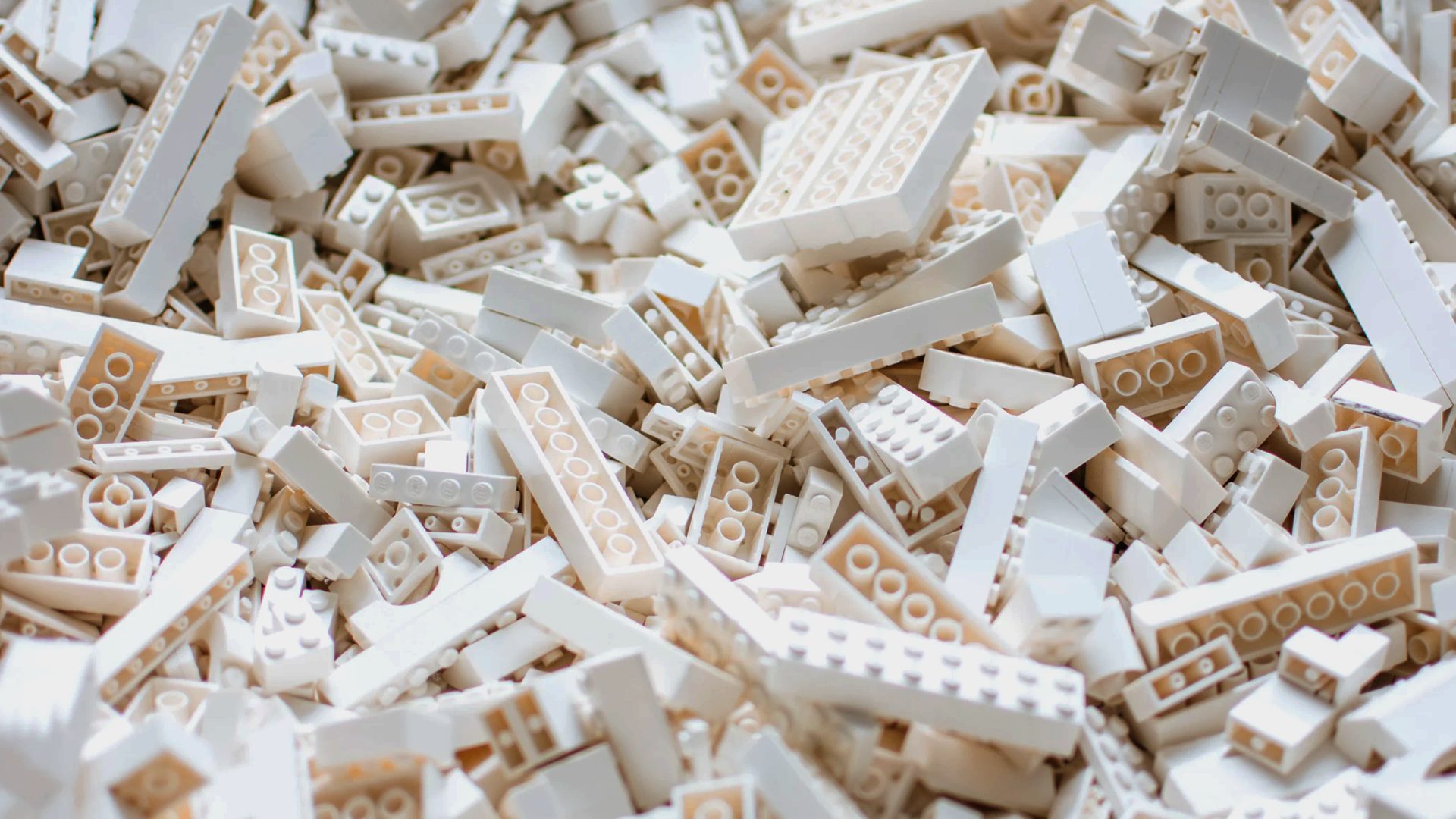
The giant toy company LEGO has shown off its first brick prototype made from recycled plastic bottles, as it continues toward making all of its products entirely sustainable.
When you think of words to associate with LEGO, ‘sustainable’ probably isn’t very far up the list.
The company has been attempting to change this in recent years, however. In 2018 it announced a new range of LEGO bricks made from ‘botanical’ elements including leaves, bushes, and trees, with a promise that its core products and packaging would be made from green materials by 2030.
Now, three years on, it has unveiled its first prototype for the ‘recycled brick’, made entirely of PET plastic from disposable bottles.
They look like any standard LEGO brick and are a clean white colour. Now you can finally create a giant plastic igloo out of blocks and not feel bad about it. The future is now, eh?
LEGO says over 150 employees are working to find alternative sustainable materials that can withstand intense pressure and be used in the same way as traditional bricks. 250 variations of PET material and plastic formulations have been rigorously tested, but this specific combination is the first to pass all of the company’s quality assurance checks.
Before you rush to your local toy store, however, LEGO has been quick to warn that it’ll be a while before we see these bricks on commercial shelves.
It still has several extra tests to go through and the team will continue to tinker with the PET formula to see if a stronger variation can be made, but the fact we’ve gotten this close to a final product is reason enough to feel excited.
In a statement, Vice President of Environmental Responsibility at the LEGO Group, Tim Brooks, explained that the ‘biggest challenge on our sustainability journey is rethinking and innovating new materials that are just as durable’.
With regards to these bricks being released for sale, Brooks wanted to assure younger consumers that LEGO will reach its goals as soon as possible. ‘We know kids care about the environment and we want to let them know we’re working on it. Experimentation and failing is an important part of learning and innovation’.
Aside from experimenting with PET, LEGO has also said it will invest upward of $400 million USD over three years to accelerate its sustainability goals. So, expect more cash for green products, more announcements in the future and, most crucially, more bricks.
Now, I’m off to get started on that giant igloo. Plastic bottles and all.
I’m Charlie (He/Him), Deputy Editor and Senior Writer at Thred. I was previously the Editor full time at Thred before moving to Bristol in 2024. As a music and gaming enthusiast, I’m a nerd for pop culture. You can find me curating playlists, designing article headline images, and sipping cider on a Thursday. Follow me on LinkedIn and drop me some ideas/feedback via email.
The ongoing Winter Olympic Games have seen many acts of defiance against the Trump administration. How will the situation play out when the US hosts in 2028?
When Baron Pierre de Coubertin revived the Olympics in 1896, one of his main aims was to promote mutual understanding among athletes. He believed that competing on the track instead of the battlefield could encourage peace and help prevent war.
However, countless...
Anxiety, depression, and emotional problems are on the rise across the globe, cutting across boundaries of culture, geography, and socio-economic status. The World Health Organisation says ‘one in seven’ have a mental health disorder in 2026.
According to the World Health Organisation, ‘one in seven adolescents worldwide has a mental health disorder.’ Such statistics obviously cannot be ignored.
This generation of teens is the first to be raised in an...
Why has the precedent that ‘British culture is dying’ invaded every aspect of our lives recently? From TikTok commentary to culture-war politics, who is really influencing the supposed shift in British culture?
Claims that Muslims and BAME communities are erasing British culture have become a popular rhetoric in recent political spheres in the UK, but also around the Global North as a whole. Popular, but not new.
Here's my take...
Findings suggest women' s professional development was only a priority for half of US businesses in 2025.
‘Many companies are overlooking women – and it’s crucial that they don’t,’ reads the opening line of the 2025 Women in the Workplace report. What follows is no more encouraging. The state of play across the corporate landscape is pretty dire where gender parity is concerned.
The standout finding was that only half...
We use cookies to ensure that we give you the best experience on our website. If you continue to use this site we will assume that you are happy with it.
































 0 comments