
























Latest Stories from Derrick
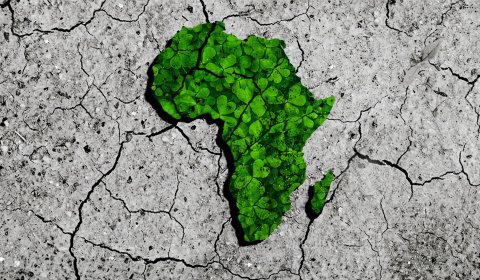
Will carbon markets help Africa or is the whole thing a myth?
Companies in the Global North are increasingly purchasing carbon credits to offset their emissions, while projects across Africa are encouraging farmers to adopt climate friendly practices that can generate those credits. The process is theoretically simple. Farmers plant trees or adopt other practices that help to sequester carbon dioxide directly from the atmosphere. This is then measured and sold to companies as credits to help them offset their own impact...


What’s up with the UK’s new study visa restrictions?
A recent move by the UK government may alter the educational routes of thousands of young people in the Global South, especially those from areas experiencing conflict. Recently, the Home Secretary, Shabana Mahmood, announced a plan by the British government to stop issuing study visas to students from various countries in the Global South. These include Cameroon, Sudan, Myanmar, and Afghanistan. If everything goes as planned, the policy...
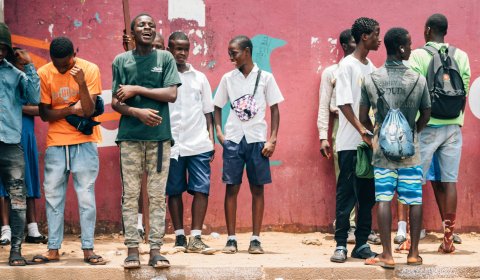
Young Africans are being blackmailed into joining Russia’s fight
During the Russian invasion of Ukraine, thousands of Africans became the target of numerous deceptive recruitment practices, leading to hundreds of deaths. During this year’s parliamentary intelligence briefing in Kenya, it was reported that over 1,000 nationals, who were lured by the prospect of high-paying jobs, were recruited and deployed to fight with no training and no clarity about their roles. Such is the case with the ongoing Russia-Ukraine...
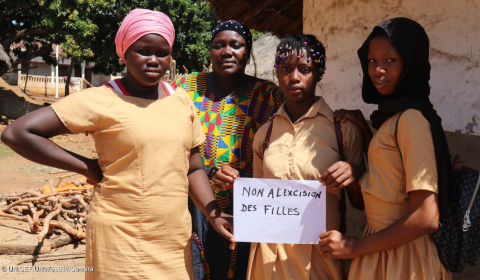
Gambia could re-legalise FGM on the grounds of tradition
In 2015, Gambia banned female genital cutting, making it one of the few countries in West Africa to criminalize the practice. On the grounds of culture and tradition, this progress is now under threat of unravelling. The legal system in Gambia is currently experiencing a second challenge to the ban on Female Genital Mutilation (FGM). Through the courts, religious organizations and a member of parliament are making arguments that the...

WHO report shows continual decline in teen mental health
Anxiety, depression, and emotional problems are on the rise across the globe, cutting across boundaries of culture, geography, and socio-economic status. The World Health Organisation says ‘one in seven’ have a mental health disorder in 2026. According to the World Health Organisation, ‘one in seven adolescents worldwide has a mental health disorder.’ Such statistics obviously cannot be ignored. This generation of teens is the first to be raised in an...
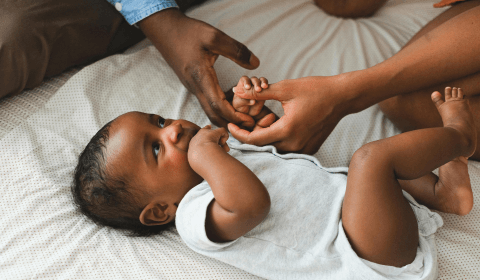
AI is helping African mothers give birth safely
The anticipation of having a baby is often clouded with uncertainty for Africa’s women as well as their families and healthcare providers due to an overwhelming number of pregnancy complications. According to WHO, annually there are over 2 million stillbirths in the world, over half occurring in Sub-Saharan Africa. These stillborn deaths are often preventable. Poor access to prenatal care, shortages of qualified health care providers, delayed responses to emergencies,...

Remote work is redefining who gets to succeed in Africa
For many years, success in Africa has been tied to one's geographical location. Urban centers were the most profitable, while people in rural centers were taught to lower their ambitions. Success in rural center regions was mostly pegged on migration to cities, but is the landscape changing in 2026? Remote work was meant to change the story of leaving home to a city for opportunities. In theory, it promised a...
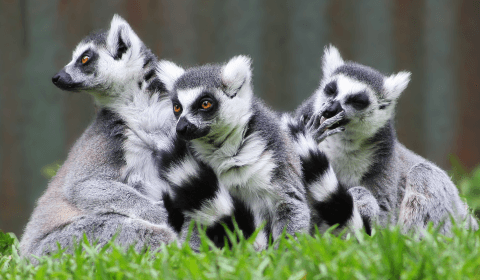
Lemurs are being eaten and it’s causing biodiversity breakdowns
Madagascar's lemurs have little time left. The animals are facing a new danger from the urban elite of the country who are paying handsomely for their meat. How is this impacting biodiversity and ecosystems in the region and beyond? A new study published in the Conservation Letters says that wealthy urban residents of Madagascar are eating the flesh of one of the world's most endangered primates. Eating lemurs has gained...

Eswatini is Africa’s first nation to roll out HIV prevention shots
Eswatini has taken a historic step in Africa’s HIV response by approving the twice-yearly anti-HIV injection, lenacapavir, offering protection to its citizens. We are getting clearer data on where 15 to 24 year olds are most likely to be living with HIV. The numbers show that young people in Africa are affected far more than anywhere else, according to organisations like UNICEF and the WHO. Eastern and Southern Africa's...

Esther Akpovi is leading Nigeria’s youth to governance
For a long period, hierarchy and tradition has been foundational to politics. Now, a new generation has come to change the rules about what it means to be a leader; they're younger, connected and, pressing the boundaries of the norm. Esther Akpovi, newly inducted as Deputy Speaker of the FCT-Abuja Youth Parliament (2025–2027), is leading this change. With a life story that bridges Europe and Africa, she is presenting a...

