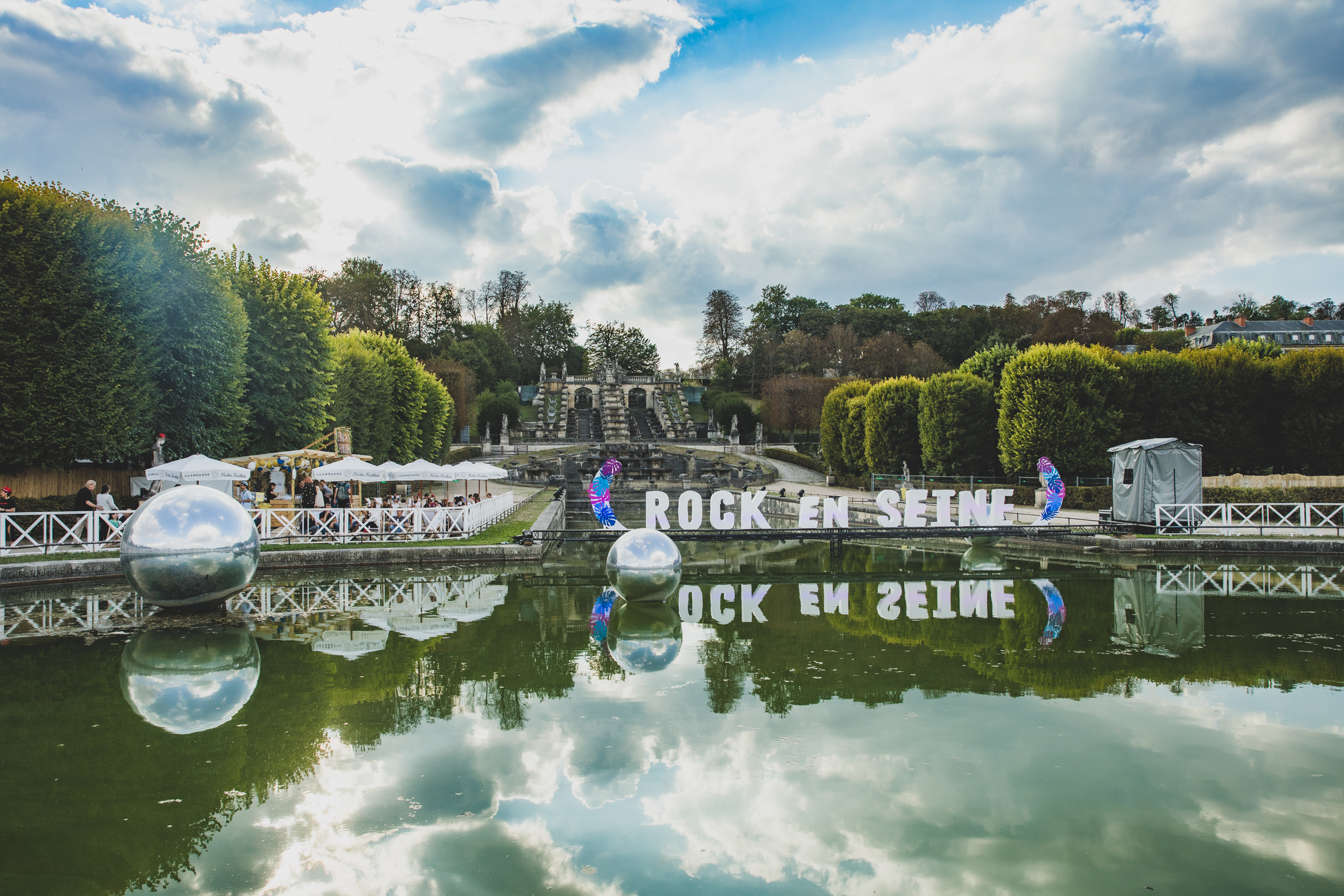
If you’re looking for an environmentally conscious music festival that will deliver as much in terms of good vibes, great music and delicious food as it does in offsetting your carbon footprint, you need look no further.
This year, as many keen music festival goers will already know, is the last year for the globally acclaimed annual Glastonbury festival – at least for a “fallow year”.
Over summer 2026 the festival’s grounds – held at Worthy Farm in Somerset since 1970 – will be allowed to recover in order to preserve the soil for future festivals.
Usually taking place every five years or so, it’ll be the first fallow year since 2018, although the annual event was disrupted two years in a row in 2020 and 2021 thanks to the safety regulations necessitated by the covid pandemic.
As those whose love for live music crosses over into environmental consciousness, or maybe just for those who can’t wait to get back to the usual summer shenanigans, they might find themselves thinking how they can approach music festivals more sustainably.
While festivals are a great place to see some mint music, have fun with your pals, and enjoy pissing about (sometimes literally) in a tent or in a field, unfortunately this can sometimes be at odds with any sort of consideration for the longevity of said fields.
Not to come across like a debbie downer, but with the state of our planet the way it is, it does kind of feel important to at least try and enjoy things like festivals responsibly, if only so we still have some sort of planet left on which to host them.
What’s more, I do care, truly, about the environmental impact of human activity like music festivals on the rapidly deteriorating state of our planet.
However, with the continuation of early morning alarms, long commutes, and 5pm(!) darkening skies, the excitement of summer plans is very much a large part of the reason why I’m finding any sort of motivation to still be getting up at all.
When considering festivals then, in my overworked, sleep deprived stupor (I’m being dramatic, I really love my job), I’m thinking about those that will please not only my eyes, my ears, and my bank account (they call me high maintenance, I don’t know why), but also my desire to not make the world any worse than it already is. This involves considering, as well, my, our, carbon footprint.
Accessible for those of us in the UK by the lower-emission producing Eurostar – rather than aeroplane – which will take you directly into Paris Charles de Gaulle from London, UK, the carbon footprint of which is 95% less than flying on average.
From there, the festival is held in the Domaine National de Saint-Cloud, a short and sustainable metro or train ride away from Paris, minimising both air and noise pollution for Parisians and those residing in the surrounding areas.
You could even take your bike free of charge if you choose to travel with SNCF, and there’s a handy and secure bike parking area for festival goers once you arrive. This is especially significant considering that, according to KintoJoin, 80% of a music festival’s carbon footprint can be attributed to audience travel.
Once you’re there, or before for the anxious anticipatory planners amongst us, you can see first hand that environmental and social impact is at the cœur of Rock en Seine’s preoccupations.
The park itself is exceptional to look at and has an even more remarkable history.
It was built originally as a pleasure garden commissioned by Italian banker Jérôme de Gondi in 1577, later acquired by the first archbishop of Paris, Jean-François de Gondi, in 1625.
In 1654 it was sold once again to another banker, Barthélémy Hervart, this time of German nationality, who improved the estate’s water supply, attracting the then king Louis XIV in 1658.
Louis in turn gifted it to his brother Philippe d’Orléans, with whom the estate underwent its largest expansion and additional constructions and landscaping. He then passed it onto his son through whom the park was ceded to Queen Marie-Antoinette.
Although Saint-Cloud survived the violence of the French Revolution in 1789, as we all know Marie herself didn’t, and it wasn’t revived until 1799 when Napoleon Bonaparte staged his coup d’etat in the grounds’ orangery.
Making a sustainable festival
Now that the park is owned officially by theFrench State, unlike them, Rock en Seine’s organisers really are committed to both short and long-term positive environmental perseverance.
Not only is everything to do with the festival designed to minimise lasting effect on the land’s vegetation, but the site has also been made more accessible to people with reduced mobility thanks to alley renovations. Unlike the concerns of the park’s previous royal owners, this makes the park more user friendly for all types of visitors all year round.
This year will be the second since the festival undertook its first carbon footprint reduction plan and joined ADEME’s ACT Pas à Pas (Accessing low Carbon Transition) programme.
This programme allows companies, such as Bimbo QSR, La Boulangère, Olga, and Pierre Martinet (of tabbouleh rather than external security fame) to work on an economic model that is compatible with climate issues – and therefore supports Rock en Seine’s decarbonisation strategy.
Like the UK’s Shambala festival, which sent over 13 tonnes of festival food waste to a local farm to be used for compost in 2023, Rock en Seine is also committed to reducing food-related waste.
It approaches this by making food (of which 50% is vegan/vegetarian) and drink receptacles either reusable or returnable (with the help of a rechargeable wristband).
Not unrelatedly to food waste – hey, we’ve all gotta go sometime, Rock en Seine also uses paper in the toilets rather than for their programs with sawdust loos.
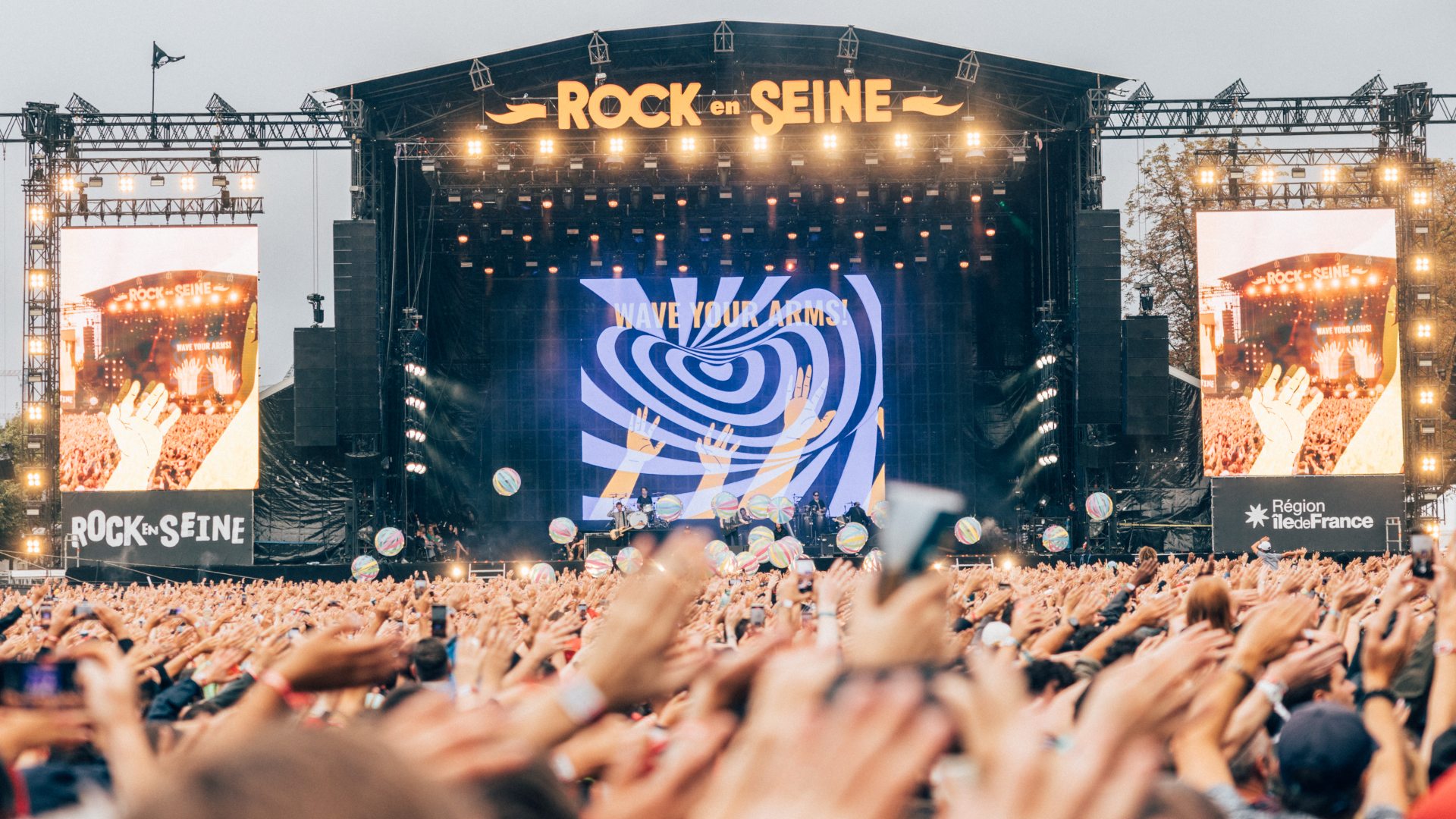
Entering this year into it’s 22nd year, and once again offering performances by some amazing (both musically and politically) artists such as Chappell Roan, KneeCap, Fontaines D.C, and Sharon Van Etten, Rock en Seine festival does an amazing job of marrying environmental sustainability with a bloody good time.
Annie (She/Her) – Originally from Newcastle Upon-Tyne, Annie’s writing focuses mostly on class and feminist issues, with a particular interest in sex-culture, identity politics, and current affairs. She studied both her undergraduate and postgraduate degrees in English literature at the University of Manchester. (Yes, it was a lot of reading. No, it didn’t ruin books for her). Follow her on Twitter or Instagram, or feel free to get in touch via email.
Shane Gillis’ uninspired, unfunny SNL monologue proves sexist humour is still shaping our social norms.
Forgive me for thinking that as a society we’d passed the point of giving men a platform to call women ‘whores’. Turns out we haven’t. Not only did Shane Gillis have free reign to do just that this weekend, he did so on live television, delivering an uninspired SNL monologue in which he mocked women...
The new judge is dismantling diet culture with big bites and no nonsense. We need more of this on TV, now more than ever.
I’ve always loved Nigella Lawson. I’m a fellow foodie, I’m a writer – which means I’ve devoured her written recipes as fervently as the dishes themselves – and I’m also a woman. Nigella has always represented the essence of womanhood in my eyes. She’s confident and unapologetic...
Gen Z subscribes to everything from music and films to software and storage, paying endlessly for things we never actually own. As ownership is increasingly replaced by access, are subscriptions making life more convenient - or creating a generation that pays forever and owns nothing?
There was once a revolutionary economic model called buying something.
You handed over money, gold, or whatever the currency was. Someone gave you the purchased item....
Recruiters are debating on TikTok whether it’s okay to bring iced coffee into a job interview, highlighting discrepancies in professional standards between different generations and industries.
Would you bring iced coffee into a job interview?
A debate has been underway on social media this week as Gen Zers and older professionals consider whether it’s ‘inappropriate’ or an unnecessary restriction that makes new, potential employees uneasy.
It began when TikToker @caitlinrecruiter uploaded...
We use cookies to ensure that we give you the best experience on our website. If you continue to use this site we will assume that you are happy with it.






























 0 comments