An influencer-backed documentary claimed that KFC’s chicken farms adhere to high standards of animal welfare. Undercover investigators say otherwise.
If there’s one thing the world can agree on, it’s that fried chicken is amazing.
Even the vegans want a bite, hence all the fried jackfruit, oyster mushrooms, and tofu alternatives to the crispy golden protein you’ve seen on TikTok and Instagram lately.
But there’s one chain that’s been pumping out real deal wings and fillets for decades now, and considering the number of chickens it goes through in a day (400 pieces a minute, apparently) it should be easy to guess that their practices are far from sustainable.
You may hate to hear this, but the company in question is Kentucky Fried Chicken.
“Steroid pumped chickens? No, mate. We’re very proud of our animal welfare here.”
We took @NikoOmilana Behind The Bucket to see how KFC rear their chickens 🐔
In recent days, the fried chicken king has been accused of portraying a highly misleading account of its farming practices to the public.
In a documentary called Behind The Bucket released last December, filmmakers visited a poultry production company called Moy Park. The farm is a top supplier of poultry across Europe and the UK – including for restaurant chains such as KFC.
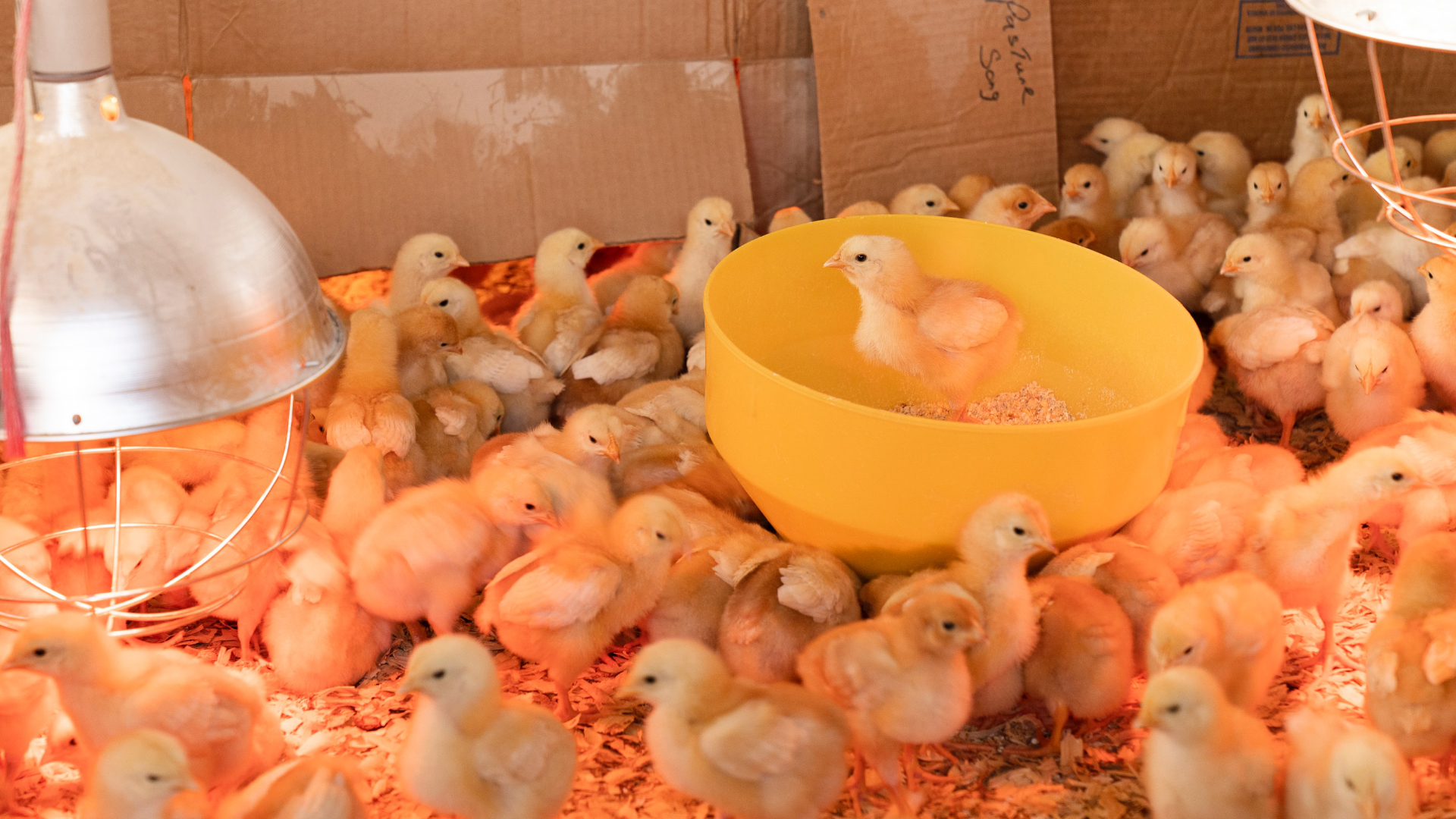
Going off the brand-backed video, farming conditions at Moy Park appeared to be decent. The birds lived inside a spacious shed where fresh straw covered the floor and rows of perches were placed throughout for the chickens to stand comfortably on.
The video, promoted by a popular UK Twitter account called JOE, has gained over 1m views since it was first posted. It appears that the attempt at good publicity hasn’t lasted, though.
Undercover investigators working for the vegan ‘fried chick*n’ brand VFC visited the same location in February of this February and found that the farm looked starkly different.
According to their accounts – you can see for yourself in the video below – there was severe overcrowding in the sheds, hardly any fresh food, and many birds were sick, injured, or dead.
It’s not the first time KFC’s stealthy approach to putting chicken into buckets has come under investigation, either. Around the world, KFC’s poultry suppliers have been known to adhere to a low standard of practice.
As early as 2004, reports have claimed that farms supplying the fast food’s chains chickens cram the birds together in sheds containing numbers as high as 34,000.
It is well-known that these birds tend to live for just 35 days before they are gassed, butchered, and shipped off to KFC branches. Some life, eh?
These types of conditions have been documented in the US, Germany, New Zealand, and India, despite KFC stating time and time again that improving the animal welfare at the farms it sources from is a priority.
In relation to the latest video, the company claimed that staff at Moy Park carry out at least three checks a day and that ‘a small number of birds may die between those visits’ and that they would be immediately ‘identified and removed during the next inspection.’
The unfortunate reality is that industrial farms are almost guaranteed to become breeding grounds for poor environments for animals. Large scale farming of animals and a decent quality of life for those creatures simply cannot go hand in hand.
The good news is that consumers (yes, we) have immense power. Industrial farms will be forced out of business is if we demand better animal welfare laws – or if we stop consuming factory farmed meat altogether.
So if this news has been enough for you to ditch KFC for good, don’t fret. There are loads of fast-food restaurants committed to sustainable practices in London to fulfil your cravings.
Deputy Editor & Content Partnership ManagerLondon, UK
I’m Jessica (She/Her). I’m the Deputy Editor & Content Partnership Manager at Thred. Originally from the island of Bermuda, I specialise in writing about ocean health and marine conservation, but you can also find me delving into pop culture, health and wellness, plus sustainability in the beauty and fashion industries. Follow me on Twitter, LinkedIn and drop me some ideas/feedback via email.
At 24, Gen Z workers born in the late 1990s are apparently being paid more than any cohort since those born in the 1950s. The bigger picture isn’t quite so rosy, however.
Gen Z’s early careers are more financially rewarding than those of millennials, according to research from the Resolution Foundation, a British thinktank.
It says that those born between 1997 and 2012 are experiencing a ‘mini rebound’ in pay packets,...
New rules governing hospital wards promise to protect women’s privacy and dignity. But an internal assessment suggests that, for transgender patients, the consequences could be delays in treatment, discrimination and a growing reluctance to seek medical care.
When we think of a hospital, we tend to imagine a place where our differences become secondary to our needs. We go there when we’re our most vulnerable and trust strangers with our...
The return of the annual haze, worsened by the El Nino phenomenon has left Southeast Asia grasping at straws for Indonesian accountability.
It has been months since I have breathed a week’s worth of fresh air here in Malaysia. On some days, low visibility makes it difficult to see what’s right ahead of you, while nights are plagued with the smell of smoke.
This is the stark reality of the transboundary...
Widespread protests against the B.J.P have led to lockdowns and arrests, as Modi’s government threatens to upend voter rights.
Nahendra Modi’s Bharatiya Janata Party (B.J.P) have courted an unprecedented backlash for the past several months.
The Indian government is no stranger to public protest, but this most recent wave of demonstration stands apart for its cross-sectionality. In a nation with such a deeply entrenched caste-system, that these protests defy social and...
We use cookies to ensure that we give you the best experience on our website. If you continue to use this site we will assume that you are happy with it.






























 0 comments